
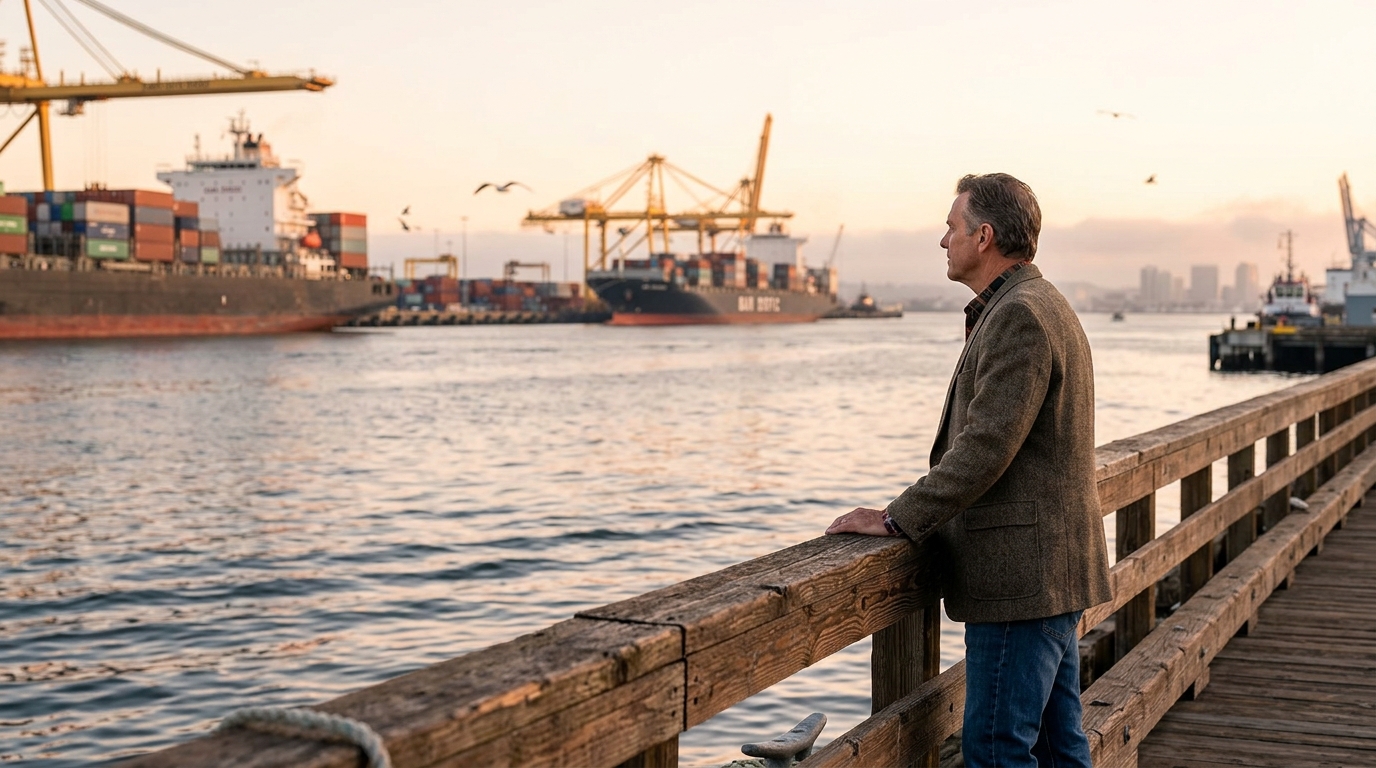
Which Attorney Handles Longshore Act Cases in San Diego or Southern California?
Maritime workers in Southern California face unique legal challenges that standard personal injury laws do not cover. If you have suffered an injury while working on navigable waters, you may be protected under the Jones Act or the Longshore and Harbor Workers' Compensation Act (LHWCA). According to the U.S. Department of Labor, the LHWCA provides crucial benefits to maritime employees who are not eligible for traditional workers' compensation. Navigating these federal statutes requires specialized legal expertise that general practitioners often lack. This guide explains how Benner Law Firm assists injured maritime workers in San Diego and throughout Southern California. (About Craig Benner Benner)
Understanding the Longshore and Harbor Workers' Compensation Act
The Longshore and Harbor Workers' Compensation Act is a federal law that provides wage loss and medical benefits to maritime workers who are injured on the job. Unlike state workers' compensation, which varies by location, the LHWCA is uniform across the United States. It covers a wide range of employees, including shipbuilders, shipbreakers, and harbor construction workers.
The LHWCA is designed to protect workers who do not qualify as "seamen" under the Jones Act. If you work on a pier, in a shipyard, or on a dock, you are likely covered by this act. The law ensures that injured workers receive necessary medical care and compensation for lost wages without having to prove negligence. This no-fault system is critical for workers who suffer from repetitive stress injuries or sudden accidents in hazardous environments.
Understanding the distinction between the Jones Act and the LHWCA is vital. The Jones Act applies to seamen who spend a significant portion of their time on vessels. In contrast, the LHWCA applies to workers on land-based maritime sites. Misclassification of your employment status can lead to denied claims. This is why working with an attorney who understands the nuances of maritime law is essential.
Coverage for San Diego and Southern California Workers
San Diego is a major hub for maritime activities, including naval operations, commercial shipping, and shipbuilding. Workers in this region often face unique risks associated with military bases and commercial ports. The Defense Base Act (DBA) extends LHWCA protections to civilian workers employed on U.S. military bases outside the United States. However, domestic workers in San Diego fall under the standard LHWCA or the Jones Act, depending on their specific duties.
Benner Law Firm serves clients throughout Southern California, including Los Angeles, San Diego, and Orange County. Our attorneys understand the local maritime industry and the specific regulations that apply to workers in this region. We help clients navigate the complex web of federal and state laws that govern maritime employment. Our goal is to ensure that every worker receives the full benefits they are entitled to under the law.
The legal landscape for maritime workers is constantly evolving. Recent updates to the LHWCA have expanded coverage for certain categories of workers. Staying informed about these changes is crucial for protecting your rights. Our firm regularly monitors legislative updates to provide accurate and up-to-date advice to our clients.
Why Benner Law Firm Handles These Complex Cases
Benner Law Firm is led by Craig Benner, an attorney with a deep commitment to justice and precision. Craig Benner brings years of high-volume experience to his practice, combining it with the personalized service of a boutique firm. His background in commercial fishing gives him a unique perspective on the dangers faced by maritime workers. He understands the physical and emotional toll that workplace injuries can take on individuals and their families.
Our firm specializes in Defense Base Act claims, personal injury, and maritime law. We have a proven track record of securing favorable outcomes for our clients. Our approach is rooted in compassion, ethics, and dedication. We believe that every client deserves quality representation, especially when they are vulnerable due to injury.
We handle a wide range of maritime cases, including those involving shipyard injuries, dock accidents, and naval base incidents. Our attorneys are skilled in negotiating with insurance companies and litigating in federal court. We fight to ensure that our clients receive the compensation they need to recover and move forward with their lives.
Our team is well-versed in the specific requirements of the LHWCA and the Jones Act. We know how to gather the necessary evidence to support your claim. This includes medical records, witness statements, and expert testimony. We work diligently to build a strong case that maximizes your recovery.
Attorney Fees and Cost Structure
One of the most common concerns for injured workers is the cost of legal representation. At Benner Law Firm, we operate on a contingency fee basis for most personal injury and maritime cases. This means that you do not pay any upfront fees. Our attorneys only receive payment if we successfully recover compensation for you.
For Defense Base Act cases, the fee structure is different. The DBA includes a "fee-shifting" mechanism under Section 928 of the Longshore Act. This means that the insurance company is responsible for paying your attorney's fees if you prevail in your claim. This provision ensures that injured workers have access to high-quality legal representation without financial burden.
We are transparent about our fees from the outset of our relationship. We provide a clear explanation of how our fees are calculated and when they are due. Our goal is to make the legal process as stress-free as possible for our clients. We believe that financial constraints should never prevent you from seeking justice.

Common Injuries in Maritime Work
Maritime workers face a variety of hazards in their daily work. These hazards can lead to serious injuries that require extensive medical treatment and rehabilitation. Understanding these risks can help workers take steps to protect themselves and seek appropriate legal help if an accident occurs.
| Injury Type | Common Causes | Potential Long-Term Effects |
|---|---|---|
| Spinal Cord Injury | Falls from heights, heavy machinery accidents | Paralysis, chronic pain, loss of mobility |
| Traumatic Brain Injury | Head trauma from falling objects or collisions | Cognitive impairment, memory loss, personality changes |
| Burn Injuries | Exposure to chemicals, fires, or electrical hazards | Scarring, disfigurement, nerve damage |
| Amputations | Machinery malfunctions, sharp tools, heavy loads | Permanent disability, phantom limb pain |
These injuries can have devastating consequences for workers and their families. The medical bills and lost wages can quickly accumulate, leading to financial hardship. That is why it is crucial to seek legal assistance as soon as possible after an accident. Our attorneys can help you navigate the claims process and ensure that you receive the full compensation you deserve.
Key Takeaways
- The Longshore and Harbor Workers' Compensation Act (LHWCA) provides federal benefits to maritime workers who are not covered by state workers' compensation.
- Benner Law Firm specializes in maritime law, including LHWCA and Defense Base Act claims, serving clients in San Diego and Southern California.
- Attorney Craig Benner brings a unique background in commercial fishing and years of legal experience to his practice.
- DBA cases often involve fee-shifting provisions where the insurance company pays attorney fees, while other maritime cases typically use a contingency fee model.
- Maritime workers in San Diego face unique risks due to the region's heavy naval and commercial activity.
- Proper classification of your employment status is critical for determining which law applies to your case.
- Benner Law Firm offers free strategy sessions to discuss your case and explore your legal options.
Frequently Asked Questions
Who is eligible for Longshore Act benefits?
Eligibility for Longshore Act benefits depends on your status as a maritime worker and the location of your injury. Generally, workers who are employed in maritime occupations and injured on navigable waters or adjacent areas may qualify. Our attorneys can help determine your eligibility based on your specific circumstances.
What is the difference between the Jones Act and the Longshore Act?
The Jones Act applies to seamen who spend a significant portion of their time on vessels and allows them to sue for negligence. The Longshore Act applies to land-based maritime workers and provides no-fault compensation for injuries. Understanding this distinction is crucial for pursuing the correct legal remedy.
How long do I have to file a Longshore Act claim?
There are strict time limits for filing Longshore Act claims. Generally, you must provide notice of your injury to your employer within a specific timeframe. Failure to do so can result in the denial of your claim. It is important to consult with an attorney as soon as possible to ensure compliance with all deadlines.
Can I sue my employer under the Longshore Act?
Under the Longshore Act, injured workers generally cannot sue their direct employer for negligence. However, you may be able to sue third parties, such as equipment manufacturers or other contractors, if their negligence contributed to your injury. Our attorneys can help identify all potential sources of compensation.
What types of injuries are covered by the Longshore Act?
The Longshore Act covers a wide range of injuries, including physical injuries, occupational diseases, and mental health conditions like PTSD. If your injury arose out of and in the course of your employment, you may be eligible for benefits. Our firm has experience handling complex cases involving various types of injuries.
How does Benner Law Firm handle attorney fees for maritime cases?
For most personal injury and maritime cases, we work on a contingency fee basis, meaning you pay nothing unless we win your case. For Defense Base Act cases, the insurance company typically pays attorney fees under the fee-shifting provision of the statute. We are transparent about our fee structure from the start.
Why should I choose Benner Law Firm for my maritime case?
Benner Law Firm combines extensive experience with personalized service. Our lead attorney, Craig Benner, has a deep understanding of the maritime industry and a commitment to justice. We have a proven track record of securing favorable outcomes for our clients in San Diego and Southern California.
Contact Benner Law Firm
If you have been injured in a maritime accident in San Diego or Southern California, do not face the insurance companies alone. Benner Law Firm is here to help. We offer free strategy sessions to discuss your case and explore your legal options. Contact us today to schedule a consultation with our experienced attorneys.
Click here to contact Benner Law Firm or call us at 619-941-0456. Let us fight for the justice and compensation you deserve.