

How to File a Workers' Compensation Claim as a Private Security Specialist
Private security specialists face some of the most dangerous working conditions of any civilian occupation, especially those stationed at overseas military bases in conflict zones. If you have been injured while providing security services under a U.S. government contract, you likely qualify for workers' compensation benefits through the Defense Base Act (DBA). Understanding the claims process is critical because missed deadlines or incomplete paperwork can result in denied benefits. This guide walks you through every step, from reporting your injury to collecting the compensation you deserve for medical expenses, lost wages, and disability.
What Is the Defense Base Act?
The Defense Base Act (DBA) is a federal workers' compensation program that provides medical and income benefits to civilian employees who are injured or become ill due to their work on overseas military bases or under U.S. government contracts. It is codified at 42 U.S.C. 1651-54 and incorporates many provisions of the Longshore and Harbor Workers' Compensation Act (LHWCA), 33 U.S.C. 901-950.
The DBA is governed and administered by the United States Department of Labor's Office of Workers' Compensation Programs (OWCP). Unlike state workers' compensation systems, the DBA applies regardless of fault and covers employees of any nationality working under qualifying government contracts.
Who Qualifies as a Private Security Specialist?
A private security specialist is a civilian employee who provides protective, surveillance, or armed security services, typically at overseas U.S. military installations or government facilities. These professionals face threats of bodily injury regularly, often working in active conflict zones like Iraq and Afghanistan.
Covered Employment Categories
The DBA covers employees of private companies on U.S. military bases outside the United States, participants in public works contracts connected to national defense, and workers under contracts funded by the Foreign Assistance Act. If you fall into any of these categories, the Act applies regardless of your nationality.
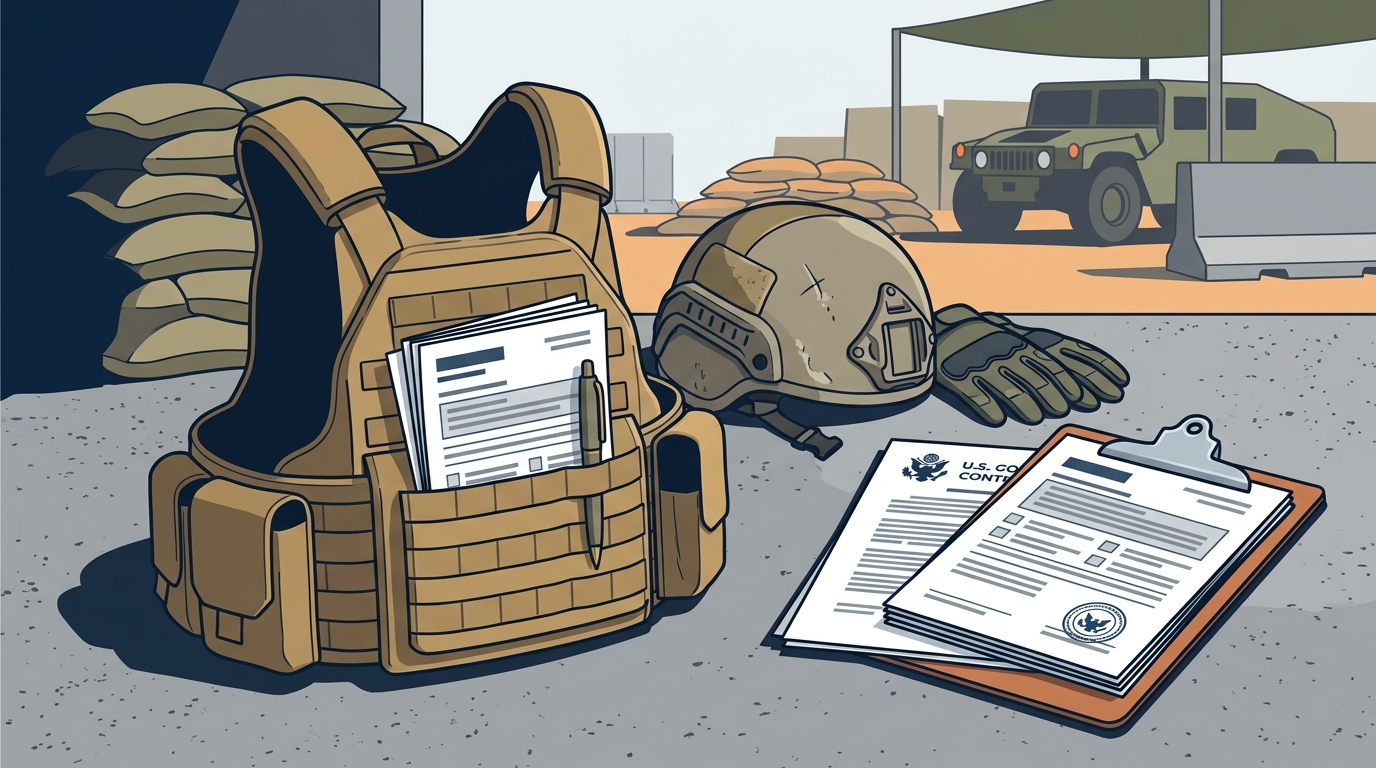
Common Security Roles Covered
| Role | Typical Setting | DBA Coverage |
|---|---|---|
| Armed security contractor | Overseas military base | Yes |
| Embassy security guard | U.S. embassy abroad | Yes |
| Convoy escort specialist | Conflict zone operations | Yes |
| Base access control officer | Forward operating base | Yes |
| Domestic security guard (CA) | Private property, U.S. | No (state workers' comp applies) |
If your security role is based within the United States, state workers' compensation laws apply instead. For California-based security injuries, Benner Law Firm's personal injury team can evaluate your claim.
Step-by-Step: Filing Your DBA Claim
Step 1: Seek Immediate Medical Treatment
Your first priority after any workplace injury is to get medical help. Even if the injury does not seem like an emergency, underlying conditions can worsen without prompt treatment. Document every visit, describe the extent of your injuries, and note what your doctor says, does, or prescribes. This medical documentation forms the backbone of your DBA claim.
Step 2: Report the Injury to Your Employer
Notify your supervisor in writing as soon as possible. Under Section 12 of the LHWCA (incorporated into the DBA), you must provide written notice within 30 days of the injury date. Your employer will then submit an Employer's First Report of Injury (Form LS-202) within ten days. Verify the accuracy of all submitted forms and keep copies for your records.
Step 3: File Form LS-203 With the Department of Labor
Form LS-203 is the Employee's Claim for Compensation. This is the official document you submit to the OWCP to initiate your DBA case. You have one year from the date of your injury (or last payment of compensation) to file. The form collects personal, employment, and injury-related details across 36 sections. Missing information can lead to delays or denials, so working with an experienced attorney is strongly recommended.
Key Forms and Deadlines
| Form | Purpose | Filed By | Deadline |
|---|---|---|---|
| LS-201 | Notice of Employee's Injury or Death | Employee | 30 days from injury |
| LS-202 | Employer's First Report of Injury | Employer | 10 days from knowledge of injury |
| LS-203 | Employee's Claim for Compensation | Employee | 1 year from injury (or last payment) |
For occupational diseases or conditions of gradual development, such as PTSD or hearing loss, the one-year filing clock typically starts from the date you knew or should have known the condition was work-related. Learn more about DBA claim deadlines and how exceptions may apply to your situation.
Benefits You Can Recover
The DBA provides several categories of compensation for injured private security specialists:
- Medical benefits: Full coverage for doctor visits, hospital stays, surgeries, prescriptions, physical therapy, and rehabilitation.
- Lost wage compensation: Typically two-thirds of your average weekly wage (AWW), up to the current statutory maximum, until you return to work or reach maximum medical improvement.
- Disability benefits: Temporary total, temporary partial, permanent total, or permanent partial disability payments depending on the severity of your condition.
- Death benefits: Half of AWW to one surviving spouse or child, or two-thirds for two or more survivors, plus up to $3,000 for funeral expenses.
- Psychological injury coverage: PTSD, anxiety, and depression resulting from work-related trauma qualify for DBA benefits.
For a detailed breakdown of what you may be entitled to, visit our guide on Defense Base Act benefits. If your injury involves PTSD, our DBA PTSD settlements page explains the process for psychological injury claims.
Common Challenges and Insurer Tactics
Filing a DBA claim may seem straightforward, but insurance companies frequently employ tactics to delay or reduce your compensation. Common strategies include disputing injury severity, questioning medical evidence, and prolonging negotiations to pressure claimants into accepting low settlements.
If your claim is denied, you have the right to appeal through the OWCP. The appeal process may involve an informal conference with a district director, a formal hearing before an administrative law judge, or a further appeal to the Benefits Review Board. An experienced DBA attorney can counter these tactics and fight for your full benefits.
Importantly, under the DBA's fee-shifting provision (Section 928 of the LHWCA), the insurance company may be required to pay your attorney fees if you obtain benefits that were previously denied. This means you should never have to pay a DBA lawyer out of pocket.
Key Takeaways
- The Defense Base Act is a federal workers' compensation program covering civilian contractors injured overseas, including private security specialists.
- You must notify your employer in writing within 30 days and file Form LS-203 within one year of your injury.
- Benefits include medical expenses, lost wages (roughly two-thirds of AWW), disability payments, and death benefits.
- PTSD and other psychological injuries qualify for DBA compensation alongside physical injuries.
- Insurance companies routinely deny or undervalue DBA claims; legal representation significantly improves outcomes.
- The DBA's fee-shifting provision means your attorney fees may be paid by the insurer, not you.
- Acting quickly preserves evidence and strengthens your claim.
Frequently Asked Questions
What is the Defense Base Act?
The Defense Base Act is a federal workers' compensation law (42 U.S.C. 1651-54) that provides medical, disability, and death benefits to civilian employees injured while working overseas under U.S. government contracts. It extends protections of the Longshore and Harbor Workers' Compensation Act to overseas contractors.
Do private security specialists qualify for DBA benefits?
Yes. Private security specialists working on overseas U.S. military bases or under government contracts are covered by the DBA. This includes armed security contractors, embassy guards, and convoy escort personnel, regardless of nationality.
How long do I have to file a DBA claim?
You must provide written notice to your employer within 30 days and file Form LS-203 with the Department of Labor within one year of your injury. For occupational diseases, the clock starts when you become aware the condition is work-related.
What benefits does the DBA provide?
The DBA covers all necessary medical expenses, lost wages at approximately two-thirds of your average weekly wage, temporary or permanent disability benefits, and death benefits for surviving dependents.
Can I file a DBA claim for PTSD?
Yes. Psychological injuries including PTSD, anxiety, and depression resulting from overseas contract work are compensable under the DBA. You will need a diagnosis from a certified psychiatrist linking the condition to your employment.
What happens if my DBA claim is denied?
You can request an informal conference with the OWCP district director, a formal hearing before an administrative law judge, or appeal to the Benefits Review Board. An attorney can guide you through each stage.
Do I have to pay for a DBA attorney?
Under Section 928 of the LHWCA, the insurer may be required to pay your attorney fees when benefits are secured. Reputable DBA attorneys should never charge the injured worker directly.
Can I file a DBA claim after returning to the U.S.?
Yes. You can file a DBA claim after returning home as long as you are still within the legal deadlines. Many contractors do not realize the full extent of their injuries until after their contract ends.
Get Help With Your Claim Today
If you are a private security specialist who has been injured while working overseas, the experienced DBA attorneys at Benner Law Firm can help you navigate the claims process and fight for full compensation. Our San Diego-based team represents injured contractors across the United States and worldwide. Contact us today at 619-595-6794 to schedule a free strategy session and learn what benefits you may be entitled to under the Defense Base Act.