

Common Mistakes When Filing a Defense Base Act Claim and How to Avoid Them
Defense Base Act (DBA) claims involve complex federal regulations that govern civilian contractors working on U.S. military bases overseas. According to the U.S. Department of Labor, the DBA extends the Longshore and Harbor Workers' Compensation Act to these workers, ensuring they receive medical and disability benefits. However, navigating this system is fraught with pitfalls that can delay or deny compensation. Understanding these common errors is the first step toward securing the benefits you deserve. (Contact Benner Law Firm)
Mistake 1: Delaying the Notification of Injury
One of the most critical errors contractors make is failing to report their injury to their employer immediately. The DBA requires prompt notice to the employer to initiate the claims process. Delaying this notification can lead to complications in proving that the injury occurred during the course of employment.
How to Avoid It: Report your injury in writing as soon as possible. Include details about when, where, and how the incident occurred. This creates a clear paper trail that supports your claim. If you are unsure about the reporting requirements, consult with a legal professional who specializes in DBA claims.
Mistake 2: Choosing the Wrong Medical Provider
Another common mistake is seeking medical treatment from a provider who is not authorized under the DBA. The Act specifies that medical treatment must be authorized by the employer or the claims administrator. Seeking unauthorized care can result in the denial of reimbursement for medical expenses.
How to Avoid It: Always ensure that your medical provider is approved by the employer or the claims administrator. If you are in an emergency situation, seek immediate care but notify the employer as soon as possible. Follow up with the necessary authorization forms to ensure coverage.
Mistake 3: Inadequate Documentation of Causation
Many claimants fail to adequately document the link between their injury and their employment. This is particularly challenging for injuries that develop over time, such as those caused by exposure to burn pits or other hazardous conditions. Without strong evidence, it is difficult to prove that the injury is work-related.
How to Avoid It: Keep detailed records of all medical visits, treatments, and communications with your employer. If your injury is related to environmental hazards, gather evidence of exposure, such as work logs, witness statements, and medical opinions linking the condition to your work environment.
Mistake 4: Accepting Premature Settlements
Insurance companies may offer early settlements to claimants, often before the full extent of the injury is known. Accepting a premature settlement can result in inadequate compensation, especially if the injury requires long-term care or results in permanent disability.
How to Avoid It: Do not accept any settlement offer without consulting with an experienced DBA attorney. A legal professional can help you understand the full value of your claim, including future medical needs and lost wages. They can also negotiate on your behalf to ensure you receive fair compensation.
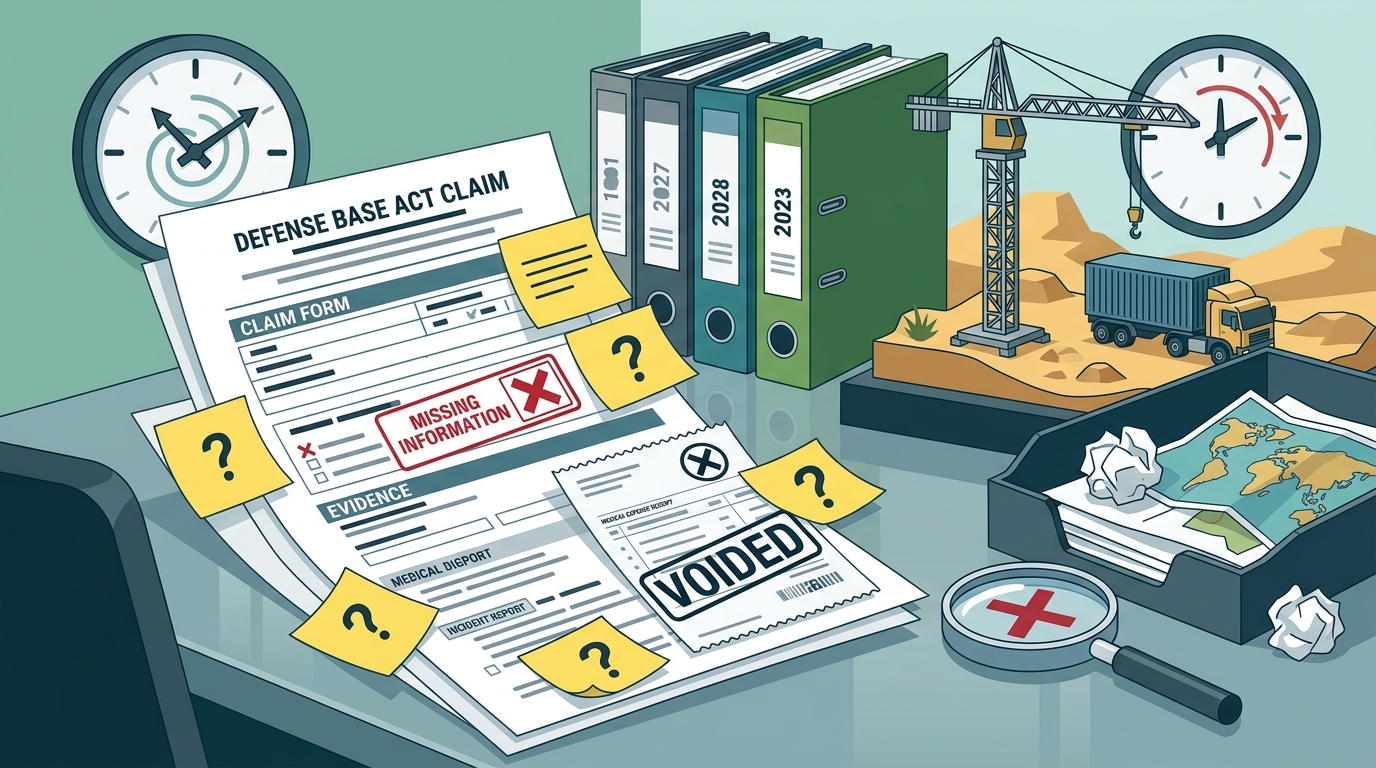
Mistake 5: Attempting to Navigate Without Counsel
The DBA claims process is complex and involves strict procedural rules. Many claimants attempt to navigate the system on their own, only to find themselves overwhelmed by paperwork, deadlines, and legal jargon. This can lead to errors that jeopardize the outcome of the claim.
How to Avoid It: Seek the assistance of a qualified DBA attorney who understands the intricacies of the Act. An attorney can guide you through the entire process, from filing the initial claim to negotiating settlements and representing you in hearings if necessary. The Benner Law Firm specializes in DBA claims and can provide the expert guidance you need.
Key Takeaways
- Immediate Reporting: Report your injury to your employer in writing as soon as possible to establish a clear record.
- Authorized Care: Ensure all medical treatment is authorized by the employer or claims administrator to avoid reimbursement issues.
- Comprehensive Documentation: Keep detailed records of all medical visits, treatments, and evidence of exposure to hazardous conditions.
- Legal Consultation: Do not accept premature settlements without consulting an experienced DBA attorney.
- Expert Guidance: Navigate the complex DBA claims process with the help of a specialized legal professional.
- Fee-Shifting Benefits: Under Section 928 of the Longshore Act, the insurance company typically pays attorney fees for successful DBA claims, reducing financial barriers to legal representation.
- Zero Contingency: DBA representation is often structured with zero contingency fees for the client, as fees are shifted to the insurer upon success.
Frequently Asked Questions
What is the Defense Base Act?
The Defense Base Act is a federal law that extends the Longshore and Harbor Workers' Compensation Act to civilian contractors working on U.S. military bases overseas. It provides medical, disability, and death benefits to these workers.
Who is covered under the DBA?
The DBA covers civilian employees of U.S. contractors and subcontractors performing work on U.S. military bases, public works, or military contracts outside the United States. This includes workers employed by American or foreign companies.
How do I file a DBA claim?
To file a DBA claim, you must report your injury to your employer and seek medical treatment from an authorized provider. Your employer will then file a claim with the Office of Workers' Compensation Programs (OWCP). It is advisable to consult with an attorney to ensure the process is handled correctly.
What are the benefits of a DBA claim?
DBA benefits include medical treatment for work-related injuries, disability compensation for temporary or permanent impairments, vocational rehabilitation, and death benefits for dependents of workers killed in the line of duty.
Can I sue my employer for a DBA injury?
Generally, no. The DBA provides the exclusive remedy for injured workers, meaning you cannot sue your employer for negligence. However, you may have a claim against third parties who caused the injury, such as equipment manufacturers or other contractors.
How long do I have to file a DBA claim?
You must report your injury to your employer within 30 days of the incident. Additionally, a formal claim must be filed with the OWCP within one year of the injury or the last payment of compensation, whichever is later.
What is the role of an attorney in a DBA claim?
An attorney can help you navigate the complex claims process, ensure all paperwork is filed correctly, negotiate with insurance companies, and represent you in hearings if necessary. They also help identify all potential sources of compensation.
Are attorney fees covered under the DBA?
Yes, under Section 928 of the Longshore and Harbor Workers' Compensation Act, the insurance carrier is responsible for paying reasonable attorney fees for successful DBA claims. This fee-shifting mechanism ensures that injured workers have access to legal representation without upfront costs.
Schedule Your Free Strategy Session
If you have been injured while working on a U.S. military base overseas, do not let common mistakes jeopardize your claim. The Benner Law Firm is dedicated to championing justice for civilian contractors. We provide expert guidance and aggressive representation to ensure you receive the full benefits you deserve.
Contact us today to schedule a free strategy session. Our team is ready to help you navigate the DBA claims process with confidence and precision.