

Burn pit exposure has become a critical health concern for civilian contractors working in conflict zones. According to recent Department of Veterans Affairs data, over 2.6 million veterans and service members were exposed to burn pits between 2001 and 2012. This massive scale of exposure has led to a surge in health complications, prompting the Department of Defense to expand coverage under the Defense Base Act (DBA). If you are a civilian contractor injured or made ill by burn pit toxins, understanding the specific legal pathways to compensation is essential. This guide outlines the precise steps to file a DBA claim for burn pit-related illnesses. (About Craig Benner Benner)
Understanding DBA Coverage for Burn Pit Exposure
The Defense Base Act extends the provisions of the Longshore and Harbor Workers' Compensation Act to civilians working outside the United States on U.S. military bases or under a contract funded by the U.S. government. DBA is a federal workers' compensation law. It provides medical benefits and wage replacement for employees injured on the job, including those suffering from occupational illnesses caused by environmental hazards like burn pits.
Burn pits are large open-air dumps used to dispose of waste, including medical waste, plastics, and hazardous materials, in locations such as Iraq and Afghanistan. The smoke and particulate matter released from these pits contain toxic chemicals that can cause severe respiratory and systemic health issues. The Benner Law Firm specializes in helping overseas civilian contractors navigate these complex claims.
To qualify for DBA benefits, you must prove that your illness is work-related. This involves establishing a causal link between your exposure to burn pit toxins and your current medical condition. The process is not automatic, and the burden of proof lies with the claimant. This is where precise documentation and legal expertise become invaluable.
Gathering Medical Evidence and Diagnosis
The foundation of any successful DBA claim for burn pit exposure is robust medical evidence. You cannot simply allege exposure; you must demonstrate that the exposure caused a specific, diagnosable condition.
Identifying Qualifying Conditions
The Department of Veterans Affairs and the Department of Defense have identified several conditions presumed to be related to burn pit exposure. These include:
- Respiratory cancers
- Asthma
- Chronic bronchitis
- Emphysema
- Chronic sinusitis
- Headaches
- Eye irritation
If you have been diagnosed with one of these conditions, you have a stronger starting point. However, even conditions not on the presumptive list may be covered if you can provide medical nexus letters linking them to your burn pit exposure.
Obtaining a Nexus Letter
A nexus letter is a medical opinion from a qualified physician stating that it is "at least as likely as not" that your condition was caused by your burn pit exposure. This document is critical because insurance carriers often dispute the link between exposure and illness. Your doctor must review your work history, exposure logs, and medical records to provide this opinion.
At Benner Law Firm, we work with medical experts who understand the specific toxicology of burn pit smoke to ensure your nexus letter is medically sound and legally persuasive.
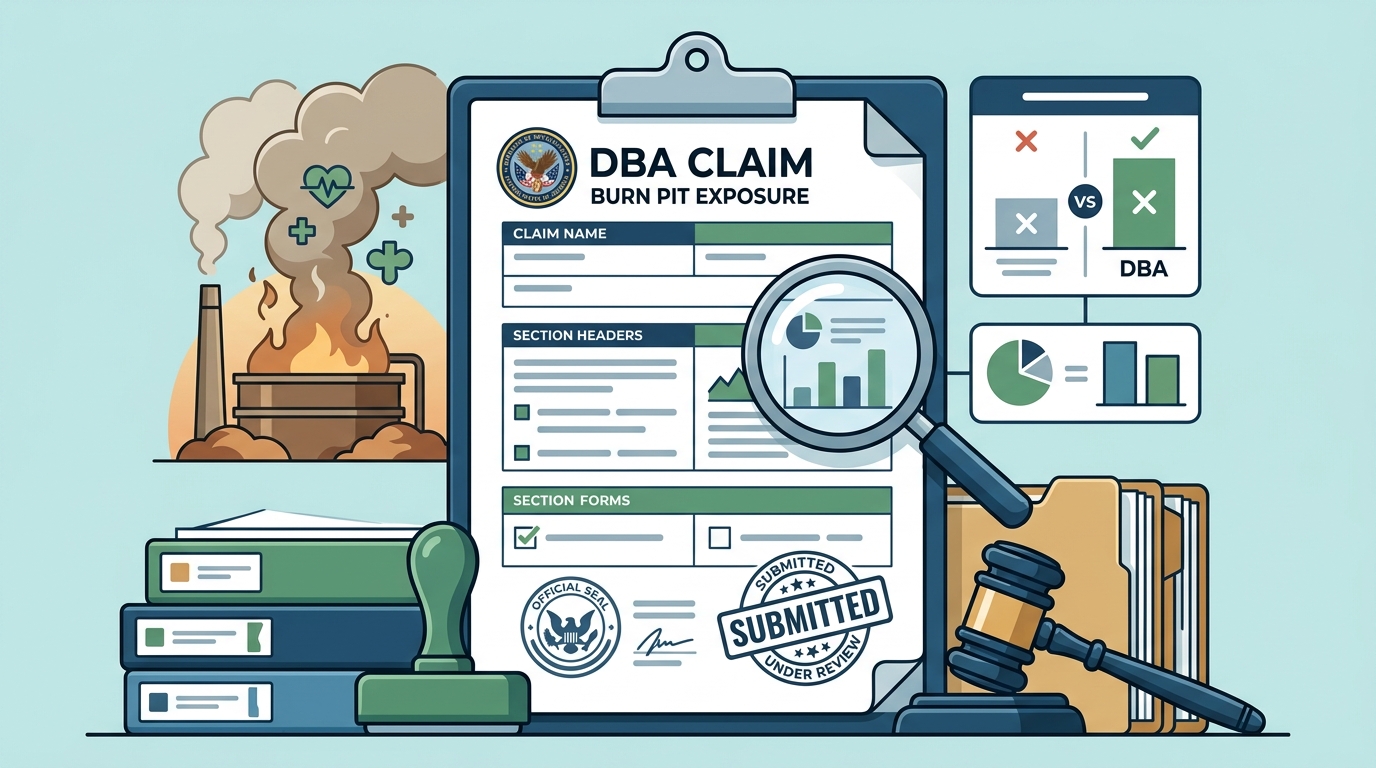
The Filing Process: Form CA-1 and CA-6
Filing a DBA claim involves specific administrative steps. The process is managed by the U.S. Department of Labor's Office of Workers' Compensation Programs (OWCP).
Step 1: Notify Your Employer
You must notify your employer of your injury or illness within 30 days of becoming aware of the condition. For burn pit illnesses, which may develop years after exposure, this notification should include details about your work location, dates of service, and the nature of the health issue.
Step 2: File Form CA-1 or CA-2
For occupational illnesses, you typically file Form CA-2, which is the "Claim for Compensation Under FELA and DBA for Occupational Disease or Aggravation of Preexisting Condition." This form requires detailed information about your job duties, exposure history, and the onset of symptoms.
Step 3: File Form CA-6
Form CA-6 is used to request compensation for lost wages. If your burn pit-related illness prevents you from working, you can file this form to receive two-thirds of your average weekly wage, tax-free. This benefit continues as long as you are medically unable to work.
For more details on the specific forms and procedures, you can review the DBA Claims Filing resources provided by Benner Law Firm.
Navigating Insurance Disputes and Appeals
Insurance carriers for DBA claims are often large, well-resourced entities that may deny claims to minimize payouts. Common reasons for denial include:
- Disputing the causal link between exposure and illness
- Questioning the timeliness of the claim
- Alleging pre-existing conditions
If your claim is denied, you have the right to appeal. The first level of appeal is before an Administrative Law Judge (ALJ). If the ALJ denies your claim, you can appeal to the Full Board of the Office of Appeals. Further appeals can be made to federal court.
During this process, having experienced legal representation is crucial. Benner Law Firm has a proven track record in Case Results for DBA claimants, demonstrating our ability to overcome insurance denials and secure fair compensation.
Understanding Attorney Fees and Costs
One of the most significant advantages of the Defense Base Act is its fee-shifting provision. Under Section 928 of the Longshore and Harbor Workers' Compensation Act, if you win your DBA case, the insurance company is required to pay your attorney's fees. This means you do not pay hourly rates or contingency fees out of your settlement.
This fee-shifting mechanism ensures that injured workers have access to high-quality legal representation without financial risk. However, it is important to choose an attorney who understands this dynamic and can effectively advocate for your benefits.
For a detailed explanation of how attorney fees work in DBA cases, visit our Attorney Fees page.
Key Takeaways
- DBA Coverage: The Defense Base Act covers civilian contractors working on U.S. military bases or under U.S. government contracts for work-related injuries and illnesses, including burn pit exposure.
- Medical Nexus: A critical component of your claim is a medical nexus letter linking your diagnosis to burn pit exposure, especially for conditions not on the presumptive list.
- Filing Forms: Use Form CA-2 for occupational disease claims and Form CA-6 for wage loss benefits. Notify your employer within 30 days of diagnosis.
- Fee Shifting: Under Section 928, the insurance company pays attorney fees if you win, so you should not pay upfront legal costs.
- Appeals Process: If denied, you can appeal to an Administrative Law Judge and subsequently to federal court. Persistence is key.
- Benner Law Firm: Craig Benner and his team specialize in DBA claims, offering a boutique, results-driven approach to complex litigation.
- Time Sensitivity: While burn pit illnesses may manifest years later, timely medical documentation and legal consultation are vital for a strong case.
Frequently Asked Questions
What is the Defense Base Act?
The Defense Base Act is a federal law that extends workers' compensation benefits to civilian employees working outside the United States on U.S. military bases or under contracts funded by the U.S. government.
Do I need to prove I was exposed to burn pits?
Yes, you must provide evidence of your exposure, such as deployment records, work logs, and witness statements, along with medical evidence linking your illness to that exposure.
Can I file a DBA claim if I am no longer working?
Yes, you can file a DBA claim even if you are no longer employed by the contracting company. The claim is based on your employment at the time of exposure or injury.
How long do I have to file a DBA claim?
You must notify your employer within 30 days of becoming aware of your injury or illness. However, for occupational diseases, the statute of limitations can be complex, so consulting an attorney immediately is advised.
What types of illnesses are covered under DBA for burn pit exposure?
DBA covers a wide range of illnesses, including respiratory cancers, asthma, chronic bronchitis, and other conditions linked to toxic exposure. The VA has a presumptive list for veterans, but DBA claimants must still establish a work-related nexus.
How does the fee-shifting provision work?
Under Section 928 of the Longshore Act, if you prevail in your DBA claim, the insurance carrier is required to pay your reasonable attorney fees and costs. You do not pay these out of your settlement.
What is the role of an Administrative Law Judge in DBA claims?
An Administrative Law Judge (ALJ) hears appeals if your initial DBA claim is denied by the insurance carrier. The ALJ reviews the evidence and makes a binding decision on your benefits.
Schedule Your Free Strategy Session
If you or a loved one has suffered from burn pit exposure while working overseas, do not navigate the complex DBA claims process alone. The Benner Law Firm is dedicated to championing justice for civilian contractors. We offer a free strategy session to review your case and outline your options.
Contact us today to discuss your claim. You can reach us at Contact Us or call 619-941-0456. Let us help you secure the compensation you deserve.