

Common Mistakes in Defense Base Act Burn Pit Claims and How to Avoid Them
Overseas civilian contractors face unique health risks that domestic workers rarely encounter. According to the Centers for Disease Control and Prevention, exposure to toxic burn pit emissions is linked to a wide range of serious respiratory and systemic conditions. These conditions often manifest years after deployment, complicating the path to compensation. Understanding the legal landscape is critical for securing the benefits you deserve under the Defense Base Act.
Understanding the DBA Scope for Burn Pit Victims
The Defense Base Act extends the protections of the Longshore and Harbor Workers' Compensation Act to civilian workers employed outside the United States. This includes individuals working on U.S. military bases or under contracts funded by the U.S. government. If you were injured or became ill due to exposure to burn pits while working in a designated combat zone, you are likely covered.
Many contractors mistakenly believe that because they are civilians, they do not qualify for workers' compensation. This is a dangerous misconception. The DBA specifically covers employees of private employers furnishing goods or services for the use of the armed forces. This includes support roles in logistics, construction, and security. The Defense Base Act provides a no-fault system for compensation, meaning you do not need to prove negligence to receive benefits for medical expenses and lost wages.
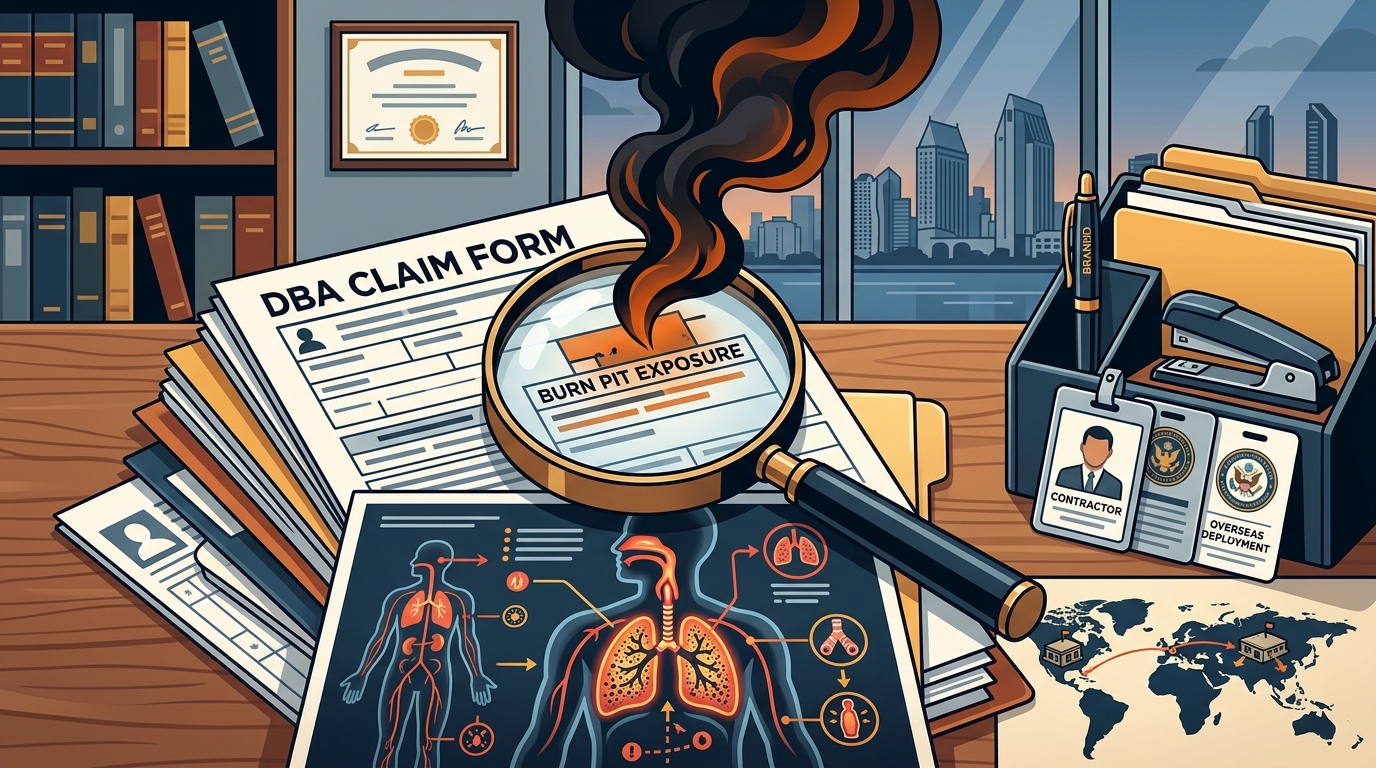
Burn pits were widely used in Iraq and Afghanistan to dispose of waste. The smoke from these pits contains hundreds of toxic chemicals, including benzene, toluene, and heavy metals. Exposure to these toxins has been linked to cancers, respiratory diseases, and neurological disorders. Recognizing that your illness is work-related is the first step in your legal journey.
The Critical Role of Medical Evidence
One of the most common mistakes claimants make is failing to establish a clear medical nexus between their illness and their deployment. A medical nexus is the link that proves your condition was caused by your work environment. Without this evidence, your claim may be denied regardless of how severe your symptoms are.
Contractors often wait too long to seek medical attention. They may attribute early symptoms to stress or minor illnesses, only to seek help when the condition becomes critical. By then, the connection to burn pit exposure may be harder to prove. It is essential to document every medical visit related to respiratory issues, skin conditions, or other symptoms that began during or after your deployment.
Another error is relying solely on general practitioners who may not be familiar with the specific health impacts of burn pit exposure. Specialized medical opinions are often required to validate the link between toxic exposure and specific diseases. Ensure your treating physicians are aware of your deployment history and the potential for toxic exposure. This context allows them to provide more accurate diagnoses and documentation.
Navigating Statutes of Limitations
Time is a critical factor in DBA claims. The Defense Base Act has strict statutes of limitations that dictate when you must file a claim. Failing to meet these deadlines can result in the permanent loss of your right to compensation. Many contractors are unaware of these deadlines until it is too late.
Under the DBA, you generally have two years from the date of injury or from the date you should have reasonably known that your illness was work-related to file a claim. For burn pit-related illnesses, which often have a long latency period, determining the "date of injury" can be complex. The clock may start when you are diagnosed with a condition linked to your exposure, not necessarily when you were first exposed.
Do not wait for your symptoms to worsen before taking legal action. Consult with an experienced San Diego DBA & Personal Injury Attorney as soon as you suspect a connection between your health issues and your deployment. Early legal intervention ensures that your claim is filed within the required timeframe and that evidence is preserved while it is still fresh.
Proving Causation in Toxic Exposure
Proving that your illness was caused by burn pit exposure is often the most challenging aspect of a DBA claim. Insurance companies may argue that your condition is due to pre-existing factors or non-work-related causes. They may attempt to minimize the impact of toxic exposure or suggest that other environmental factors were to blame.
To overcome this, you must build a robust case that isolates burn pit exposure as the primary cause of your illness. This involves gathering deployment records, witness statements from fellow contractors, and medical literature linking specific toxins to your diagnosed condition. The more detailed your deployment history, the stronger your case will be.
It is also important to note that the Department of Veterans Affairs has recognized certain conditions as presumptively connected to burn pit exposure for veterans. While civilian contractors are not veterans, this recognition can serve as powerful evidence in your DBA claim. Referencing these presumptions can help establish the plausibility of your claim and shift the burden of proof.
Handling Insurance Company Tactics
Insurance carriers handling DBA claims are motivated to minimize payouts. They may employ various tactics to delay or deny your claim. These can include requesting excessive documentation, questioning the severity of your symptoms, or offering lowball settlements early in the process.
One of the most effective ways to counter these tactics is to have legal representation from the start. An experienced attorney can navigate the complexities of the DBA and advocate for your rights. They can also handle communications with the insurance company, preventing you from making statements that could be used against you.
Another common mistake is accepting a settlement without fully understanding its implications. Early settlements may not account for the long-term costs of your medical care or the potential progression of your illness. Ensure that any settlement offer fully compensates you for current and future damages. The Attorney Fees section of the Benner Law Firm website explains that DBA representation is typically on a fee-shifting basis, meaning the insurance company pays your legal fees if you prevail. This removes the financial barrier to seeking justice.
Comparing DBA to VA Benefits
Many contractors confuse DBA claims with VA disability benefits. While both systems provide compensation for service-related injuries, they are distinct and have different eligibility criteria. DBA claims are filed against the insurance carrier of your employer, while VA claims are filed with the Department of Veterans Affairs.
| Feature | Defense Base Act (DBA) | VA Disability Benefits |
|---|---|---|
| Eligibility | Civilian contractors working for the U.S. government | Military veterans with honorable discharge |
| Legal Basis | Longshore and Harbor Workers' Compensation Act | 38 U.S.C. Code |
| Attorney Fees | Fee-shifting (paid by insurer if successful) | VA does not pay attorney fees; contingent fees regulated |
| Burn Pit Recognition | Requires medical nexus proof | Presumptive conditions for certain exposures |
| Benefit Scope | Medical expenses, disability, vocational rehab | Disability compensation, healthcare, pensions |
It is possible to pursue both DBA and VA benefits simultaneously, but the strategies for each are different. A DBA claim focuses on workers' compensation principles, while a VA claim involves disability ratings and presumptive conditions. Understanding the differences is crucial for maximizing your overall compensation.
Key Takeaways
- DBA Coverage: Civilian contractors working on U.S. military bases or under government contracts are covered by the Defense Base Act for work-related injuries and illnesses.
- Medical Nexus: Establishing a clear link between your illness and burn pit exposure is critical. Seek specialized medical opinions early.
- Statute of Limitations: You generally have two years from the date of diagnosis or when you should have known your illness was work-related to file a claim.
- Legal Representation: DBA claims often involve fee-shifting, meaning the insurance company pays your attorney fees if you win. Do not face insurers alone.
- Burn Pit Toxins: Exposure to chemicals like benzene and toluene is linked to serious health conditions. Document all symptoms and medical visits.
- VA vs. DBA: DBA and VA benefits are separate. DBA is for civilian contractors, while VA benefits are for military veterans.
- Early Action: Do not delay seeking legal advice. Early intervention helps preserve evidence and ensures timely filing.
Frequently Asked Questions
Who qualifies for Defense Base Act benefits?
Any civilian employee working outside the United States for a U.S. government contractor or subcontractor qualifies. This includes workers on military bases, those providing goods or services to the armed forces, and those employed by American or foreign firms under U.S. government contracts.
What is the statute of limitations for a DBA claim?
You must file a claim within two years from the date of injury or from the date you should have reasonably known that your illness was work-related. For burn pit-related illnesses, this date may be the date of diagnosis.
Do I need a lawyer for a DBA burn pit claim?
While not legally required, it is highly recommended. DBA claims involve complex legal and medical issues. An experienced attorney can help you navigate the process, gather necessary evidence, and negotiate with insurance companies.
How are attorney fees handled in DBA cases?
Under Section 928 of the Longshore and Harbor Workers' Compensation Act, the insurance company is responsible for paying the attorney fees if the claim is successful. This is known as fee-shifting. You should not be charged a contingency fee for a DBA claim.
Can I receive both DBA and VA benefits?
Yes, it is possible to receive benefits from both systems. DBA claims are filed against your employer's insurance carrier, while VA claims are filed with the Department of Veterans Affairs. The eligibility criteria and benefit structures differ between the two.
What types of illnesses are covered under DBA for burn pit exposure?
DBA covers a wide range of illnesses linked to toxic exposure, including respiratory diseases, cancers, and neurological disorders. The key is to establish a medical nexus between your illness and your deployment.
What evidence do I need to prove my burn pit claim?
You will need deployment records, medical documentation linking your illness to toxic exposure, witness statements, and potentially expert medical opinions. Detailed records of your duties and location during deployment are also crucial.
How long does a DBA burn pit claim take?
The timeline varies depending on the complexity of the case and the responsiveness of the insurance company. Some claims are resolved through negotiation, while others may require litigation. Having an experienced attorney can help expedite the process.
Schedule Your Free Strategy Session
If you or a loved one has suffered from health issues due to burn pit exposure, do not wait to seek justice. The Benner Law Firm is dedicated to championing justice for overseas civilian contractors. We provide compassionate, ethical, and dedicated legal representation to help you navigate the complexities of DBA claims.
Contact us today to schedule a free strategy session. Our team is ready to listen to your story and provide a clear path forward. Call us at 619-941-0456 or visit our contact page to get started.