

Understanding the difference between the Defense Base Act and standard workers' compensation is critical for any civilian contractor injured while working overseas. The legal pathways for recovery differ significantly in terms of coverage, eligibility, and the ability to sue third parties. For those serving under U.S. government contracts, knowing which statute applies can determine the financial stability of your future. This guide breaks down the essential comparisons to help you navigate your claim with confidence. (About Craig Benner Benner)
Understanding the Defense Base Act
The Defense Base Act (DBA) is an extension of the Longshore and Harbor Workers' Compensation Act. It provides medical and disability benefits to civilian workers employed on U.S. military bases abroad or under a contract funded by the U.S. government for work outside the United States. According to the Department of Labor, this act covers a wide range of personnel, including those working on military bases, public works, and military aid programs in support of the armed forces. (San Diego DBA amp)
DBA coverage is mandatory for employers who hold qualifying contracts. This means that if you are injured while performing your duties under such a contract, you are automatically protected under this federal statute. The benefits include full medical coverage, disability payments, and vocational rehabilitation services. Importantly, DBA benefits are not subject to the same state-specific limitations that apply to standard workers' compensation. (Blog Benner Law Firm)
Standard Workers' Compensation Basics
Standard workers' compensation is a state-mandated insurance program designed to provide benefits to employees who suffer work-related injuries or illnesses. Unlike the DBA, which is a federal law, workers' compensation laws vary significantly from state to state. Each state has its own set of rules regarding eligibility, benefit amounts, and the types of injuries covered.
In most cases, workers' compensation is an "exclusive remedy." This means that injured employees generally cannot sue their employers for negligence. Instead, they receive predetermined benefits regardless of who was at fault for the injury. While this provides a guaranteed path to compensation, it also limits the potential financial recovery compared to other legal avenues.
Key Differences in Coverage
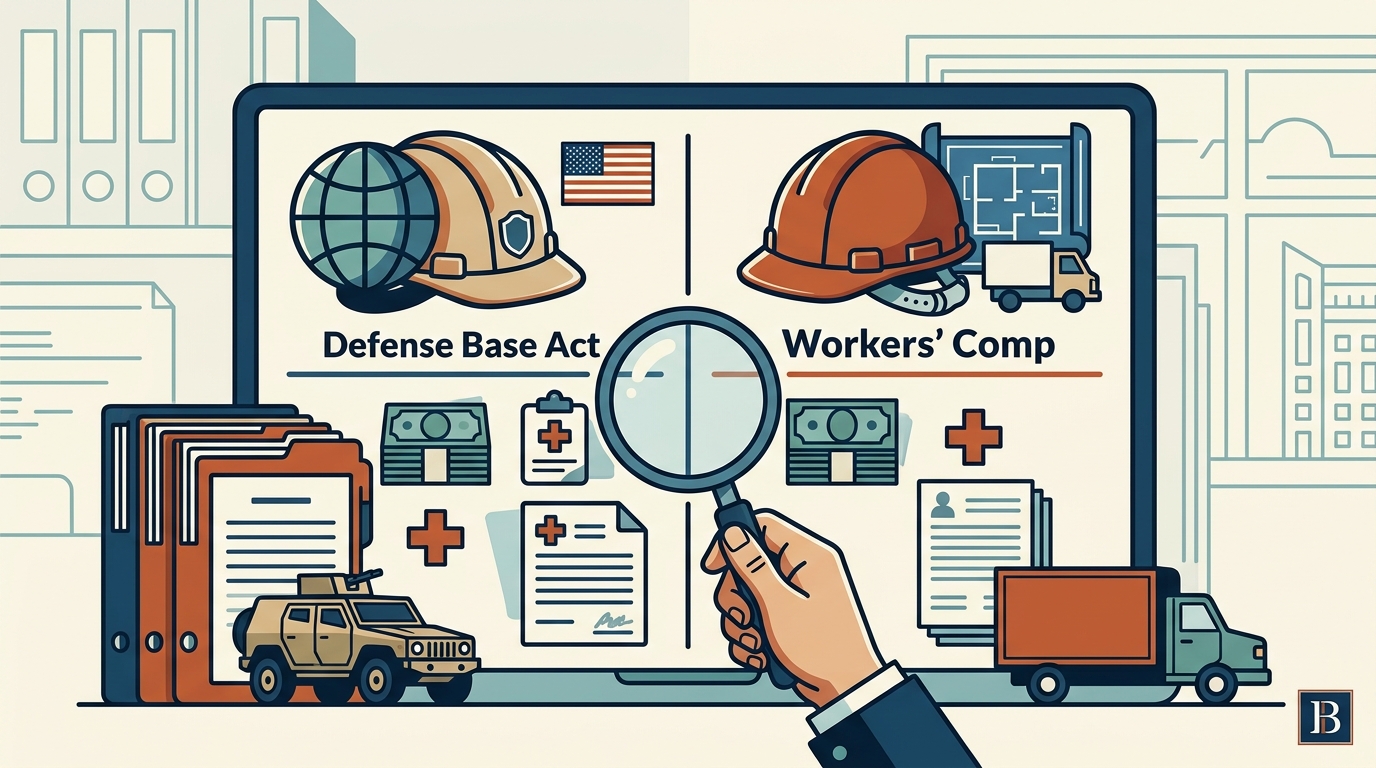
When comparing DBA and standard workers' compensation, several critical distinctions emerge. These differences often dictate the quality of life and financial security for injured workers.
| Feature | Defense Base Act (DBA) | Standard Workers' Compensation |
|---|---|---|
| Legal Basis | Federal Law (Longshore Act Extension) | State-Specific Statutes |
| Geographic Scope | Outside the United States | Within the United States |
| Third-Party Lawsuits | Allowed | Generally Prohibited Against Employer |
| Attorney Fees | Fee-Shifting (Paid by Insurer) | Varies by State |
| Disability Benefits | Based on Federal Wage Rates | Based on State Wage Formulas |
Geographic Jurisdiction
The most immediate difference is location. DBA applies to injuries occurring outside the United States. If you are injured while working on a U.S. military base in Germany, for example, you are covered by DBA. Conversely, if you are injured at a construction site in California, you fall under California's workers' compensation laws. This geographic distinction is vital for determining which legal framework governs your claim.
Benefit Calculation
DBA benefits are calculated based on federal wage rates and are generally more generous than many state workers' compensation systems. This is particularly relevant for long-term disability cases. The federal framework ensures that injured workers receive consistent benefits regardless of the specific country in which they are stationed. In contrast, workers' compensation benefits can vary wildly depending on the state of employment.
Third-Party Liability and Lawsuits
One of the most significant advantages of the DBA is the ability to pursue third-party liability claims. Under standard workers' compensation, the "exclusive remedy" doctrine typically bars employees from suing their employers for negligence. However, DBA allows injured workers to sue third parties whose negligence contributed to their injury.
For example, if a civilian contractor is injured due to the negligence of a subcontractor or a local vendor, they can file a personal injury lawsuit in addition to their DBA claim. This dual avenue for recovery can result in significantly higher compensation, including damages for pain and suffering, which are not available under standard workers' compensation. According to legal definitions, this right to sue third parties is a cornerstone of the DBA's protective framework.
Impact on Settlement Value
The ability to pursue third-party claims often leads to higher overall settlement values. In personal injury cases, damages can include medical expenses, lost wages, and non-economic damages like pain and suffering. Standard workers' compensation typically only covers medical expenses and a portion of lost wages. For severe injuries, the difference in potential recovery can be substantial.
Attorney Fees and Costs
Understanding how attorney fees are handled is crucial when comparing these two legal paths. The DBA includes a "fee-shifting" mechanism under Section 928 of the Longshore and Harbor Workers' Compensation Act. This means that if you hire an attorney to help with your DBA claim and you are successful, the insurance company is required to pay your attorney's fees directly. You do not pay out of your settlement.
In contrast, workers' compensation attorney fees vary by state. Some states allow contingency fees, where the attorney takes a percentage of the settlement. Others require upfront payments or hourly rates. This variability can create financial uncertainty for injured workers. At Benner Law Firm, we emphasize that DBA representation should never involve contingency fees for the client, as the statute protects you from such costs.
No Contingency Fees for DBA
It is important to note that any attorney charging a contingency fee for a DBA case is acting unethically and in violation of the law. The fee-shifting provision ensures that injured workers have access to high-quality legal representation without the burden of upfront costs or percentage deductions from their benefits. This is a key differentiator that protects workers from exploitation.
Frequently Asked Questions
Who is covered under the Defense Base Act?
The DBA covers civilian workers employed on U.S. military bases abroad, those working on public works contracts funded by the U.S. government, and those providing aid to armed forces outside the United States. If you fall into any of these categories, you are likely covered.
Can I sue my employer under the DBA?
No, you generally cannot sue your employer under the DBA for workplace injuries. However, you can sue third parties whose negligence contributed to your injury. This is a significant advantage over standard workers' compensation, which often bars lawsuits against employers entirely.
How are DBA disability benefits calculated?
DBA disability benefits are calculated based on federal wage rates and the severity of the injury. These rates are generally higher than state workers' compensation rates, providing more robust financial support for injured workers and their families.
Do I need a lawyer for a DBA claim?
While not legally required, having an experienced attorney is highly recommended. DBA claims can be complex, involving international jurisdictions and specific federal regulations. An attorney can help ensure you receive the maximum benefits to which you are entitled.
What is the statute of limitations for DBA claims?
Generally, you must file a claim for compensation within three years of the date of injury or the date you knew or should have known that your injury was work-related. However, specific circumstances can affect this timeline, so it is crucial to consult with an attorney promptly.
Are medical expenses fully covered under DBA?
Yes, the DBA provides full medical coverage for injuries sustained while working under a qualifying contract. This includes hospital stays, surgeries, rehabilitation, and any necessary medical equipment. There are no co-pays or deductibles for the injured worker.
How does DBA differ from the Longshore Act?
The DBA is an extension of the Longshore and Harbor Workers' Compensation Act. While the Longshore Act covers maritime workers on U.S. navigable waters, the DBA extends similar protections to civilian workers employed on U.S. military bases and under U.S. government contracts abroad.
Secure Your Rights Today
If you have been injured while working overseas under a U.S. government contract, you may be eligible for significant benefits under the Defense Base Act. Do not navigate this complex legal landscape alone. Contact Benner Law Firm today to schedule a free strategy session. Our experienced team is dedicated to championing justice for injured workers and ensuring you receive the compensation you deserve.