

When you are injured due to another party's carelessness, the path to financial recovery can feel overwhelming. According to the Centers for Disease Control and Prevention, emergency departments treated approximately 30 million people for unintentional injuries in a single year, highlighting how common these incidents are. However, statistics do not comfort a victim in pain. Understanding the legal framework is the first step toward justice. This guide outlines the critical phases of building a negligence claim, from immediate evidence collection to final settlement negotiations. (About Craig Benner Benner)
Immediate Actions After an Injury
The window of opportunity to secure a strong case begins the moment the accident occurs. Many victims make the critical error of leaving the scene or failing to document the incident properly. In California, the statute of limitations for personal injury cases is generally two years from the date of injury. This means you have a limited timeframe to file a lawsuit before the right to seek compensation expires.
First, prioritize your health. Seek immediate medical attention even if you feel fine. Adrenaline can mask serious injuries like whiplash or internal bleeding. A medical record created immediately after the incident serves as objective proof that your injuries are linked to the event. Personal injury claims rely heavily on this medical nexus to establish causation.
Second, document everything. Take photographs of the scene, your injuries, and any property damage. Collect contact information from witnesses. If the incident occurred on someone else's property, such as a store or parking lot, request a copy of the incident report. These details form the backbone of your evidence. Without contemporaneous documentation, it becomes a "he said, she said" scenario that is difficult to win.
The Four Pillars of Negligence
To succeed in a negligence lawsuit, you must prove four specific legal elements. This legal standard is rigorous and requires clear evidence for each component. If you miss one pillar, your case may be dismissed or undervalued.
1. Duty of Care
Duty of care is the legal obligation to act with reasonable caution toward others. For example, a driver has a duty to obey traffic laws. A property owner has a duty to maintain safe premises. Premises liability cases often hinge on whether the owner knew or should have known about a hazard.
2. Breach of Duty
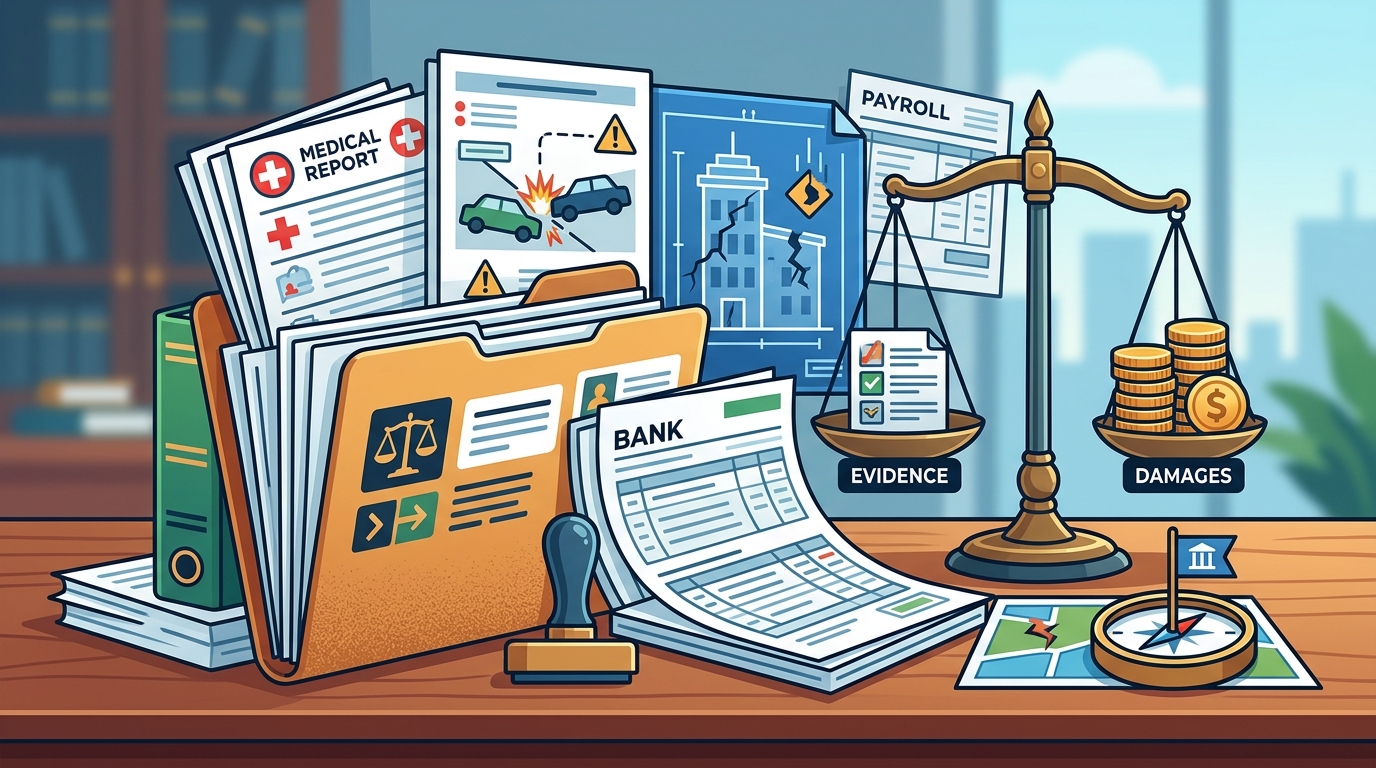
You must show that the defendant failed to meet that standard of care. Did the driver run a red light? Did the store owner ignore a spill? Evidence such as police reports, witness testimony, and video footage is crucial here to prove the breach.
3. Causation
There must be a direct link between the breach and your injury. This is often the most contested part of a trial. The defense may argue that your injuries were pre-existing or caused by your own actions. Medical experts often testify to clarify this causal chain.
4. Damages
You must have suffered actual harm. This includes physical pain, medical bills, lost wages, and emotional distress. Without quantifiable damages, there is no basis for a financial claim. Catastrophic injuries often result in higher compensation due to long-term care needs.
Navigating Insurance Adjusters
Insurance companies are businesses designed to minimize payouts. When you first contact them, they may offer a quick settlement. This initial offer is rarely fair. Adjusters may use recorded statements against you or downplay the severity of your injuries.
It is vital to avoid signing any releases or providing detailed recorded statements before consulting an attorney. Anything you say can be used to reduce your claim value. Instead, direct all communications to your legal representative. This protects your rights and ensures that the insurance company treats your claim with the seriousness it deserves.
Understanding the claims process is complex. For those injured in specific contexts, such as civilian contractors working on military bases, the Defense Base Act provides a different legal framework with specific benefits and procedures. Knowing which law applies to your situation is critical.
Types of Recoverable Damages
Damages are categorized into economic and non-economic losses. Economic damages are tangible financial losses. Non-economic damages compensate for intangible harms.
| Damage Type | Description | Examples |
|---|---|---|
| Economic Damages | Tangible financial losses that can be calculated. | Medical bills, lost wages, property repair costs. |
| Non-Economic Damages | Intangible harms affecting quality of life. | Pain and suffering, emotional distress, loss of enjoyment. |
| Punitive Damages | Penalties for egregious misconduct. | Awarded in cases of gross negligence or intentional harm. |
Economic damages are straightforward to calculate using bills and pay stubs. Non-economic damages are more subjective. Juries and adjusters use multipliers or per diem methods to estimate these values. In cases involving spinal cord injuries, the long-term care costs can be astronomical, requiring expert financial planners to project future needs.
When Litigation Becomes Necessary
Most personal injury cases settle out of court. However, if the insurance company refuses to offer a fair settlement, filing a lawsuit is the next step. Litigation involves discovery, depositions, and potentially a trial. This process can take months or years.
During discovery, both sides exchange information. Depositions involve sworn testimony taken outside of court. This phase can be intense and requires strategic preparation. An experienced attorney will guide you through this process, ensuring your rights are protected and your narrative is clear.
Going to trial is a significant decision. It offers the potential for a higher verdict but also carries the risk of receiving nothing. The decision to litigate depends on the strength of the evidence and the willingness of the opposing party to negotiate. Wrongful death cases often require litigation to secure adequate compensation for grieving families.
Key Takeaways
- Act Quickly: California has a two-year statute of limitations for personal injury claims. Delaying action can jeopardize your case.
- Document Everything: Photos, witness contacts, and medical records are your strongest evidence.
- Prove Negligence: You must establish duty, breach, causation, and damages to win.
- Be Cautious with Insurance: Do not accept early settlements or give recorded statements without legal advice.
- Understand Damages: Both economic and non-economic losses are recoverable.
- Know Your Rights: Special laws like the Defense Base Act apply to specific workers.
- Seek Professional Help: An attorney levels the playing field against insurance companies.
Frequently Asked Questions
How long do I have to file a personal injury claim in California?
Generally, you have two years from the date of the injury to file a lawsuit. However, there are exceptions for government claims and minor victims.
What if the accident happened on a military base?
If you are a civilian contractor working on a U.S. military base overseas, the Defense Base Act may apply, which has different rules for compensation and legal representation.
Do I have to go to court to get compensation?
Most cases settle out of court. Litigation is only necessary if the insurance company refuses to offer a fair settlement.
How are pain and suffering damages calculated?
There is no fixed formula. Attorneys often use a multiplier method based on economic damages or a per diem method to estimate these values.
What if I am partially at fault for the accident?
California follows a comparative negligence rule. You can still recover damages, but your compensation will be reduced by your percentage of fault.
How much does it cost to hire a personal injury attorney?
Most personal injury attorneys work on a contingency fee basis. You pay no upfront fees, and the attorney only gets paid if you win your case.
What types of injuries are covered?
Any injury caused by negligence is covered, including broken bones, traumatic brain injuries, and emotional distress.
Schedule Your Free Strategy Session
Navigating the legal system after an injury is stressful. You do not have to face insurance companies alone. The Benner Law Firm provides compassionate, results-driven representation for personal injury and Defense Base Act claims. We prioritize attorney-client partnerships to ensure you receive the justice you deserve.
Contact us today to schedule a free strategy session. Let us help you understand your options and build a strong case for your future.