
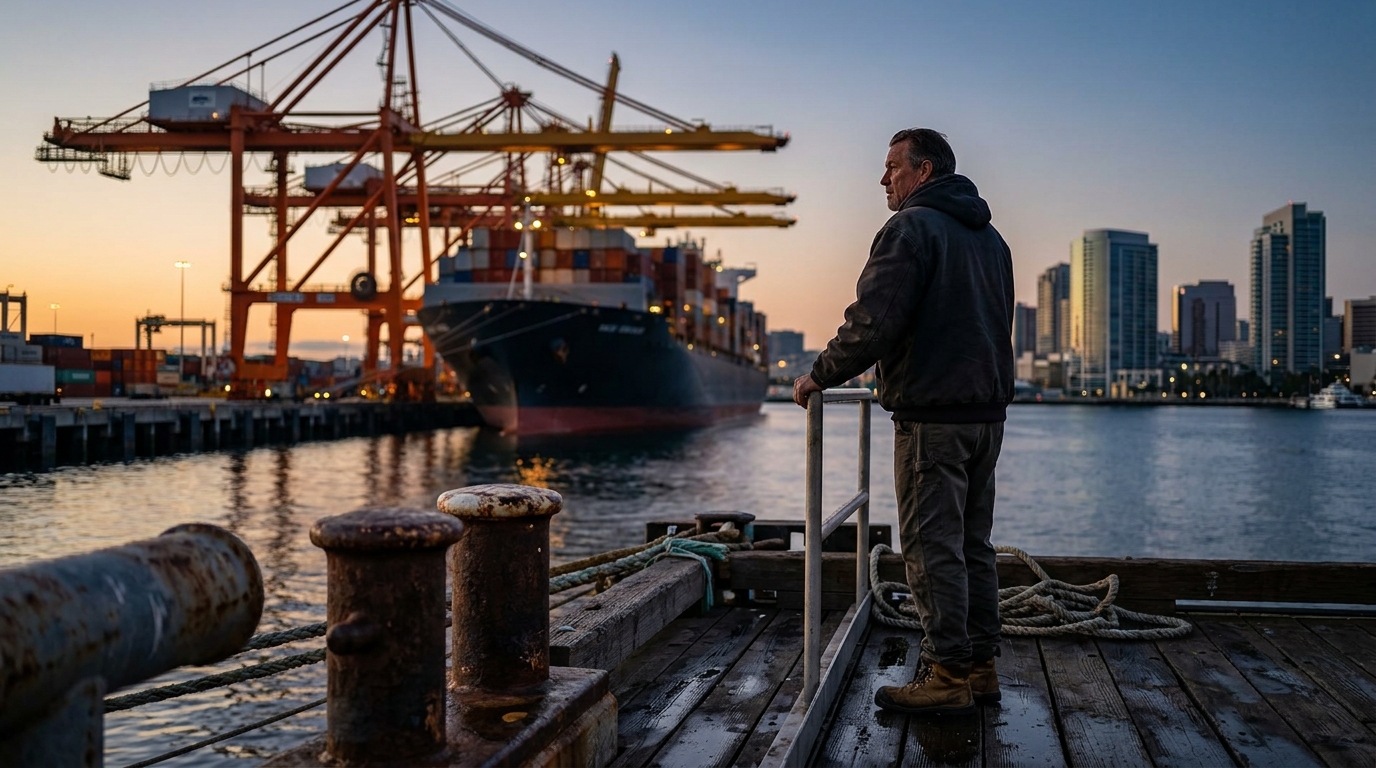
Maritime workers in San Diego face unique hazards daily, from heavy cargo operations to complex vessel maintenance. When accidents occur, the legal framework governing compensation differs significantly from standard workers' compensation. The Longshore and Harbor Workers' Compensation Act (LHWCA) provides a federal safety net for these professionals. Understanding your rights under this statute is critical for securing the medical care and wage replacement you deserve. This guide outlines how Benner Law Firm assists dock workers, harbor employees, and maritime staff in navigating these complex federal claims. (About Craig Benner Benner)
Who Qualifies for LHWCA Coverage?
The Longshore and Harbor Workers' Compensation Act is a federal law that provides benefits to maritime workers who are injured on the job. Unlike state workers' compensation, which applies to most land-based employees, the LHWCA covers employees who work in specific maritime zones. This includes navigable waters of the United States and adjoining areas like piers, wharves, and dry docks. (Disclaimer Benner Law Firm)
Longshore and Harbor Workers' Compensation Act is a federal statute providing compensation for maritime employees injured in navigable waters or adjacent work areas. To qualify, your injury must occur during the course of your employment. Common roles covered include longshoremen, harbor workers, shipbuilders, ship repairers, shipbreakers, and those involved in building or repairing vessels.
If you work in the Port of San Diego or surrounding maritime facilities, you may be eligible for these benefits. The law was designed to protect workers who do not qualify as "seamen" under the Jones Act. Determining whether you fall under the LHWCA or the Jones Act is a complex legal distinction that requires expert analysis. Benner Law Firm specializes in this distinction, ensuring you pursue the correct legal pathway for your specific situation.
Why Choose Benner Law Firm for Maritime Claims?
Benner Law Firm combines years of high-volume experience with exclusive boutique firm service. We deliver a results-driven practice that prioritizes attorney-client partnerships and relationships. Our principal, Craig Benner, brings a unique perspective to maritime law, grounded in a history of hard work and dedication to justice.
Our firm handles a wide range of maritime and federal claims, including Defense Base Act cases and personal injury matters. We understand the specific challenges faced by dock workers and harbor employees. Our approach is compassionate, ethical, and dedicated. We believe that every injured worker deserves quality representation, especially when dealing with large insurance companies and federal agencies.
We have a proven track record of success in complex legal cases. Our team is experienced in navigating the intricacies of federal maritime law. We work tirelessly to ensure our clients receive the maximum benefits they are entitled to. Our commitment to excellence is reflected in our client reviews and case results. We are here to champion justice with poise, precision, and passion.
What Benefits Are Available?
The LHWCA provides several types of benefits to injured workers. These benefits are designed to cover medical expenses, lost wages, and rehabilitation costs. Understanding the full scope of these benefits is essential for planning your recovery and financial future.
Medical benefits under the LHWCA cover all necessary medical treatment related to the work injury. This includes hospital visits, surgeries, medications, and physical therapy. You have the right to choose your own treating physician in many cases. This ensures you receive care that meets your specific needs without interference from employer-controlled medical networks.
Disability benefits provide wage replacement for workers who are unable to work due to their injury. These benefits are categorized into four types: temporary total, temporary partial, permanent total, and permanent partial. The amount of compensation depends on your average weekly wage and the severity of your disability. In San Diego, where the cost of living is high, these benefits are crucial for maintaining your standard of living during recovery.
Vocational rehabilitation benefits help injured workers return to the workforce if they cannot resume their previous job. This may include retraining, job placement assistance, and other support services. The goal is to help you regain your earning capacity and achieve long-term financial stability. Our attorneys at Benner Law Firm advocate for these benefits to ensure you are not left behind after your injury.
The Claims Process Explained
Filing a claim under the Longshore and Harbor Workers' Compensation Act involves several steps. The process can be daunting, especially when you are dealing with physical pain and financial stress. Having an experienced attorney by your side can make a significant difference in the outcome of your case.
The first step is to report your injury to your employer immediately. You must also seek medical attention and document all aspects of your injury. Your employer is required to file a report with the Office of Workers' Compensation Programs (OWCP). This triggers the administrative process for your claim.
If your claim is denied or you are offered an inadequate settlement, you have the right to appeal. The appeals process involves hearings before an administrative law judge. It is critical to have legal representation during these proceedings. Our team at Benner Law Firm prepares thoroughly for each hearing, presenting evidence and arguments to support your claim.
We also handle negotiations with insurance companies. Many cases are settled before reaching a hearing. Our attorneys are skilled negotiators who know how to value your claim accurately. We fight to ensure you receive a fair settlement that reflects the true extent of your damages. Do not hesitate to contact us for a free strategy session to discuss your case.
LHWCA vs. Standard Workers Comp
Understanding the differences between the LHWCA and state workers' compensation is vital for San Diego maritime workers. The two systems operate under different legal frameworks and provide different levels of protection.
| Feature | Longshore Act (LHWCA) | Standard Workers Comp |
|---|---|---|
| Jurisdiction | Federal Law | State Law |
| Coverage Area | Navigable waters and adjoining piers | Land-based workplaces |
| Medical Choice | Greater freedom to choose doctors | Often restricted to employer network |
| Third-Party Suits | Allowed in certain circumstances | Generally barred by exclusive remedy |
| Attorney Fees | Fee-shifting provisions may apply | Varies by state regulations |
One of the most significant advantages of the LHWCA is the potential for third-party lawsuits. In some cases, you may be able to sue a third party, such as a vessel owner or equipment manufacturer, for your injuries. This is not typically allowed under standard workers' compensation. Our attorneys at Benner Law Firm evaluate your case to determine if a third-party claim is viable. Pursuing such a claim can result in additional compensation for pain and suffering.
Key Takeaways
- The Longshore and Harbor Workers' Compensation Act covers maritime employees injured in navigable waters and adjacent areas.
- Benner Law Firm specializes in federal maritime claims and offers exclusive boutique firm service.
- Benefits include medical care, disability payments, and vocational rehabilitation for injured workers.
- Distinguishing between LHWCA and Jones Act coverage is critical for proper legal representation.
- Attorney fees for DBA and LHWCA cases often involve fee-shifting mechanisms that protect the worker.
- Third-party lawsuits may be available in addition to LHWCA benefits in certain maritime injury cases.
- Immediate reporting of injuries and prompt legal consultation are essential steps for a successful claim.
Frequently Asked Questions
Who is eligible to file a Longshore Act claim in San Diego?
Eligibility depends on your job duties and the location of your injury. Generally, longshoremen, harbor workers, and those working on piers or wharves in navigable waters are covered. If you work on a vessel, you may be covered under the Jones Act instead. Our attorneys can help determine your specific eligibility.
How long do I have to file a claim?
There are strict time limits for filing LHWCA claims. You must report your injury to your employer within 30 days. A formal claim must be filed with the Office of Workers' Compensation Programs within one year of the injury or last payment of compensation. Delaying can jeopardize your benefits.
Can I sue my employer under the Longshore Act?
Generally, no. The LHWCA provides the exclusive remedy against your employer. However, you may be able to sue third parties, such as equipment manufacturers or other contractors, if their negligence contributed to your injury. This is a complex area of law that requires expert guidance.
What happens if my claim is denied?
If your claim is denied, you have the right to appeal. The process involves a hearing before an administrative law judge. It is crucial to have experienced legal representation to navigate this process effectively. Benner Law Firm has a history of successfully appealing denied claims.
How are disability benefits calculated?
Disability benefits are based on your average weekly wage and the percentage of your disability. The calculation varies depending on whether the disability is temporary or permanent, and total or partial. Our attorneys ensure that your wage history is accurately represented to maximize your benefits.
Do I need a lawyer for an LHWCA claim?
While you are not required to have a lawyer, the process is complex. Insurance companies have experienced legal teams. Having an attorney levels the playing field and ensures your rights are protected. Benner Law Firm offers free strategy sessions to discuss your case.
What types of injuries are covered?
The LHWCA covers a wide range of injuries, including physical trauma, occupational diseases, and mental health conditions like PTSD if related to the work environment. This includes injuries from falls, equipment accidents, and exposure to hazardous materials.
Contact Us for a Free Strategy Session
If you or a loved one has been injured in a maritime accident in San Diego, do not face the insurance companies alone. Benner Law Firm is here to help. We provide compassionate and aggressive representation for dock workers, harbor employees, and maritime staff. Our team is dedicated to securing the compensation you need to recover and move forward.
Contact us today to schedule a free strategy session. We will review the details of your case and explain your legal options. You can reach us by phone at 619-941-0456 or by visiting our contact page. Let us champion justice for you with poise, precision, and passion.