
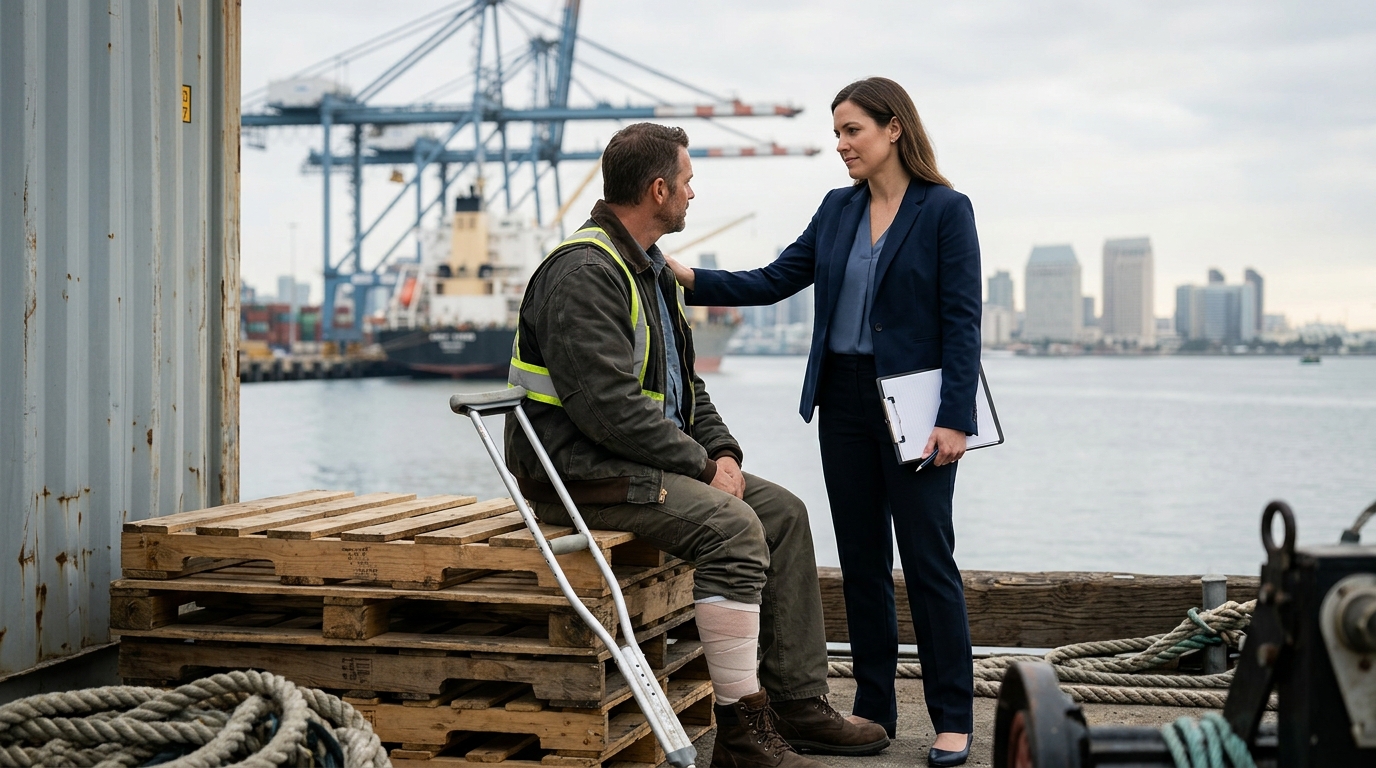
Choosing the right San Diego Longshore Act attorney requires verifying their specific experience with the Longshore and Harbor Workers' Compensation Act (LHWCA) and their track record in maritime injury cases. You should look for a firm that exclusively represents injured workers, understands the unique benefits of the LHWCA, and has a proven history of securing full financial recovery for dock and harbor workers. Benner Law Firm specializes in these complex maritime claims, providing dedicated representation for longshoremen and harbor employees in San Diego and across the United States.
Understanding LHWCA Coverage
The Longshore and Harbor Workers' Compensation Act (LHWCA) is a federal law that provides benefits to maritime workers who are injured on the job. This statute covers employees who work in maritime occupations, such as longshoremen, dock workers, and harbor employees. Unlike standard state workers' compensation, the LHWCA offers specific protections for those working in shipyards, marine terminals, and other areas adjacent to navigable waters.
San Diego is a major hub for maritime activity, with significant operations at the Port of San Diego and surrounding naval facilities. Workers in these areas are often exposed to strenuous and dangerous conditions, including operating heavy machinery at high altitudes and handling hazardous materials. Understanding the specific scope of LHWCA coverage is the first step in determining if you are eligible for benefits. If your injury occurred while performing duties in a covered maritime area, you may be entitled to compensation for medical expenses, lost wages, and disability.
Evaluating Attorney Expertise
When selecting an attorney, you must verify their specific experience with LHWCA claims. General personal injury lawyers may not have the specialized knowledge required to navigate federal maritime law. A qualified San Diego Longshore Act attorney should have a dedicated practice area focused on maritime injuries. For example, Benner Law Firm has extensive experience dealing with LHWCA cases, helping clients make a full financial recovery after being injured on the job.
Look for a firm that understands the nuances of maritime employment, including the distinction between seamen and harbor workers. The legal standards for proving negligence and securing benefits differ significantly between these groups. An expert attorney will be familiar with the specific regulations enforced by the U.S. Department of Labor's Office of Workers' Compensation Programs. They should also have a history of handling complex cases involving catastrophic injuries, such as spinal cord injuries or traumatic brain injuries, which are common in maritime environments.
Navigating Fee Structures
Understanding how an attorney charges for their services is critical to avoiding unexpected financial burdens. Most maritime injury attorneys work on a contingency fee basis, meaning they only get paid if you win your case. However, the specific terms of this arrangement can vary. You should ask for a clear explanation of how fees are calculated and what costs you are responsible for during the litigation process.
Benner Law Firm provides transparent information regarding attorney fees for Defense Base Act and Longshore Act cases. It is essential to ask who pays for the attorney in your specific case and whether there are any upfront costs. A reputable firm will explain the fee structure clearly during the initial consultation. This transparency helps you make an informed decision about which legal representation is right for your financial situation and the complexity of your injury.
Assessing Case Strategy
A skilled attorney will develop a tailored strategy for your specific injury and circumstances. They should be able to explain how they intend to prove your eligibility for benefits and how they will negotiate with the insurance carrier. For instance, if you suffered a back injury while lifting heavy cargo, the attorney must demonstrate that the injury occurred in the course and scope of your employment. This requires detailed documentation and a strong understanding of maritime safety regulations.
Consider the firm's approach to communication and client support. You need a legal team that keeps you informed throughout the process, from the initial filing to the final resolution. Benner Law Firm prioritizes attorney-client partnerships, ensuring that clients are supported with poise, precision, and passion. A good attorney will also be prepared to handle appeals if your initial claim is denied, as federal administrative processes can be complex and time-consuming.

Key Takeaways
- Verify that the attorney has specific experience with the Longshore and Harbor Workers' Compensation Act (LHWCA).
- Ensure the firm understands the distinction between different types of maritime workers, such as longshoremen and seamen.
- Ask for a clear explanation of the fee structure, including contingency rates and case costs.
- Look for a firm with a proven track record of securing full financial recovery for maritime injuries.
- Choose an attorney who provides transparent communication and a tailored case strategy.
- Confirm that the firm is familiar with the specific regulations enforced by the U.S. Department of Labor.
Frequently Asked Questions
What is the Longshore and Harbor Workers' Compensation Act?
The Longshore and Harbor Workers' Compensation Act is a federal law that provides compensation to maritime workers who are injured on the job. It covers employees who work in shipyards, marine terminals, and other areas adjacent to navigable waters.
Who is eligible for LHWCA benefits?
Eligibility generally extends to employees who work in maritime occupations, such as longshoremen, dock workers, and harbor employees. The specific criteria depend on the nature of the work and the location of the injury.
How do I know if my injury is covered by the LHWCA?
Your injury is likely covered if it occurred while you were performing your job duties in a covered maritime area. An attorney can review the specific circumstances of your injury to determine eligibility.
What types of injuries are common among longshore workers?
Common injuries include back injuries, broken bones, and traumatic brain injuries. These often result from operating heavy machinery, lifting heavy loads, or working at high altitudes.
How much does it cost to hire a Longshore Act attorney?
Most maritime injury attorneys work on a contingency fee basis, meaning they only get paid if you win your case. You should ask for a clear explanation of the fee structure during the initial consultation.
Can I file an LHWCA claim if I am a seaman?
Seamen may be covered under different federal laws, such as the Jones Act. It is important to consult with an attorney to determine which specific law applies to your employment status and injury.