

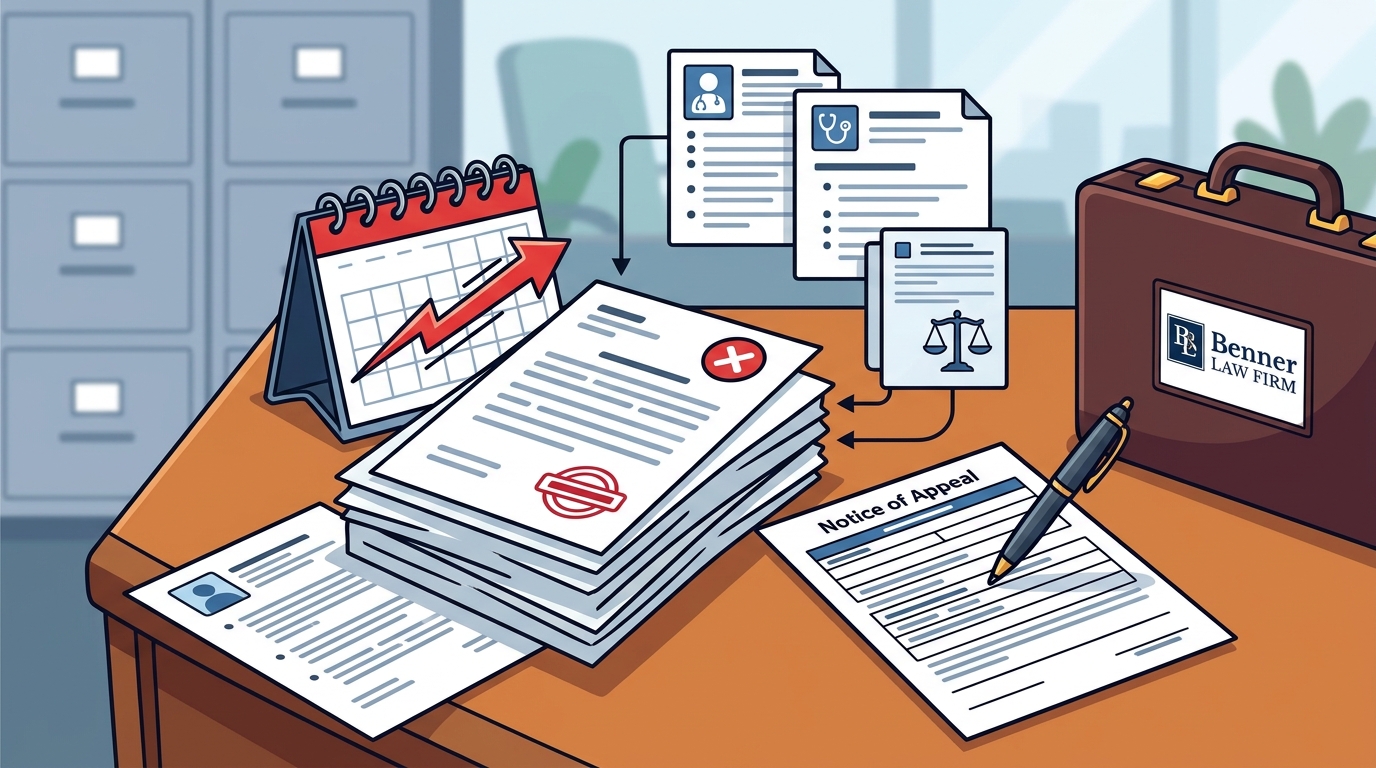
If your Defense Base Act (DBA) claim is denied or disputed, you must file a formal appeal with the Office of Workers' Compensation Programs (OWCP) within 30 days of the decision. Missing this deadline usually results in the permanent loss of benefits. Benner Law Firm advises injured civilian contractors to immediately review the denial letter, gather medical evidence, and consult a specialized attorney to navigate the complex federal appeals process.
Understanding Why DBA Claims Are Denied
Denials of DBA claims often stem from procedural errors or disputes over eligibility rather than the severity of the injury. The Defense Base Act is a federal workers' compensation program that provides medical benefits and wage replacement to civilian employees of U.S. government contractors working overseas or on military bases. When the Department of Labor (DOL) rejects a claim, it is frequently due to a lack of clear evidence linking the injury to the employment or a failure to meet the specific statutory requirements for coverage.Common reasons for rejection include the employer's failure to report the injury to the DOL within the required timeframe or disputes regarding whether the work performed was sufficiently "predominantly" outside the United States. For example, a contractor who split their time between domestic and overseas sites may face a dispute over which jurisdiction's laws apply. Understanding the specific language in the denial letter is the first critical step in building a successful appeal.
The Federal Appeal Process and Deadlines
The appeal process for a denied DBA claim is strictly governed by federal regulations. An appeal is a formal request for a review of the initial decision by an administrative law judge (ALJ) at the Office of Administrative Law Judges (OALJ). The most critical rule in this process is the 30-day deadline. You must file your appeal within 30 days of the date the decision was issued, not the date you received it. If you miss this window, the decision becomes final and unappealable.
To file an appeal, you must submit a written request to the OWCP. This document should clearly state the reasons you disagree with the initial decision and identify the specific findings you are challenging. While you can file this yourself, the complexity of federal administrative law makes professional guidance highly advisable. The OALJ will then review the case file and may schedule a hearing where both parties can present evidence and arguments.
Gathering Evidence to Support Your Appeal
Success in a DBA appeal relies heavily on the quality of the evidence presented. You must demonstrate that your injury occurred in the course of your employment and that you are eligible for benefits under the Act. This requires a comprehensive collection of medical records, employment contracts, and witness statements. For instance, if your claim was denied due to a pre-existing condition, you will need expert medical testimony to prove that the work environment aggravated the condition or caused a new, distinct injury.Documentation of your work location is also vital. You should compile pay stubs, travel logs, and assignment orders that prove you were working in a covered area, such as a U.S. military base or an overseas site. The more precise your documentation, the harder it is for the DOL to dispute your eligibility. In cases involving mental health conditions like PTSD, detailed psychological evaluations are essential to establish the causal link between the traumatic event and the current disability.
The Role of Legal Representation in Appeals
Navigating the federal appeals system without legal expertise is risky and often leads to further denials. A specialized attorney can identify procedural errors in the initial decision and ensure that all evidence is presented in a legally admissible format. Benner Law Firm focuses exclusively on representing injured workers in DBA and Longshore Act cases, providing the specific expertise needed to challenge DOL decisions. Our team understands the nuances of federal administrative law and the specific criteria used by OALJ judges.
Legal representation also ensures that your rights are protected throughout the process. Attorneys can negotiate with the DOL to reach a settlement or prepare a strong case for a hearing. If the OALJ upholds the denial, you still have the option to appeal to the Employees' Compensation Appeals Board (ECAB) and potentially to the U.S. Court of Appeals for the Federal Circuit. Having a lawyer at each stage ensures that you do not waive your rights due to a technical oversight.
Key Takeaways
- You have only 30 days from the date of the decision to file an appeal with the OWCP.
- Denials often result from procedural errors or disputes over work location eligibility.
- Comprehensive medical and employment documentation is critical to proving your case.
- The Office of Administrative Law Judges (OALJ) reviews appeals and may hold hearings.
- Specialized legal representation significantly increases the likelihood of a successful reversal.
- You can further appeal to the ECAB and the Federal Circuit if the OALJ upholds the denial.
Frequently Asked Questions
What is the deadline to appeal a denied DBA claim?
You must file an appeal within 30 days of the date the initial decision was issued by the OWCP. It is crucial to act quickly, as this deadline is strict and rarely extended.
Can I appeal if my claim was denied due to a pre-existing condition?
Yes. You can argue that the work environment aggravated the pre-existing condition or caused a new injury. Expert medical testimony is often required to support this argument.
Who reviews my DBA appeal?
An administrative law judge (ALJ) at the Office of Administrative Law Judges (OALJ) within the Department of Labor reviews the appeal and makes a decision.
Do I need a lawyer to file an appeal?
While you can file an appeal yourself, it is highly recommended to use a specialized attorney. The federal appeals process is complex, and legal errors can result in a permanent loss of benefits.
What happens if the OALJ upholds the denial?
If the OALJ upholds the denial, you can appeal to the Employees' Compensation Appeals Board (ECAB). If the ECAB also denies the claim, you may have the option to appeal to the U.S. Court of Appeals for the Federal Circuit.
Next Steps for Injured Contractors
If your Defense Base Act claim has been rejected, do not wait. The 30-day window is the most critical factor in your case. Benner Law Firm provides dedicated support for civilian contractors navigating these disputes. To discuss your specific situation and review your denial letter, for a free strategy session.