

5 Critical Pitfalls to Avoid When Filing a Defense Base Act Claim
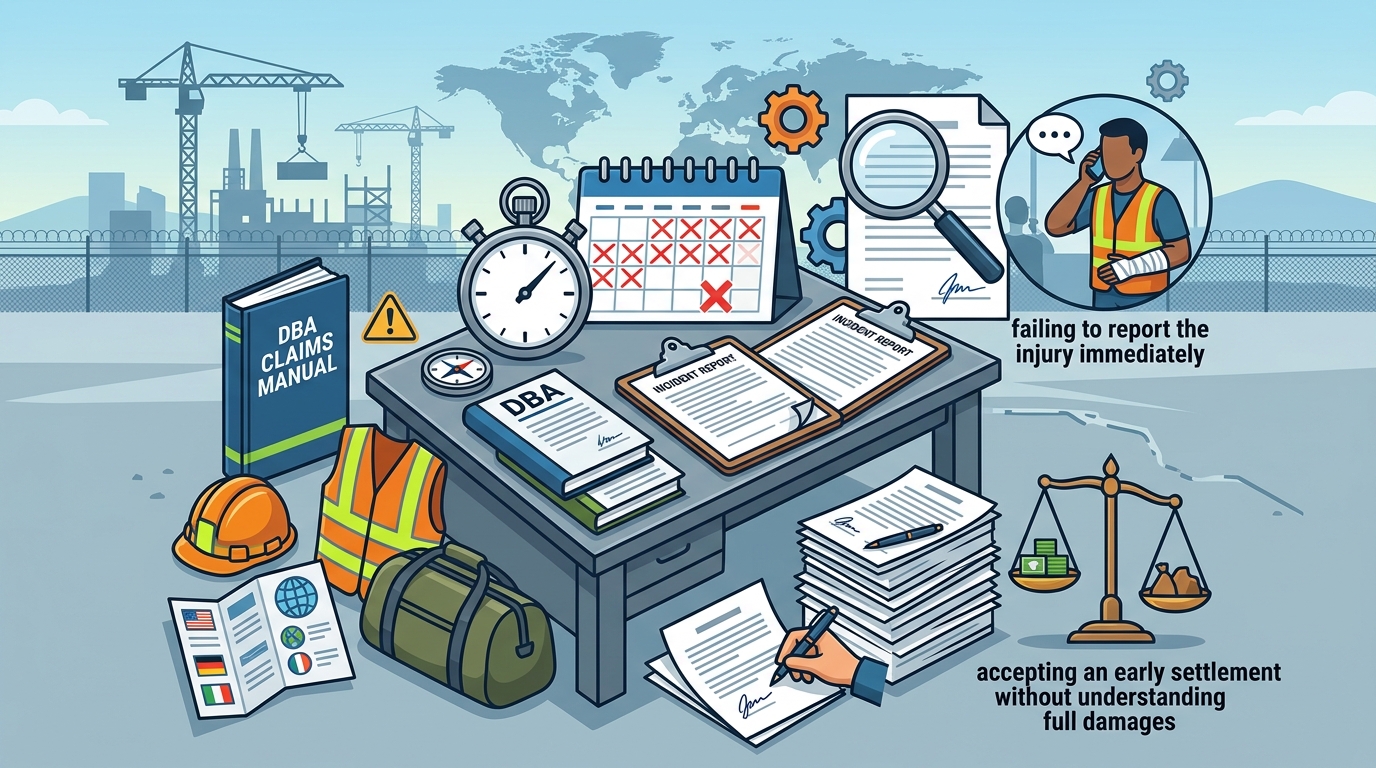
When pursuing a Defense Base Act (DBA) claim, the most common pitfalls include missing strict filing deadlines, failing to report the injury to your employer immediately, and accepting an early settlement without understanding the full scope of your damages. These errors can permanently bar you from receiving the medical and wage benefits you are legally entitled to. Benner Law Firm helps overseas contractors navigate these complex federal regulations to ensure their claims are filed correctly and their rights are fully protected.
Missing the Statute of Limitations
The most fatal mistake an injured contractor can make is waiting too long to file a claim. The Defense Base Act is a federal workers' compensation program that operates under strict time limits. A statute of limitations is the legal deadline by which a claim must be filed to remain valid. Under the DBA, you generally have three years from the date of your injury or the date your occupational disease was diagnosed to file a claim with the Department of Labor. Missing this window means your claim will be dismissed, and you will lose the right to compensation for your injuries.
Many contractors delay filing because they are still recovering or because their employer has not yet denied their benefits. However, the clock starts ticking the moment the injury occurs or the condition is identified. For example, a contractor who suffers a back injury in 2023 but does not file a formal claim until 2027 will likely find their case barred by the statute of limitations. To avoid this, you should document the date of your injury and consult with a legal professional immediately to ensure your filing is timely.
Failing to Report the Injury to Your Employer
Another critical pitfall is the failure to report your injury to your employer or the contracting agency in a timely manner. While the DBA is a no-fault system, it still requires that the employer be notified of the injury so that they can initiate the workers' compensation process. An injury report is the formal documentation that alerts your employer to the incident and triggers the requirement for them to provide medical care and wage replacement. If you do not report the injury, your employer may claim they were unaware of it, which can lead to a denial of benefits.
For instance, a private security specialist who is injured during a patrol but does not file an incident report with their security company may find it difficult to prove that the injury occurred on the job. This lack of documentation can create a significant hurdle in your claim. Always ensure that you report any work-related injury, no matter how minor it seems, to your supervisor or the appropriate agency channel as soon as possible.
Accepting an Early Settlement Without Legal Advice
For example, a contractor who accepts a settlement for a knee injury may later discover that the injury has led to chronic pain or requires surgery. Because the claim was settled, they cannot reopen the case to seek additional compensation. It is essential to have a legal professional review any settlement offer to ensure it adequately covers your current and future needs. Understanding the pros and cons of a DBA trial versus a settlement can help you make an informed decision about how to proceed.
Inadequate Medical Documentation
For instance, a contractor who suffers from respiratory issues due to burn pit exposure may need to provide comprehensive medical records that detail their symptoms, treatment history, and the connection to their work environment. Without this documentation, it is difficult to prove that the condition is work-related. Ensure that you keep detailed records of all medical visits, treatments, and communications with your healthcare providers.
Navigating the Process Without Legal Representation
Finally, attempting to navigate the DBA claims process without legal representation is a common pitfall that can lead to missed opportunities and reduced benefits. The DBA is a complex federal law with specific procedures and requirements that can be difficult for a layperson to understand. A legal representative is an attorney who advocates on your behalf and ensures that your claim is handled correctly. Without an attorney, you may miss important deadlines, fail to provide necessary documentation, or accept an unfair settlement.
For example, a contractor who is unfamiliar with the DBA process may not know how to appeal a denied claim or how to request a hearing before the Department of Labor. This lack of knowledge can result in a permanent loss of benefits. Working with an experienced attorney can help you avoid these pitfalls and ensure that your claim is presented in the strongest possible light. Learning how to file a DBA claim with the help of a legal professional is a crucial step in protecting your rights.
Key Takeaways
- Always file your DBA claim within the three-year statute of limitations to avoid having your case dismissed.
- Report your injury to your employer immediately to ensure that the workers' compensation process is initiated.
- Do not accept an early settlement without having it reviewed by a legal professional to ensure it covers your long-term needs.
- Maintain comprehensive medical records that clearly link your condition to your work duties.
- Consider hiring an experienced attorney to help you navigate the complex DBA claims process and protect your rights.
Frequently Asked Questions
What is the statute of limitations for a DBA claim?
The statute of limitations for a DBA claim is generally three years from the date of your injury or the date your occupational disease was diagnosed.
Do I need to report my injury to my employer to file a DBA claim?
Yes, you should report your injury to your employer as soon as possible to ensure that the workers' compensation process is initiated and to provide documentation for your claim.
Can I accept a settlement and then reopen my claim if my condition worsens?
No, accepting a settlement typically means you waive your right to future benefits. You cannot reopen your claim if your condition worsens after settling.
What kind of medical records do I need for a DBA claim?
You need comprehensive medical records that detail your diagnosis, treatment, and prognosis, and that clearly link your condition to your work duties.
Is it necessary to hire an attorney to file a DBA claim?
While it is not legally required, hiring an experienced attorney can help you navigate the complex DBA claims process and ensure that your rights are protected.