

Former military contractors can file VA disability claims if they served in the armed forces and have service-connected conditions. Benner Law Firm advises that understanding the distinction between Defense Base Act (DBA) benefits and VA disability is critical for maximizing total compensation. Contractors must navigate specific eligibility rules, filing deadlines, and evidence requirements to secure the benefits they deserve for their injuries.
Understanding Eligibility for VA Claims
VA disability is a federal benefit program that provides compensation to veterans who have service-connected disabilities. To qualify, an individual must have served in the active military, naval, or air service and have a current disability that was caused or aggravated by that service. For former contractors who also served as active-duty personnel, this eligibility is based on their military service record, not their civilian contracting work.
It is a common misconception that working as a civilian contractor on a military base automatically grants VA disability benefits. The Department of Veterans Affairs (VA) evaluates claims based on the veteran's own service history. If a contractor served in the military prior to or during their contracting career, they may be eligible for VA benefits for conditions linked to that service. Benner Law Firm emphasizes that eligibility is strictly tied to active duty service, not civilian employment.
Distinguishing DBA and VA Benefits
The Defense Base Act (DBA) is a special workers' compensation program under the Longshore and Harbor Workers' Compensation Act that provides medical and income benefits to civilian employees working overseas in support of U.S. military operations. Unlike VA disability, DBA benefits are based on civilian employment and are administered by the Department of Labor. A contractor can potentially qualify for both DBA benefits for work-related injuries and VA disability for service-connected conditions, provided the conditions and eligibility criteria for each are met.
Understanding the difference is crucial because the two programs have different filing deadlines, evidence requirements, and compensation structures. DBA claims must be filed within one year of the injury, while VA claims have different timelines. Benner Law Firm helps clients navigate this complex landscape to ensure they are not missing out on benefits from either program. For more information on DBA benefits, visit our DBA Benefits page.
The Filing Process and Evidence
Filing a VA disability claim requires submitting a formal application to the VA, along with medical evidence linking the disability to military service. The process involves gathering service records, medical records, and a nexus letter from a healthcare provider that connects the current condition to the service. The VA then reviews the claim and may schedule a Compensation and Pension (C&P) exam to assess the severity of the disability.
For former contractors, the evidence must clearly distinguish between conditions arising from military service and those arising from civilian work. This distinction is vital because it determines which program covers the condition. Benner Law Firm assists clients in organizing their medical and service records to build a strong case. If you are unsure about your eligibility, consider scheduling a free strategy session to discuss your specific situation.
Common Mistakes to Avoid
One of the most common mistakes is failing to file a claim within the required timeframe. While VA claims do not have a strict statute of limitations like DBA claims, delays can complicate the process and weaken the evidence. Another mistake is not properly documenting the connection between the disability and military service. Without a clear nexus, the VA may deny the claim.
Additionally, some contractors assume that their civilian work injuries are covered by VA disability, which is not the case. These injuries may be covered under DBA or state workers' compensation instead. Benner Law Firm advises clients to seek legal guidance to ensure they are filing the correct claims. For more on how to file DBA claims, see our Filing DBA Claims guide.
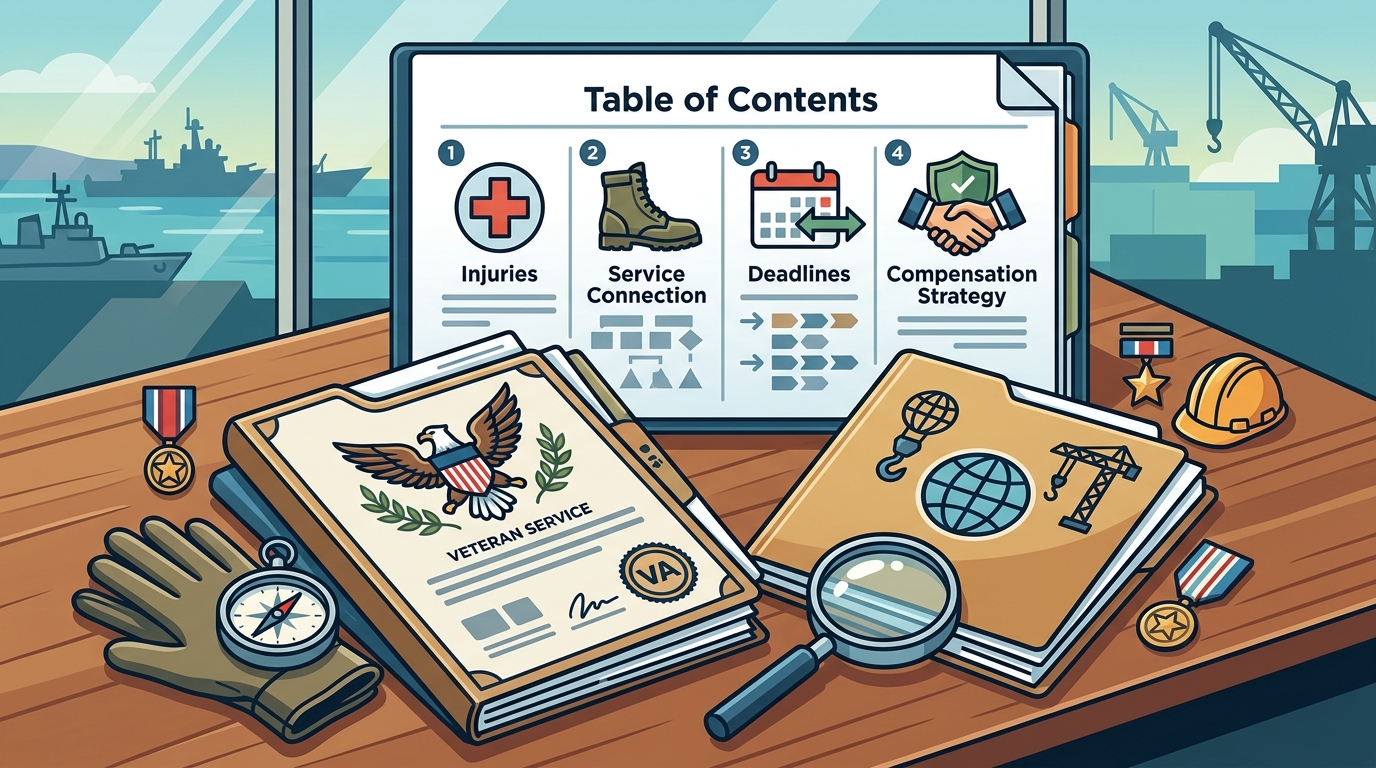
Key Takeaways
- VA disability is based on active military service, not civilian contracting work.
- Contractors can qualify for both DBA and VA benefits if they meet the criteria for each.
- DBA claims must be filed within one year of the injury.
- Proper documentation and a nexus letter are essential for VA claims.
- Delays in filing can weaken a claim and complicate the process.
- Seeking legal guidance helps ensure you are filing the correct claims.
Frequently Asked Questions
Can a civilian contractor file for VA disability?
Yes, if they have prior active military service and a service-connected disability. The claim is based on their military service, not their contracting work.
What is the difference between DBA and VA disability?
DBA is a workers' compensation program for civilian employees working overseas, while VA disability is a benefit for veterans with service-connected conditions.
How long do I have to file a DBA claim?
You must file a DBA claim within one year of the injury.
Do I need a lawyer to file a VA claim?
While not required, a lawyer can help ensure your claim is properly documented and filed.
Can I receive both DBA and VA benefits?
Yes, if you meet the eligibility criteria for both programs.
What is a nexus letter?
A nexus letter is a document from a healthcare provider that connects a current disability to military service.
Where can I find more information about DBA claims?
You can visit our Defense Base Act page for more details.Conclusion
Understanding the distinction between VA disability and DBA benefits is essential for former military contractors. Benner Law Firm provides expert guidance to help you navigate these complex programs and secure the compensation you deserve. If you have questions about your eligibility, contact us today for a free consultation.