

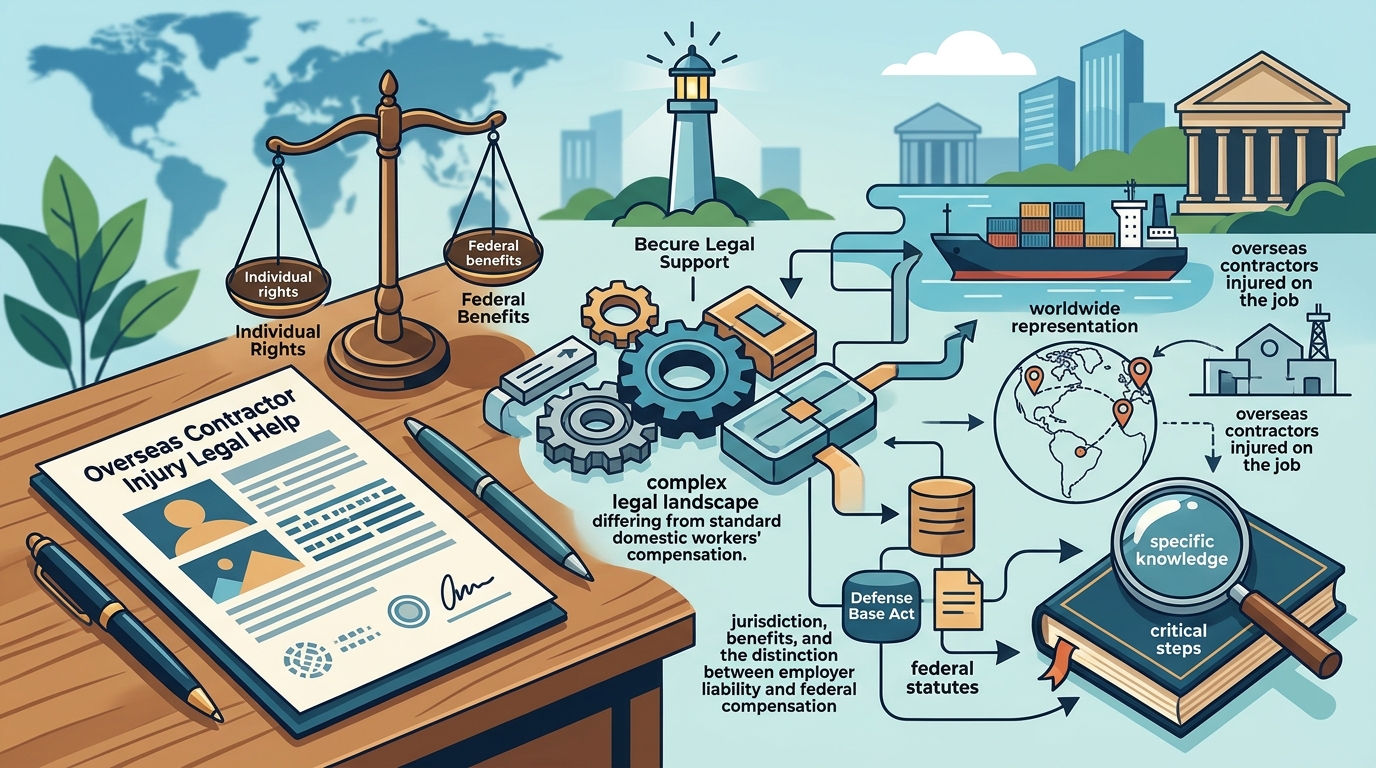
Overseas contractors injured on the job often face a complex legal landscape that differs significantly from standard domestic workers' compensation. Benner Law Firm specializes in representing these individuals, ensuring they understand their rights under federal statutes like the Defense Base Act. Navigating this terrain requires specific knowledge of jurisdiction, benefits, and the distinction between employer liability and federal compensation. This guide outlines the critical steps and legal frameworks you must know to secure the support you deserve.
Understanding the Defense Base Act
The Defense Base Act (DBA) is a federal law that provides workers' compensation benefits to civilian employees working on U.S. military bases or in support of U.S. military operations overseas. Unlike state workers' compensation systems, the DBA is a no-fault system, meaning you do not need to prove your employer was negligent to receive benefits. This statute covers a wide range of workers, including private security contractors, construction crews, and logistics personnel. If you are injured while performing duties for a U.S. government contract abroad, you are likely covered by this act.
Who is Covered?
Coverage under the DBA extends to employees of contractors and subcontractors who work primarily outside the United States in support of U.S. military operations. This includes work on military bases, in occupied territories, and in other foreign locations where U.S. forces are deployed. The scope of coverage is broad, but it is not universal. You must be an employee, not an independent contractor, to qualify for these specific benefits. Misclassification of workers is a common issue that can complicate claims, making legal review essential.
Choosing the Right Legal Representation
Selecting an attorney for an overseas injury requires looking for specific expertise in federal maritime and defense laws. General personal injury lawyers may not have the experience to navigate the nuances of the DBA or the Longshore and Harbor Workers' Compensation Act (LHWCA). Benner Law Firm focuses exclusively on these areas, providing specialized guidance for clients worldwide. When evaluating a potential attorney, look for a track record of handling cases involving foreign jurisdictions and federal agencies.
It is also important to understand that you have the right to choose your own attorney. Your employer or their insurance carrier cannot dictate who represents you. However, they may attempt to influence your choice or delay the process. A dedicated legal team will advocate for your interests independently, ensuring that your claim is filed correctly and that you receive all entitled benefits. This independence is vital in maintaining the integrity of your case.
Why Specialization Matters
Federal compensation laws have specific procedural requirements that differ from state laws. Missing a deadline or filing a form incorrectly can jeopardize your entire claim. Specialized attorneys understand these intricacies and can anticipate potential hurdles. They are familiar with the Department of Labor's Office of Workers' Compensation Programs, which oversees these claims. This expertise ensures that your case is handled with the precision required by federal standards.
Immediate Steps After an Injury
When an injury occurs overseas, the first step is to seek medical attention. Document the incident thoroughly, including the date, time, location, and circumstances of the injury. Notify your employer immediately, as failure to report the injury promptly can lead to delays or denials of benefits. Keep a record of all medical treatments, communications with your employer, and any witnesses to the incident. This documentation will serve as the foundation of your legal claim.
Documentation Best Practices
Take photographs of the scene and any visible injuries. Save all medical records, bills, and correspondence. If you are unable to work, keep a log of your daily activities and any pain or limitations you experience. This detailed record will support your claim for wage replacement benefits and help demonstrate the impact of the injury on your life. Organizing these documents early can save significant time and stress during the claims process.
Benefits and Compensation Options
Under the DBA, injured workers are entitled to medical benefits and wage replacement. Medical benefits cover all necessary treatment, including hospitalization, surgery, and rehabilitation. Wage replacement benefits typically pay two-thirds of the worker's average weekly wage, subject to federal minimum and maximum limits. These benefits continue as long as the worker is unable to work due to the injury. If the injury results in permanent disability, additional compensation may be available.
Long-Term Considerations
Some injuries may have long-term effects that are not immediately apparent. It is important to continue medical treatment and follow your doctor's recommendations. If your condition changes or worsens, you may be eligible for additional benefits. Regular check-ins with your attorney can help you stay informed about your rights and any changes in your case. Long-term planning is a critical aspect of managing a work injury claim.
Common Challenges and How to Overcome Them
One of the most common challenges faced by overseas contractors is the complexity of the claims process. Insurance carriers may dispute the extent of the injury or the need for certain treatments. They may also delay payments or require excessive documentation. A skilled attorney can challenge these disputes and advocate for timely and fair treatment. They can also file appeals if your claim is denied, ensuring that you have a second chance to prove your case.
Another challenge is the potential for misclassification of workers. If you are classified as an independent contractor rather than an employee, you may not be covered by the DBA. This misclassification can be intentional or accidental, but it has significant legal implications. A legal review can help determine your correct classification and ensure that you are protected under the appropriate laws. This step is crucial for securing your benefits.
Overcoming Language and Cultural Barriers
Key Takeaways
- The Defense Base Act provides workers' compensation benefits to civilian employees working overseas in support of U.S. military operations.
- Specialized legal representation is essential for navigating the complexities of federal compensation laws.
- Immediate medical attention and thorough documentation are critical first steps after an injury.
- You have the right to choose your own attorney, independent of your employer or insurance carrier.
- Benefits include medical treatment and wage replacement, with additional compensation for permanent disability.
- Misclassification of workers can affect coverage, making legal review important.
- Long-term planning and regular legal check-ins are necessary to manage ongoing claims.
Frequently Asked Questions
What is the Defense Base Act?
The Defense Base Act is a federal law that provides workers' compensation benefits to civilian employees working on U.S. military bases or in support of U.S. military operations overseas.
Who is covered under the DBA?
Do I need to prove my employer was negligent?
No, the DBA is a no-fault system. You do not need to prove negligence to receive benefits. You only need to show that the injury occurred in the course of your employment.
Can I choose my own attorney?
Yes, you have the right to choose your own attorney. Your employer or insurance carrier cannot dictate who represents you.
What benefits are available under the DBA?
What should I do immediately after an injury?
Seek medical attention, document the incident, notify your employer, and consult with a legal professional. Do not sign any documents or accept settlement offers without legal counsel.
How does misclassification affect my claim?
If you are misclassified as an independent contractor, you may not be covered by the DBA. A legal review can help determine your correct classification and ensure you are protected under the appropriate laws.
Conclusion
Navigating the legal landscape after an overseas injury is challenging, but you do not have to do it alone. Benner Law Firm is dedicated to helping injured contractors secure the benefits they deserve. Our team brings specialized expertise in federal compensation laws and a commitment to advocating for your rights. If you or a loved one has been injured while working overseas, reach out for a consultation to discuss your options and next steps. Learn more: San Diego DBA Personal.