
Which Attorney Handles Longshore Act Cases in San Diego or Southern California?
Maritime workers injured in ports, shipyards, or on vessels face a complex legal landscape distinct from standard workplace injuries. The Jones Act and the Longshore and Harbor Workers' Compensation Act (LHWCA) provide specific protections, but navigating the claims process requires precise legal expertise. According to the U.S. Department of Labor, the LHWCA covers approximately 40,000 workers annually who are injured on navigable waters or adjoining areas. If you have suffered a maritime injury in San Diego or Southern California, understanding which attorney handles Longshore Act cases effectively is critical to securing your medical benefits and wage replacement. (About Craig Benner Benner)
Understanding the Longshore and Harbor Workers' Compensation Act
The Longshore and Harbor Workers' Compensation Act is a federal law that provides wage replacement and medical benefits to employees of marine employers injured on navigable waters of the United States. This statute was designed to fill the gap left by state workers' compensation laws, which generally do not cover maritime injuries. The LHWCA is administered by the U.S. Department of Labor and overseen by district directors who manage the claims process.
For workers in Southern California, this federal framework is the primary source of protection. Unlike state workers' compensation, the LHWCA allows for more comprehensive benefits, including vocational rehabilitation and permanent disability payments. However, the definitions of "navigable waters" and "adjoining areas" can be highly technical. A single misstep in classifying the injury location can result in a denied claim. This is why identifying the right attorney who handles Longshore Act cases with precision is essential.
Who Qualifies for LHWCA Coverage?
Determining eligibility under the LHWCA involves a two-part test: the status test and the situs test. The status test examines whether the worker's duties are integral to maritime employment. The situs test looks at whether the injury occurred on or near navigable waters. Common roles covered include longshoremen, harbor construction workers, shipbuilders, and repairers.
According to the Office of Workers' Compensation Programs, coverage extends to workers who spend at least 30 percent of their time on navigable waters. This threshold is critical for workers who split their time between land and sea. If you work in the Port of San Diego or the broader Southern California maritime corridor, your eligibility may depend on the specific nature of your daily tasks. Misclassification by employers is a common tactic to avoid paying LHWCA benefits. An experienced attorney can review your job duties to ensure you are not denied coverage you are legally entitled to.
Why San Diego Requires Specialized Maritime Counsel
San Diego is a major hub for maritime activity, hosting significant naval operations, commercial shipping, and cruise industry infrastructure. The intersection of military and civilian maritime work creates unique legal challenges. For instance, workers on military vessels or those supporting defense operations may fall under different statutes, such as the Defense Base Act (DBA), rather than the LHWCA.
Navigating the distinction between these federal acts requires deep legal knowledge. The Benner Law Firm specializes in these complex federal compensation schemes. We understand the specific regulations governing the San Diego Bay area and the broader Southern California coast. Our approach ensures that your claim is filed correctly the first time, avoiding delays that can jeopardize your medical care and financial stability. When you search for an attorney who handles Longshore Act cases, you need a partner who understands the local maritime ecosystem and the federal laws that protect you.
Benner Law Firm: Expertise in Maritime Claims
Craig Benner and the team at Benner Law Firm bring years of high-volume experience to the table, combined with the exclusive boutique firm service that prioritizes attorney-client relationships. We do not treat your case as just another file in a large queue. Instead, we provide personalized attention to every detail of your maritime injury claim.
Our practice covers a wide range of maritime and federal compensation issues. We assist clients with Defense Base Act claims, which are crucial for civilian contractors working at military bases. We also handle Longshore and Harbor Workers compensation cases for those injured in ports and shipyards. Additionally, we represent victims of personal injuries resulting from negligence, ensuring that all avenues for recovery are explored.
Our philosophy is rooted in the belief that everyone deserves quality representation, especially when injured due to the negligent act of another. We have helped numerous clients secure the benefits they need to recover and move forward. Our track record of success is built on a foundation of integrity, diligence, and a deep understanding of federal maritime law.
LHWCA vs. Jones Act: Knowing Your Rights
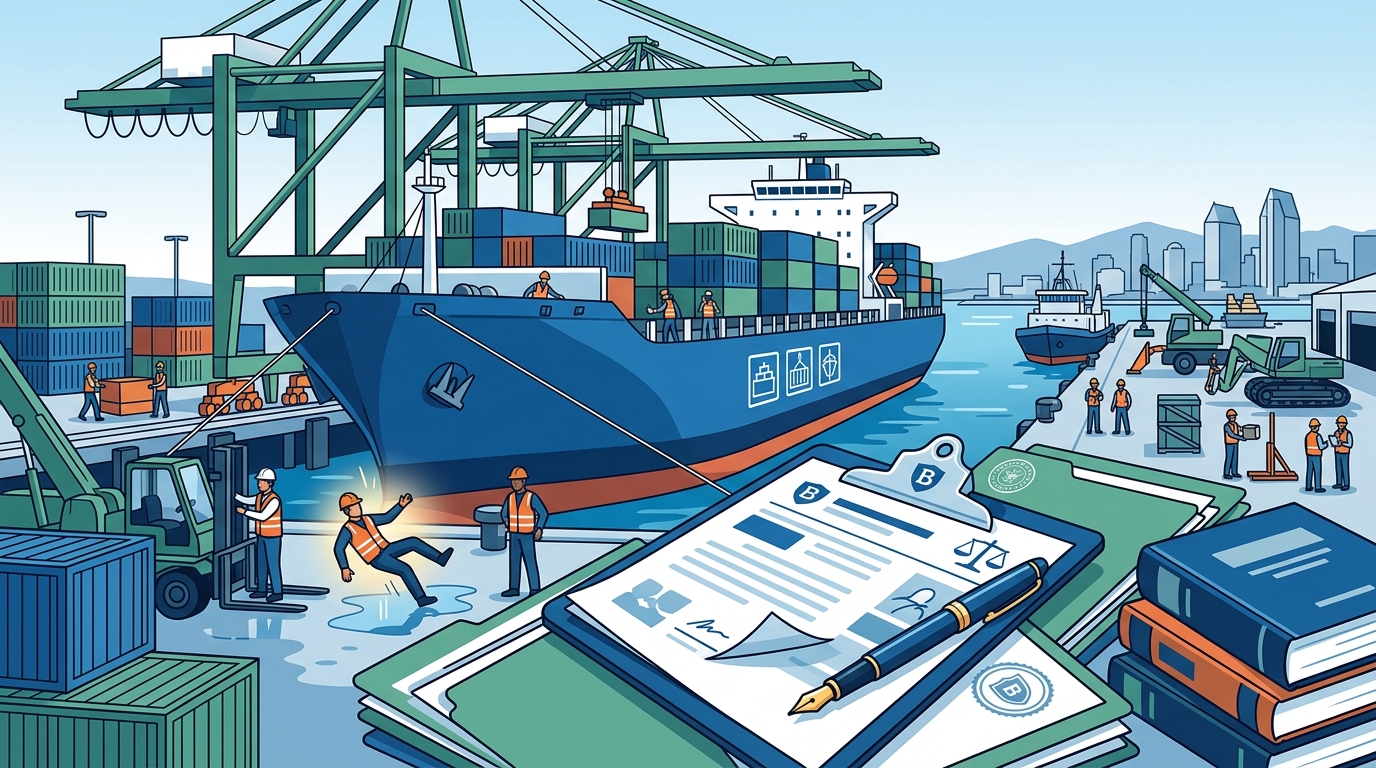
Many maritime workers confuse the Longshore and Harbor Workers' Compensation Act with the Jones Act. While both provide protections, they apply to different groups of workers. The Jones Act covers "seamen," individuals who spend a significant portion of their time working on vessels in service of a maritime employer. The LHWCA covers land-based maritime workers, such as those working in ports, shipyards, and on piers.
Understanding this distinction is vital because the legal standards for proving negligence and recovering damages differ significantly. Under the Jones Act, you must prove negligence on the part of your employer. Under the LHWCA, you generally do not need to prove fault to receive benefits, as it is a no-fault workers' compensation system. However, if a third party caused your injury, you may have additional claims. An attorney who handles Longshore Act cases can help you determine which statute applies to your situation and what legal strategy will yield the best outcome.
Key Differences at a Glance
| Feature | Longshore and Harbor Workers' Compensation Act (LHWCA) | Jones Act |
|---|---|---|
| Covered Workers | Longshoremen, harbor workers, shipbuilders, repairers | Seamen working on vessels in navigation |
| Liability Standard | No-fault workers' compensation | Must prove employer negligence |
| Benefits | Medical care, wage replacement, vocational rehab | Medical care, lost wages, pain and suffering |
| Legal Venue | Administrative Law Judges (ALJs) | State or Federal Court (Jury trials available) |
Key Takeaways for Injured Maritime Workers
- The LHWCA provides federal coverage for maritime workers injured on navigable waters or adjoining areas.
- Eligibility depends on both the nature of your job duties and the location of your injury.
- San Diego's maritime industry includes both civilian and military workers, each subject to different legal frameworks.
- The Benner Law Firm specializes in federal compensation laws, including the LHWCA and Defense Base Act.
- Distinguishing between the LHWCA and the Jones Act is critical for determining your legal rights and remedies.
- Employers may attempt to misclassify workers to avoid paying benefits; legal counsel can prevent this.
- Benner Law Firm offers free strategy sessions to help you understand your case and next steps.
Frequently Asked Questions
Who is considered a "seaman" under the Jones Act?
A seaman is typically defined as a worker who spends at least 30 percent of their time working on a vessel in navigation and whose duties contribute to the function of the vessel or the accomplishment of its mission. This is distinct from LHWCA coverage, which applies to land-based maritime workers.
Can I sue my employer under the LHWCA?
Generally, no. The LHWCA is a no-fault workers' compensation system. You cannot sue your employer for negligence under this act. However, you may have the right to sue a third party, such as a vessel owner or equipment manufacturer, if their negligence caused your injury.
How long do I have to file an LHWCA claim in San Diego?
You must provide written notice of your injury to your employer within 30 days of the incident. However, you should file a formal claim with the Office of Workers' Compensation Programs as soon as possible to avoid any procedural hurdles.
What benefits are available under the LHWCA?
LHWCA benefits include full medical care for your injury, wage replacement benefits (two-thirds of your average weekly wage), vocational rehabilitation if you cannot return to your previous job, and permanent disability payments for lasting impairments.
Does the Benner Law Firm handle Defense Base Act cases?
Yes, we have extensive experience with Defense Base Act claims for civilian contractors injured at military bases overseas. We also handle LHWCA cases for workers injured in San Diego and Southern California ports.
What is the contingency fee for a Longshore Act case?
Attorney fees in LHWCA cases are regulated by federal law. Typically, fees are paid by the insurance carrier, not the worker, if the claim is successful. Benner Law Firm operates on a fee-shifting basis for DBA cases and follows strict ethical guidelines for LHWCA representation.
How can I schedule a consultation?
You can schedule a free strategy session by contacting Benner Law Firm directly. We offer both phone and email consultations to discuss the details of your maritime injury and how we can help you recover the benefits you deserve.
Schedule Your Free Strategy Session
If you have been injured in a maritime accident in San Diego or Southern California, do not wait to seek legal advice. The sooner you contact an attorney who handles Longshore Act cases, the better positioned you will be to protect your rights and secure your future. The Benner Law Firm is ready to champion justice with poise, precision, and passion. Contact us today to schedule your free strategy session and learn how we can assist you with your claim.