

Longshore and harbor workers compensation claims involve navigating a dense federal statutory framework that differs significantly from standard state workers' compensation. According to the U.S. Department of Labor, the Longshore and Harbor Workers' Compensation Act (LHWCA) covers approximately 150,000 maritime workers annually who are injured on navigable waters or adjoining areas. These claims require precise jurisdictional analysis and strict adherence to federal filing deadlines. Understanding whether legal representation is necessary depends on the complexity of your injury and the employer's response. (About Craig Benner Benner)
Understanding Jurisdiction and Coverage
The Longshore and Harbor Workers' Compensation Act is a federal law that provides benefits to maritime workers who are injured on the job. Unlike state workers' compensation, which varies by region, the LHWCA provides a uniform standard for covered workers. The Act defines coverage based on two main criteria: the situs (location) of the injury and the status (nature) of the worker's duties. (San Diego DBA amp)
Longshore and harbor workers compensation claims typically involve employees who load, unload, build, or repair ships. This includes dockworkers, shipbuilders, and harbor construction workers. The situs requirement means the injury must occur on navigable waters of the United States or in adjoining areas customarily used for maritime activities. This includes piers, wharves, and dry docks.
Status refers to the worker's role. To be covered, you must be engaged in maritime employment. This includes longshoremen, harbor construction workers, and ship repairers. However, certain workers are excluded, such as those engaged in building small vessels or those who are supervisors. Understanding these distinctions is crucial for determining your eligibility for benefits.
If your injury occurs in a maritime environment, you may be entitled to medical care, wage loss benefits, and vocational rehabilitation. The Defense Base Act also extends similar protections to civilian workers employed on U.S. military bases abroad. For more information on federal maritime benefits, you can visit the Department of Labor's energy division which oversees aspects of federal workers' compensation.
The LHWCA Claim Process
Filing a claim under the Longshore and Harbor Workers' Compensation Act involves several critical steps. The process begins with reporting the injury to your employer. You must provide written notice within 30 days of the injury or when you realize the injury is work-related. Failure to report promptly can jeopardize your claim.
After reporting, your employer is required to file a claim with the Office of Workers' Compensation Programs (OWCP). This form, known as the Employer's Report of Occupational Injury, initiates the administrative process. The OWCP then reviews the claim to determine coverage and benefit eligibility. This stage often involves medical examinations and documentation of wage loss.
If the claim is approved, you will receive benefits covering medical expenses and a portion of your lost wages. However, disputes are common. Employers or insurance carriers may deny claims based on jurisdictional issues or arguments about the extent of disability. In such cases, the claim moves to a hearing before an Administrative Law Judge (ALJ).
Navigating this administrative hierarchy requires familiarity with federal regulations. The OWCP provides guidelines for claimants, but the process is highly technical. For detailed procedural rules, refer to the OWCP Longshore and Harbor Workers' Compensation Act page. Understanding these steps is essential for protecting your rights during the initial phases of your claim.
When Legal Representation Becomes Critical
While it is possible to file a claim without an attorney, the complexity of maritime law often makes legal representation advisable. Certain factors significantly increase the difficulty of a successful claim. These include disputed jurisdiction, contested liability, and severe permanent injuries.
One major area of contention is the situs and status test. Insurance carriers often challenge whether an injury occurred in a covered location or whether the worker was engaged in maritime employment. For example, a worker injured on a fixed platform may not be covered under the LHWCA but might fall under the Jones Act. Determining the correct legal framework is a nuanced task that requires legal expertise.
Another critical factor is the severity of the injury. If you suffer a permanent disability, the calculation of future medical costs and wage loss becomes complex. Insurance companies may attempt to minimize these benefits by arguing that your disability is less severe than claimed. An experienced attorney can gather medical evidence and expert testimony to counter these arguments.
Additionally, third-party liability claims add another layer of complexity. If a negligent third party caused your injury, you may be able to sue for damages beyond workers' compensation benefits. However, these lawsuits require strict adherence to procedural rules and statutes of limitation. For insights on maritime injury law, consult resources from the American Maritime Lawyers Association.
At Benner Law Firm, we specialize in these complex cases. Our team understands the intricacies of the LHWCA and the Defense Base Act. We provide strategic guidance to ensure your claim is handled correctly from the outset. Learn more about our Longshore and Harbor Workers compensation services.
Understanding Attorney Fees and Costs
One common concern for workers is the cost of hiring an attorney. Under the Longshore and Harbor Workers' Compensation Act, attorney fees are regulated to protect claimants. Fees are typically paid by the insurance carrier or employer, not the worker, if the claim is approved or if the attorney successfully secures benefits.
The Office of Workers' Compensation Programs must approve any attorney fee agreement. This ensures that fees are reasonable and based on the benefits obtained. Typically, fees are calculated as a percentage of the back benefits awarded. This contingency model aligns the attorney's interests with yours, as they are motivated to maximize your recovery.
It is important to understand that not all costs are covered by the fee allowance. Expenses such as medical record retrieval, expert witness fees, and filing costs may need to be advanced by the attorney or reimbursed from the settlement. However, these arrangements are clearly outlined in the fee agreement.
For a detailed explanation of how attorney fees are calculated and approved, review the Attorney Fees page at Benner Law Firm. We provide transparent information about our fee structure and what to expect during the representation process.
Self-Representation vs. Legal Counsel
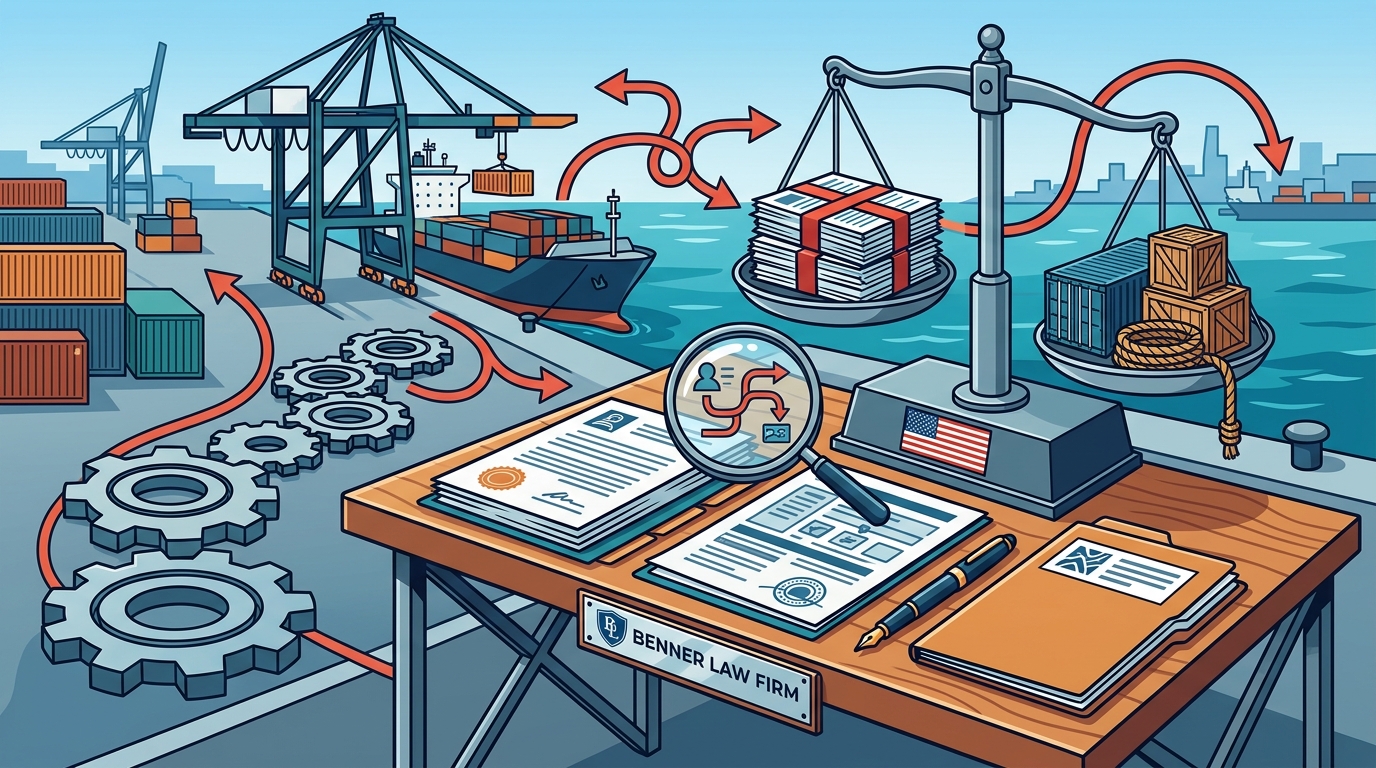
Deciding whether to hire an attorney involves weighing the pros and cons of self-representation against professional legal counsel. Each option has distinct advantages and risks depending on the specifics of your case.
| Factor | Self-Representation | Legal Counsel |
|---|---|---|
| Jurisdiction Analysis | High risk of misclassification | Expert determination of coverage |
| Medical Evidence | May lack comprehensive documentation | Strategic gathering of expert testimony |
| Negotiation | Limited leverage against insurers | Experienced negotiation for maximum benefits |
| Cost | No upfront fees | Contingency fees paid from benefits |
| Complexity Handling | Challenging for severe injuries | Managed effectively by specialists |
Self-representation may be viable for straightforward cases with clear liability and minor injuries. However, for complex claims involving permanent disability or jurisdictional disputes, legal counsel is often essential. Insurance carriers have experienced adjusters and legal teams. Without representation, you may be at a significant disadvantage in negotiations.
At Benner Law Firm, we offer a free strategy session to discuss your case. We evaluate the merits of your claim and provide honest advice on the need for legal representation. Our goal is to ensure you receive the full benefits you are entitled to under the law. Schedule your free consultation today.
Key Takeaways
- The Longshore and Harbor Workers' Compensation Act covers maritime workers injured on navigable waters or adjoining areas.
- Jurisdictional disputes over situs and status are common challenges in LHWCA claims.
- Attorney fees are typically paid by the insurer and require OWCP approval.
- Complex cases involving permanent disability or third-party liability strongly benefit from legal counsel.
- Timely reporting of injury is critical to preserving your claim rights.
- Benner Law Firm specializes in both LHWCA and Defense Base Act claims.
- A free strategy session can help determine the best course of action for your specific situation.
Frequently Asked Questions
Who is covered under the Longshore and Harbor Workers' Compensation Act?
The Act covers maritime workers who are injured on navigable waters or adjoining areas. This includes longshoremen, harbor construction workers, and ship repairers. It does not cover seamen, who are typically covered under the Jones Act.
What is the statute of limitations for filing an LHWCA claim?
You must report your injury to your employer within 30 days. Additionally, a claim must be filed with the Office of Workers' Compensation Programs within one year of the injury or last payment of compensation, whichever is later.
Can I sue my employer for a maritime injury?
Generally, workers' compensation is the exclusive remedy against your employer. However, you may be able to sue third parties, such as vessel owners or equipment manufacturers, for negligence. This requires a separate legal action.
How are attorney fees calculated for LHWCA claims?
Attorney fees are usually a percentage of the back benefits awarded. The Office of Workers' Compensation Programs must approve these fees to ensure they are reasonable. Fees are typically paid by the insurer, not the worker.
What is the difference between LHWCA and Jones Act coverage?
The LHWCA covers land-based maritime workers injured on navigable waters. The Jones Act covers seamen who are injured due to negligence. The key difference lies in the worker's status and the nature of the employment relationship.
Do I need a lawyer for a simple LHWCA claim?
While simple claims can be handled without an attorney, consulting with a lawyer can help ensure you receive all entitled benefits. Legal counsel can also help navigate jurisdictional issues that may arise.
What benefits are available under the LHWCA?
Benefits include medical care, wage loss compensation, vocational rehabilitation, and disability benefits for permanent injuries. The amount of wage loss benefits depends on your average weekly wage and the extent of your disability.
Contact Benner Law Firm
If you are injured in a maritime workplace, do not navigate the complex LHWCA claims process alone. Benner Law Firm provides expert legal representation for Longshore and Harbor Workers' Compensation claims. Our team understands the nuances of maritime law and is dedicated to securing the maximum benefits for our clients. Contact us today for a free strategy session to discuss your case. Visit our contact page or call 619-941-0456 to get started.