
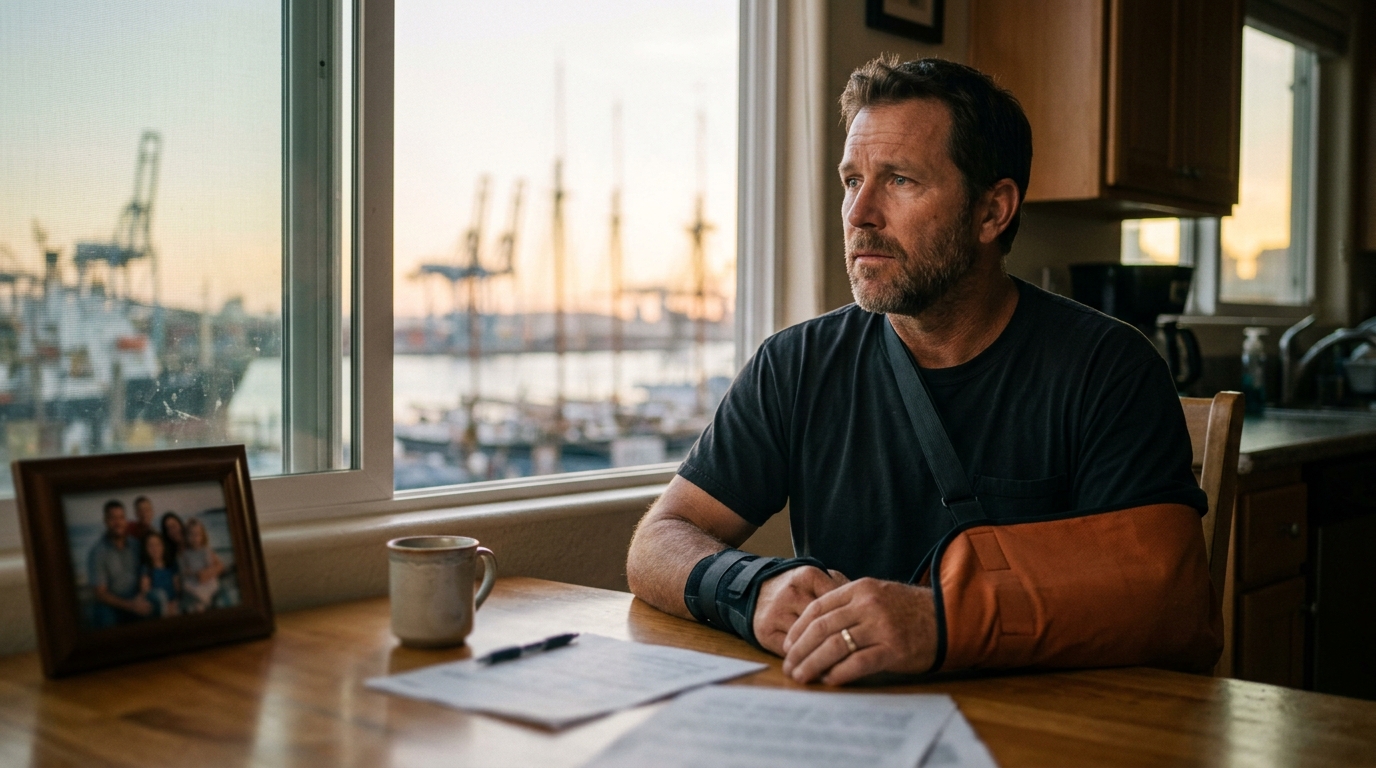
Navigating maritime injury claims requires precise legal knowledge and strict adherence to federal statutes. According to the U.S. Department of Labor, maritime workers face injury rates that consistently exceed national averages across all industrial sectors. These complex cases demand immediate documentation and strategic advocacy to secure full benefits. Understanding your rights under the Longshore and Harbor Workers Compensation Act is the first step toward financial recovery. You should consult experienced counsel before submitting any formal paperwork to insurance adjusters. Early legal intervention often prevents costly procedural errors that could jeopardize your entire claim. (About Craig Benner Benner)
Understanding the Longshore and Harbor Workers Compensation Act
The Longshore and Harbor Workers Compensation Act is a federal statute designed to provide wage replacement and medical benefits to maritime employees injured on the job. This legislation covers dockworkers, shipbuilders, and harbor maintenance personnel who do not qualify as traditional seamen. The act establishes a no-fault system that guarantees compensation regardless of who caused the accident. You must prove your work location and job duties fall within the statutory boundaries to qualify for coverage.
Insurance carriers frequently attempt to misclassify maritime employees to avoid paying statutory benefits. They might argue that your duties occurred on navigable waters rather than a pier or dock. This jurisdictional dispute requires precise legal interpretation and case law analysis. An experienced attorney will gather site surveys and employment records to establish your exact coverage status.
Maritime employers often rely on complex regulatory loopholes to minimize their financial exposure. They may classify your role as purely administrative or land-based to bypass federal obligations. Your legal team must review daily work logs and site maps to prove your actual duties. This documentation becomes the foundation of your entire case.
Eligibility Requirements and Jurisdictional Tests
Qualifying for maritime compensation requires satisfying two distinct legal tests. The status test examines whether your daily duties involve maritime employment. The situs test confirms that your injury occurred on navigable waters or adjacent pier areas. Both conditions must align perfectly for your claim to proceed under federal jurisdiction.
Defining Maritime Employment
Maintenance workers, longshoremen, and ship repair crews typically meet the status requirement. Your primary job functions must directly contribute to vessel loading, unloading, or construction. Administrative staff working exclusively in land-based offices usually fall outside this category. You need clear employment contracts and daily logs to prove your maritime connection.
Establishing Jurisdictional Boundaries
The situs requirement focuses on geographic location rather than job title. Injuries occurring on piers, wharves, or dry docks generally qualify for federal coverage. Accidents happening on active vessels usually trigger separate seaman statutes instead. Your legal team must map the exact coordinates of your incident to determine the correct legal pathway.
Regulatory agencies frequently update jurisdictional guidelines to reflect modern harbor operations. Your attorney must track these legislative changes to ensure your claim follows the current legal framework. Failure to adapt your strategy to updated regulations can result in immediate dismissal. Staying ahead of regulatory shifts requires dedicated legal research and continuous case monitoring.
Common Mistakes That Derail Maritime Claims
Many injured workers make critical errors during the initial reporting phase. Filing a state workers compensation claim instead of a federal LHWCA claim can permanently waive your rights. Insurance adjusters often encourage this mistake to minimize payout amounts. You must explicitly request federal maritime coverage in your initial paperwork.
Another frequent error involves signing early settlement offers without medical evaluation. Your long-term disability might not manifest until months after the initial incident. Accepting a quick cash payment typically prevents you from pursuing additional benefits later. You should never sign release documents before consulting a qualified maritime attorney.
Delaying medical treatment also severely weakens your legal position. Insurance carriers will argue that your condition resulted from unrelated activities or pre-existing conditions. Prompt medical documentation creates an unbroken chain of causation that strengthens your case. Your legal team will coordinate with healthcare providers to ensure all treatments align with your claim timeline.
How Attorney Fees Structure Works
Mariitime injury representation operates on a contingency fee basis that protects your financial security. You pay absolutely nothing upfront for legal services or case investigations. Your attorney only collects a percentage of your final settlement or award. This arrangement ensures that experienced advocates remain fully invested in your maximum recovery.
The standard fee structure typically ranges between fifteen and twenty percent of your total compensation. This percentage covers all research, expert witness consultations, and court filing expenses. You retain full control over settlement decisions throughout the entire process. Our firm maintains transparent billing practices that align with your financial interests.
Understanding your fee agreement prevents unexpected financial burdens during prolonged litigation. Your attorney will provide a detailed written contract outlining all cost responsibilities. You should never proceed without reviewing these financial terms carefully. Clear communication regarding billing ensures that your case progresses without financial distractions.
Settlement Versus Trial Outcomes
Most maritime claims resolve through negotiated settlements rather than courtroom trials. Insurance companies prefer predictable outcomes that eliminate litigation costs and public exposure. Your attorney will calculate your future medical needs and lost earning capacity to establish a fair baseline value. Negotiation strategies focus on maximizing your total compensation package.
Complex cases involving permanent disability or gross negligence may require formal litigation. Trial proceedings allow juries to award punitive damages that settlements cannot provide. You must weigh the emotional toll of extended litigation against potential financial rewards. Your legal team will recommend the optimal path based on your specific injury profile.
Preparing for trial requires extensive discovery, depositions, and expert witness preparation. Your attorney will build a compelling narrative that highlights your employer's negligence. Courtroom proceedings demand precise legal arguments and strategic evidence presentation. You should trust your legal team to navigate these complex procedural requirements.
Comparison of Claim Resolution Paths
| Resolution Method | Typical Timeline | Financial Outcome | Legal Strategy |
|---|---|---|---|
| Administrative Settlement | Three to six months | Predictable compensation capped by insurance guidelines | Negotiation focused on immediate medical coverage |
| Formal Litigation | Twelve to twenty-four months | Higher potential awards including punitive damages | Aggressive courtroom advocacy and expert testimony |
| Mediation Process | Six to nine months | Flexible settlement terms with mutual concessions | Collaborative dispute resolution with neutral arbitrators |
Key Takeaways
- Mariitime workers face injury rates that consistently exceed national averages across all industrial sectors.
- Qualifying for federal coverage requires satisfying both status and situs jurisdictional tests.
- Filing state workers compensation claims instead of federal LHWCA claims can permanently waive your rights.
- Standard contingency fees typically range between fifteen and twenty percent of total compensation.
- Insurance carriers frequently attempt to misclassify maritime employees to avoid paying statutory benefits.
- Early legal intervention prevents costly procedural errors that could jeopardize your entire claim.
Frequently Asked Questions
What qualifies as maritime employment under federal law?
Maintenance workers, longshoremen, and ship repair crews typically meet the status requirement. Your primary job functions must directly contribute to vessel loading, unloading, or construction. Administrative staff working exclusively in land-based offices usually fall outside this category.
How long do I have to file a Longshore claim?
Federal statutes generally require you to submit written notice within one year of your injury. Failure to meet this strict deadline typically results in permanent claim denial. Your attorney will draft and file all necessary documentation before the statutory deadline expires.
Can I sue my employer for a maritime workplace injury?
The Longshore and Harbor Workers Compensation Act generally bars direct lawsuits against your employer. You must pursue benefits through the federal administrative system instead. Third-party lawsuits against equipment manufacturers or vessel owners remain fully permissible.
What documents do I need to prove my jurisdictional status?
You must provide employment contracts, daily work logs, and site location maps. These documents establish your exact duties and geographic location during the incident. Your legal team will request official maritime records to verify your coverage eligibility.
How are medical expenses handled during an active claim?
Insurance carriers must approve and pay for all reasonable medical treatments related to your injury. You should avoid unauthorized procedures that might trigger claim disputes. Your attorney will coordinate directly with healthcare providers to ensure proper billing and coverage.
Schedule Your Free Strategy Session
Navigating maritime injury claims requires precise legal knowledge and strict adherence to federal statutes. You deserve experienced representation that fights for your maximum recovery. Contact our San Diego office today to schedule your free strategy session. Our legal team will review your case details and outline your optimal path forward. Visit our contact page to begin your claim today.