

According to the Centers for Disease Control and Prevention, emergency departments treat over thirty million injury cases annually across the United States. Negligence is the failure to exercise reasonable care that results in harm to another party. When a third party breaches this duty, victims must follow a strict procedural framework to recover compensation. The initial phase requires immediate documentation of the scene, collection of witness statements, and preservation of all physical evidence. Insurance adjusters often begin reviewing claims within forty-eight hours, making early action critical. You should consult a qualified legal professional to establish a clear chain of custody for your evidence. (About Craig Benner Benner)
Step 1: Document the Incident and Preserve Evidence
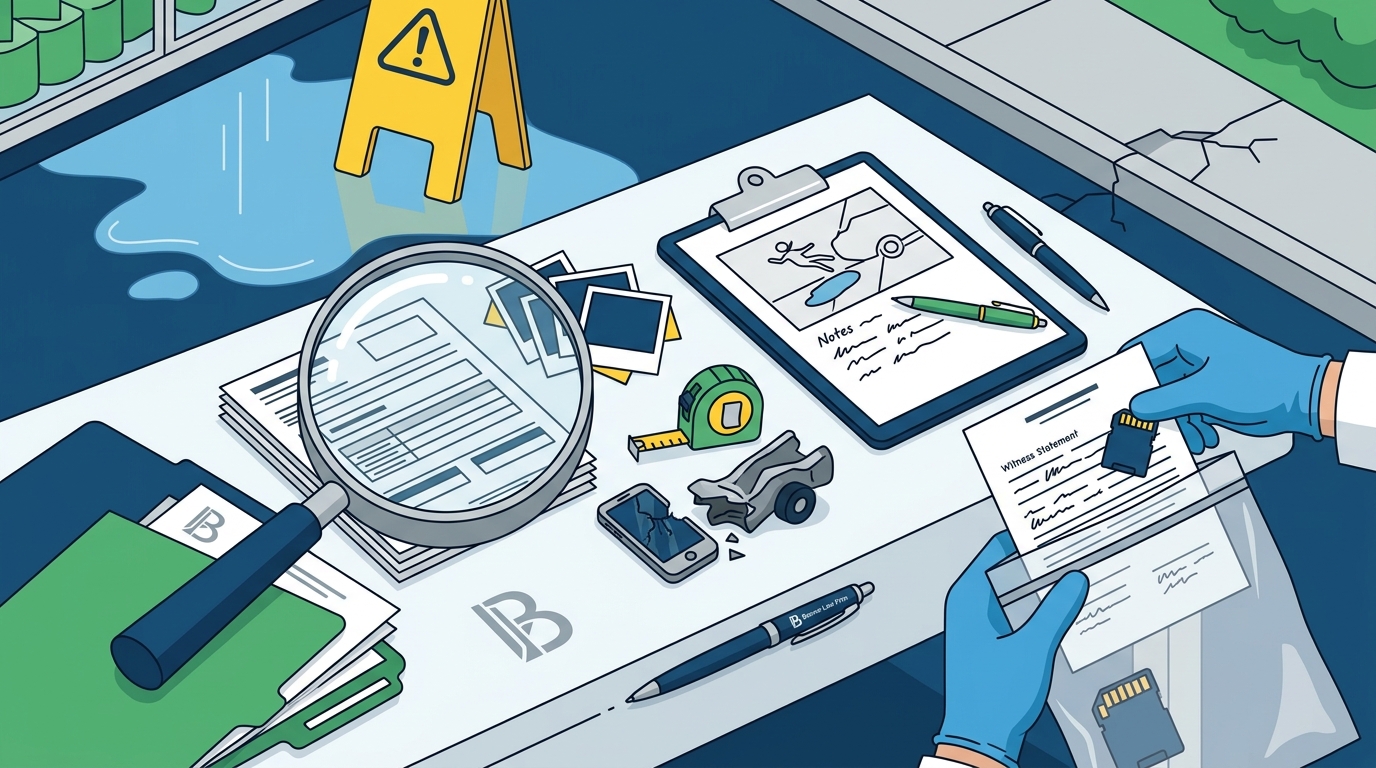
The foundation of any successful compensation claim rests on meticulous evidence collection. You must photograph the exact location, capture vehicle damage, and record visible injuries immediately after the event. Medical professionals require detailed incident reports to establish a direct medical timeline. Law enforcement agencies generate official police narratives that serve as primary evidentiary anchors. You should request copies of all surveillance footage before automated systems overwrite the recordings. Preserving physical evidence prevents insurance carriers from disputing the sequence of events. Early documentation directly correlates with higher settlement valuations. You can review additional resources on our blog to understand standard evidence protocols.
Medical Records and Incident Reports
Healthcare providers document injury severity, treatment duration, and projected recovery timelines. These records establish the medical necessity of every procedure and prescription. You must ensure your treating physicians explicitly link your injuries to the specific incident. Insurance adjusters frequently challenge delayed medical treatment to reduce payout amounts. Maintaining a dedicated injury journal tracking daily pain levels and mobility restrictions strengthens your evidentiary portfolio.
Step 2: Establish Legal Liability and Causation
Liability is the legal responsibility assigned to a party for causing damages through breach of duty. You must prove four distinct elements: duty, breach, causation, and actual damages. The responsible party owed you a legal obligation to act reasonably under the circumstances. Evidence must demonstrate how their specific actions or inactions directly caused your injuries. Comparative fault rules vary significantly across jurisdictions, affecting your final recovery amount. You should engage experienced legal counsel to reconstruct the incident and identify all potentially liable entities. Our lead attorney has successfully navigated complex liability disputes across multiple practice areas.
Proving Breach of Duty
Expert witnesses often reconstruct accident dynamics to demonstrate how the defendant deviated from standard safety protocols. Traffic engineering reports, workplace safety manuals, and industry compliance standards establish the baseline for reasonable conduct. You must show that the defendant knew or should have known the potential for harm. Failure to maintain equipment, distracted driving, or inadequate security measures frequently trigger breach determinations. Establishing clear causation prevents insurance carriers from shifting blame to third parties or preexisting conditions.
Step 3: Calculate Economic and Non-Economic Losses
Damages are the monetary compensation awarded to an injured party to cover losses and suffering. You must quantify both immediate financial losses and long-term financial impacts. Medical expenses include emergency transport, hospital stays, surgical procedures, rehabilitation therapy, and prescription medications. Lost wages encompass current missed work, reduced earning capacity, and future career limitations. You should retain financial experts to project inflation adjustments and lifetime care requirements. Non-economic losses address pain, emotional distress, loss of enjoyment, and permanent disfigurement. Accurate damage calculations prevent undervalued settlement offers. You can learn more about our transparent billing structure on our attorney fees page.
Long-Term Financial Projections
Life care planners develop comprehensive budgets covering assistive devices, home modifications, and ongoing therapy. Economic analysts factor in inflation rates, investment returns, and tax implications to project accurate lifetime costs. You must document how your injuries impact daily routines, family responsibilities, and recreational activities. Courts and insurance carriers require detailed financial documentation to approve structured settlements. Failure to project long-term needs often results in insufficient compensation that forces victims back into financial hardship.
Step 4: Navigate Insurance Negotiations
Insurance carriers operate with dedicated adjusters trained to minimize payout amounts while maintaining regulatory compliance. You will receive an initial settlement offer that rarely reflects the full value of your claim. Adjusters frequently use recorded statements, social media activity, and prior medical history to devalue your case. You should never accept the first offer without independent legal review. Experienced attorneys leverage case results and industry benchmarks to counter lowball proposals. Strategic negotiation often resolves claims without triggering costly court proceedings. You can examine our verified case results to understand typical settlement ranges.
Counteroffer Development
Legal representatives draft detailed demand packages containing medical records, expert opinions, and liability evidence. You must justify every dollar requested through documented financial losses and verified pain metrics. Insurance companies typically respond with counteroffers that require iterative negotiation rounds. You should maintain clear communication channels while avoiding emotional decision-making. Settlement conferences and mediation sessions provide structured environments to resolve disputes efficiently.
Step 5: Prepare for Formal Litigation
When negotiations stall, filing a formal complaint initiates the judicial discovery process. You must comply with strict jurisdictional deadlines, filing requirements, and procedural rules. Discovery involves interrogatories, document requests, depositions, and expert witness examinations. You should prepare thoroughly for deposition questioning, as transcripts become permanent court records. Trial preparation requires organizing exhibits, drafting jury instructions, and rehearsing direct examination strategies. Litigation readiness often motivates carriers to return to the negotiating table. You can schedule a confidential consultation to discuss your specific case details.
Jury Selection and Trial Strategy
Judge presided cases follow different procedural pathways than jury trials. You must identify jurors who understand complex liability concepts and financial damages. Opening statements frame the narrative, while closing arguments synthesize evidence into a compelling verdict request. You should anticipate defense challenges to expert testimony and evidentiary admissibility. Successful litigation requires meticulous preparation and adaptive courtroom strategy.
Understanding Your Financial Recovery Options
| Damage Category | Definition and Scope | Recovery Mechanism |
|---|---|---|
| Economic Damages | Quantifiable financial losses including medical bills and lost wages | Full reimbursement through documented receipts |
| Non-Economic Damages | Subjective losses including pain, suffering, and emotional distress | Judicial assessment based on injury severity (Personal injury cases) |
| Punitive Damages | Penalties awarded for reckless or intentional misconduct | Court-ordered sanctions to deter future violations |
| Structured Settlements | Long-term payment plans replacing lump-sum distributions | Tax-advantaged financial management |
Key Takeaways
- Emergency departments process over thirty million injury cases annually, making documentation critical.
- Negligence requires proving duty, breach, causation, and actual damages to establish legal responsibility.
- Insurance adjusters typically begin reviewing claims within forty-eight hours of incident reporting.
- Comparative fault rules vary by jurisdiction, directly impacting your final compensation percentage.
- Structured settlements provide tax-advantaged long-term financial management for catastrophic injuries.
- Our firm maintains a verified track record of successful case results across multiple practice areas.
- Legal consultation costs operate on a contingency basis, eliminating upfront financial barriers.
Frequently Asked Questions
How long do I have to file a negligence claim?
Statutes of limitations vary by jurisdiction and injury type, typically ranging from one to three years. You must file your complaint before the deadline expires, or you forfeit your right to recover damages. Certain exceptions exist for minors, government entities, and latent injuries that manifest years later.
Can I recover damages if I share partial fault?
Comparative negligence rules allow partial recovery even when you bear some responsibility. Pure comparative fault states reduce your award by your percentage of fault, while modified systems bar recovery if you exceed fifty percent responsibility.
What evidence do I need to prove negligence?
You must provide police reports, medical records, witness statements, photographic documentation, and expert testimony. Insurance carriers frequently request surveillance footage and social media records to challenge your claims.
How are pain and suffering damages calculated?
Courts apply multiplier methods or per diem calculations to quantify subjective losses. Your attorney will factor injury severity, treatment duration, and long-term impact to justify your requested amount.
Do I need to go to trial to get compensation?
Most claims resolve through settlement negotiations before reaching the courtroom. Litigation readiness strengthens your negotiating position, but experienced attorneys prioritize efficient resolution whenever possible.
What happens if the at-fault party lacks insurance?
You can pursue coverage through your own uninsured motorist policy, umbrella policies, or personal asset claims. Your attorney will identify all available insurance layers and explore alternative recovery mechanisms.
How does the contingency fee model work?
You pay no upfront legal fees, and your attorney only collects a percentage when you recover compensation. This structure aligns your legal team incentives with your financial recovery goals.
Secure Your Legal Strategy Today
Navigating the compensation process requires precise legal knowledge, strategic negotiation skills, and courtroom readiness. You deserve comprehensive representation that prioritizes your financial recovery and long-term wellbeing. Contact our office to schedule a confidential case evaluation and discuss your specific circumstances. Schedule your free strategy session today and take the first step toward securing the compensation you deserve.