

How to Seek Damages for Injuries Caused by Someone Else's Negligence
When you are hurt because another person failed to act with reasonable care, the law gives you a path to financial recovery. Negligence is the failure to exercise the level of caution that a reasonably prudent person would use under similar circumstances, and it is the legal foundation for most personal injury claims in the United States. Understanding how the process works, from gathering evidence to settling or going to trial, puts you in control of your own recovery. Below, the San Diego personal injury attorneys at Benner Law Firm break down every stage so you know exactly what to expect.
What Is Negligence in Personal Injury Law?
Negligence is a legal theory used to hold a person or entity liable for harm caused by their careless conduct. In simpler terms, it means someone did not take the care a reasonable person would have taken, and you got hurt as a result. Most car accident claims, slip-and-fall cases, and medical malpractice suits are built on this theory.
A personal injury claim is a civil action in which the injured party (plaintiff) seeks compensation from the party whose negligence caused the harm (defendant). According to FindLaw, the elements of a negligence claim include duty, breach of duty, causation, and damages.
The Four Elements You Must Prove
Every negligence case rests on four pillars. Failing to establish even one can result in your claim being denied.
Duty of Care
You must show the defendant owed you a legal obligation to act carefully. Drivers owe a duty to other road users, property owners owe a duty to visitors, and medical professionals owe a duty to patients. The duty usually arises from the relationship between the parties or from the law itself.
Breach of Duty
A breach of duty is conduct that falls short of the standard a reasonable person would meet. Running a red light, failing to repair a hazard on your property, or texting while driving are common examples. As our guide to proving negligence explains, this includes both unreasonable actions and failures to act.
Causation and Damages
Causation is the direct link between the defendant's breach and your injury. You must prove that "but for" the defendant's conduct, the harm would not have occurred. Finally, you must show actual, measurable damages such as medical bills, lost income, or pain and suffering.
Step-by-Step Process for Seeking Damages
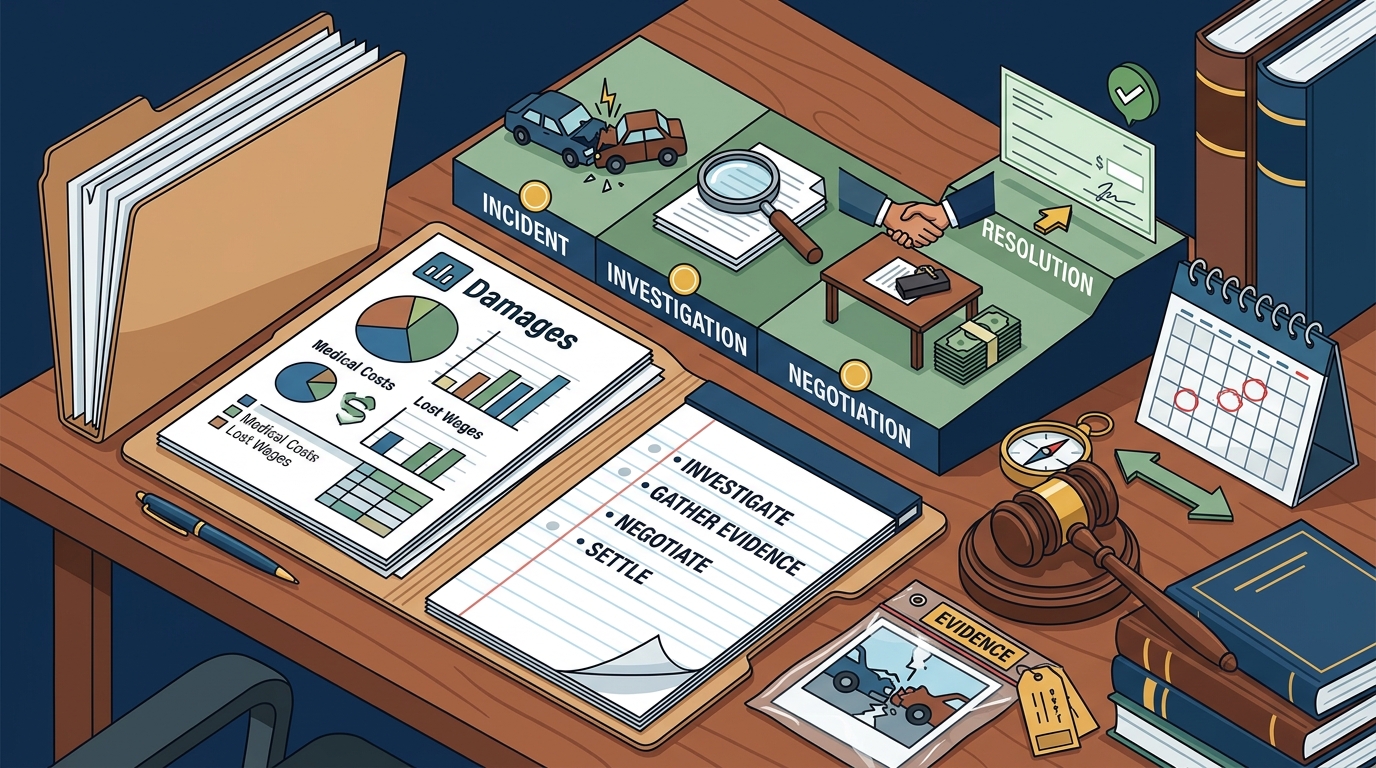
While every case is unique, the general litigation path follows a predictable sequence.
| Stage | What Happens | Typical Timeline |
|---|---|---|
| 1. Seek Medical Care | Get treated immediately; medical records become key evidence. | Day of injury |
| 2. Preserve Evidence | Photograph the scene, collect witness info, request police reports. | First 48 hours |
| 3. Consult an Attorney | A personal injury lawyer evaluates liability and damages. | Within days |
| 4. Investigation | Attorney gathers records, expert opinions, and builds the case. | Weeks to months |
| 5. Demand & Negotiation | A demand letter is sent to the insurer; settlement talks begin. | Months |
| 6. Filing a Lawsuit | If no fair settlement, a complaint is filed in court. | Before statute expires |
| 7. Discovery & Trial | Both sides exchange evidence; case may go to trial or settle. | Months to years |
Insurance companies often try to settle claims quickly and for far less than they are worth. Working with experienced catastrophic injury attorneys ensures your claim reflects the true cost of your injuries.
Types of Damages You Can Recover
Damages is the legal term for the monetary compensation awarded to an injured plaintiff. In California, recoverable damages typically fall into three categories:
- Economic damages: Medical expenses, lost wages, property damage, and rehabilitation costs.
- Non-economic damages: Pain and suffering, emotional distress, loss of enjoyment of life, and loss of consortium.
- Punitive damages: Awarded in rare cases involving especially reckless or intentional misconduct to punish the defendant.
Victims of truck accidents or mass tort injuries frequently face extensive damages that insurance alone cannot cover, making a lawsuit critical for full recovery.
California Statute of Limitations
The statute of limitations is the legal deadline for filing a lawsuit. In California, the statute of limitations for most personal injury cases is two years from the date of the injury, as codified in California Code of Civil Procedure Section 335.1. Missing this deadline almost always means losing your right to compensation.
Exceptions exist. California's discovery rule may extend the deadline when injuries are not immediately apparent. Claims against a government entity may require filing an administrative claim within just six months. If the injured party is a minor, the clock generally does not start until they turn 18.
How Comparative Negligence Affects Your Claim
California follows a pure comparative negligence system. This means you can still recover damages even if you were partially at fault for the accident. However, your award is reduced by your percentage of responsibility. For example, if you are found 20% at fault and your damages total $100,000, you would recover $80,000.
This rule makes it vital to work with a skilled attorney who can minimize your share of fault and maximize your recovery. Learn more about how fault is assessed in our back injury claims resource.
Key Takeaways
- Negligence requires proving four elements: duty, breach, causation, and damages.
- Seek medical attention immediately; your records are your strongest evidence.
- California gives you two years from the date of injury to file a personal injury lawsuit.
- Pure comparative negligence allows partial recovery even when you share fault.
- Economic, non-economic, and punitive damages may all be available depending on the facts.
- Insurance companies rarely offer full value without legal pressure from an attorney.
- Preserving evidence early, including photos, witness details, and police reports, strengthens your case significantly.
Frequently Asked Questions
What is negligence in a personal injury case?
Negligence is the failure to exercise reasonable care, resulting in harm to another person. To win a negligence claim you must prove duty of care, breach of duty, causation, and damages.
How long do I have to file a personal injury lawsuit in California?
California's statute of limitations gives you two years from the date of injury to file suit. Exceptions apply for minors, government claims, and cases involving delayed discovery of the injury.
Can I still recover compensation if I was partly at fault?
Yes. California's pure comparative negligence rule allows you to recover damages even if you share some blame. Your award is simply reduced by your percentage of fault.
What types of damages can I seek?
You may seek economic damages (medical bills, lost wages), non-economic damages (pain and suffering, emotional distress), and in some cases punitive damages for egregious misconduct.
Do I need a lawyer to file a negligence claim?
While you can technically file on your own, personal injury cases involve complex evidence, legal strategy, and negotiations with insurance companies. An experienced attorney significantly increases your chances of a fair outcome.
How much does it cost to hire a personal injury attorney?
Most personal injury lawyers, including Benner Law Firm, work on a contingency fee basis. That means you pay nothing upfront and the attorney's fee comes from your settlement or verdict.
What should I do immediately after an accident?
Seek medical attention, call the police, photograph the scene, collect witness information, and contact a personal injury attorney before speaking with insurance adjusters.
Injured by Someone Else's Negligence? Contact Benner Law Firm Today
If you or a loved one has been hurt because of another person's carelessness, you do not have to face the legal process alone. The attorneys at Benner Law Firm in San Diego provide compassionate, skilled representation for personal injury victims throughout California. Call 619-941-0456 to schedule your free consultation and take the first step toward the compensation you deserve.