

How to Seek Damages for Injuries Caused by Someone Else's Negligence
If you have been hurt because another person or company failed to act responsibly, you may be entitled to financial compensation. Negligence is the failure to exercise reasonable care in a situation, and it forms the legal basis of most personal injury claims in the United States. Understanding the process for seeking damages can feel overwhelming, especially while you are recovering from an injury. This guide walks you through every critical step, from gathering evidence to negotiating a settlement or filing a lawsuit, so you can protect your rights and pursue the compensation you deserve under California law.
What Is Negligence in Personal Injury Law?
Negligence is a legal concept that applies when someone fails to meet a reasonable standard of care and that failure results in harm to another person. In civil law, California personal injury law allows injured parties to hold the at-fault party financially accountable.
Common scenarios include car accidents caused by distracted driving, slip-and-fall incidents on poorly maintained property, and medical errors. Whether the responsible party is an individual, a corporation, or a government entity, the injured person has the right to pursue a claim. Our San Diego personal injury attorneys help victims navigate this process every day.
The Four Elements You Must Prove
To succeed in a negligence claim, you must establish four legal elements. Missing even one can prevent you from recovering compensation.
Duty of Care
Duty of care is the legal obligation to act with reasonable caution to prevent foreseeable harm. Drivers must follow traffic laws, property owners must keep premises safe, and doctors must provide competent treatment. Establishing that the defendant owed you this duty is the first step in any claim.
Breach, Causation, and Damages
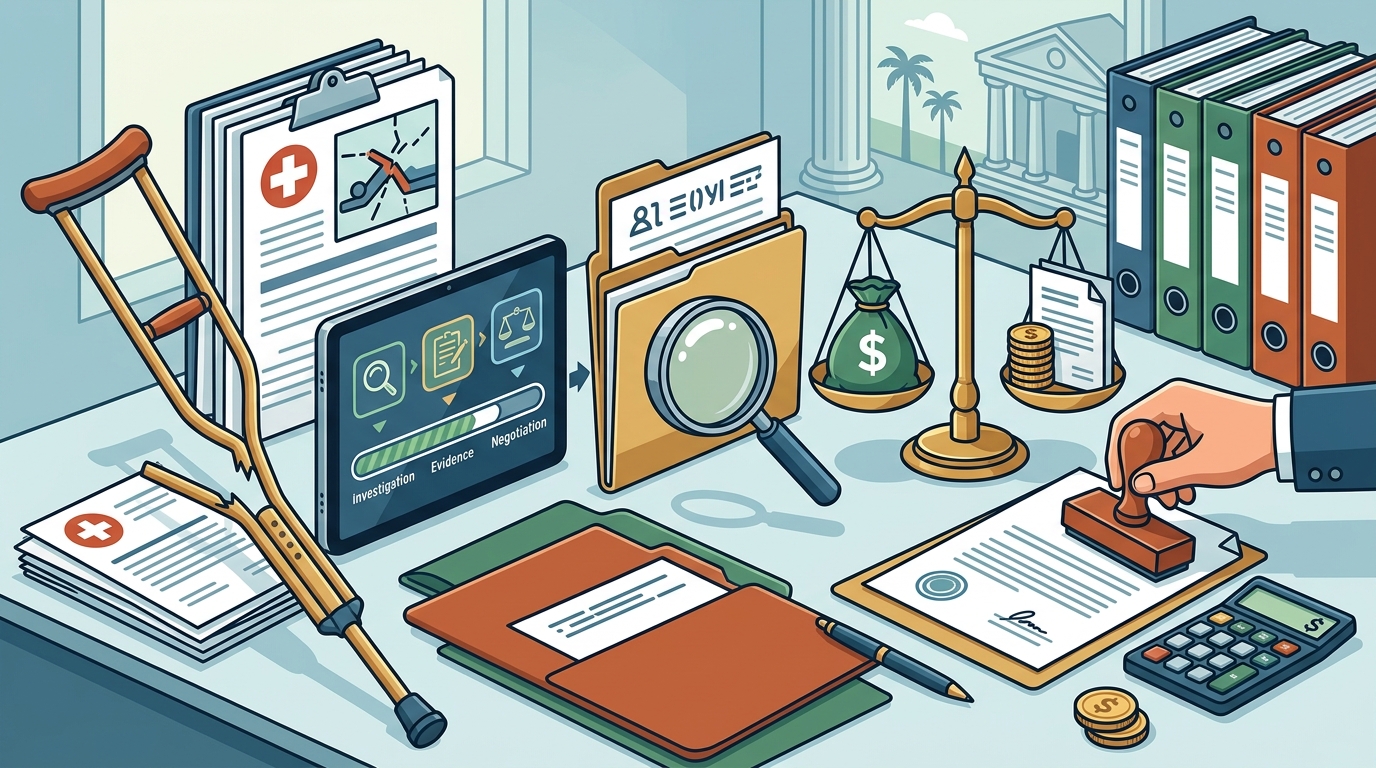
After establishing duty, you must show the defendant breached that duty by acting carelessly or recklessly. Next, you must prove causation, meaning the breach directly caused your injuries. Finally, you must demonstrate actual damages, such as medical bills, lost wages, or pain and suffering.
| Element | What You Must Show | Example Evidence |
|---|---|---|
| Duty of Care | Defendant had a legal obligation to act safely | Traffic laws, property codes, professional standards |
| Breach of Duty | Defendant failed to meet that obligation | Witness testimony, surveillance footage |
| Causation | The breach directly caused your injury | Medical records, expert testimony |
| Damages | You suffered measurable harm | Medical bills, wage statements, therapy records |
Immediate Steps After an Injury
What you do in the hours and days after an accident significantly impacts the strength of your claim. Acting quickly preserves evidence and protects your legal rights.
Seek Medical Attention
Your health comes first. Prompt medical treatment also creates documentation that links your injuries to the accident. Delayed treatment gives insurance companies an excuse to argue your injuries are unrelated.
Document Everything
Photograph the accident scene, your injuries, and any property damage. Obtain contact information from witnesses and request a police report. As our car accident attorneys advise, do not discuss fault with the other party or their insurer before consulting a lawyer.
Contact an Attorney Early
An attorney can begin preserving evidence, communicating with insurance adjusters, and building your case from day one. The legal team at Benner Law Firm offers free strategy sessions to help you understand your options immediately.
Filing an Insurance Claim vs. a Lawsuit
Most personal injury cases start with an insurance claim filed against the at-fault party's insurer. You will provide details about the accident, your injuries, and your expenses. However, insurance companies are businesses that aim to minimize payouts, so initial settlement offers are often far below what a claim is truly worth.
If negotiations fail, your attorney may recommend filing a personal injury lawsuit. A lawsuit triggers formal discovery, where both sides exchange evidence, take depositions, and may bring in expert witnesses. Many cases still settle before trial, but having a credible lawsuit filed strengthens your bargaining position. Victims of catastrophic injuries especially benefit from aggressive legal representation because their long-term costs are substantial.
California Statute of Limitations
A statute of limitations is the legal deadline for filing a lawsuit. In California, the statute of limitations for most personal injury cases is two years from the date of the injury under California Code of Civil Procedure Section 335.1. Missing this deadline almost always results in your case being dismissed.
Important exceptions include claims against government entities, which require an administrative claim within six months, and medical malpractice cases, which carry a one-year discovery deadline. If a minor is injured, the statute is typically tolled until the child turns 18. Consult an attorney promptly to confirm which deadline applies to your situation.
Types of Damages You Can Recover
Damages is the legal term for the financial compensation awarded to an injury victim. California law recognizes both economic and non-economic damages, and in some cases, punitive damages.
Economic vs. Non-Economic Damages
Economic damages cover quantifiable losses like medical bills, lost wages, reduced earning capacity, and property damage. Non-economic damages compensate for intangible harms such as pain and suffering, emotional distress, and loss of enjoyment of life. Victims of severe injuries like burn injuries or traumatic brain injuries often receive significant non-economic awards because of the lasting impact on daily living.
Punitive damages are separate and intended to punish defendants for especially reckless or intentional conduct. They are less common but can dramatically increase total compensation when awarded.
Why Hiring a Personal Injury Attorney Matters
Insurance adjusters are trained to minimize what they pay. Without experienced legal counsel, injured people frequently accept settlements that fail to account for future medical expenses, ongoing therapy, and non-economic suffering. A qualified attorney investigates your claim, gathers medical and financial evidence, negotiates with insurers, and takes your case to trial if necessary.
At Benner Law Firm, our team has years of experience representing injured clients in San Diego and throughout California. We handle cases involving premises liability, truck accidents, mass torts, and more. We work on a contingency basis, meaning you pay nothing unless we recover compensation on your behalf.
Key Takeaways
- Negligence claims require proving four elements: duty of care, breach, causation, and damages.
- Seek medical attention immediately after an injury to protect both your health and your legal claim.
- California's statute of limitations for personal injury is generally two years from the date of injury.
- Claims against government entities have a much shorter deadline of six months for an administrative claim.
- Economic damages cover bills and lost income; non-economic damages address pain and emotional suffering.
- Insurance companies routinely undervalue claims, making experienced legal representation essential.
- Contacting an attorney early preserves evidence and strengthens your case from the start.
Frequently Asked Questions
What qualifies as negligence in a personal injury case?
Negligence occurs when a person or entity fails to act with reasonable care, and that failure directly causes injury to someone else. Examples include running a red light, neglecting property maintenance, or providing substandard medical treatment.
How long do I have to file a personal injury lawsuit in California?
California law generally allows two years from the date of injury to file a personal injury lawsuit. Exceptions apply for claims against government agencies (six months), medical malpractice (one year from discovery), and cases involving minors.
What types of damages can I recover?
You may recover economic damages such as medical expenses and lost wages, non-economic damages like pain and suffering, and in rare cases, punitive damages designed to punish especially reckless conduct.
Do I need a lawyer to file a personal injury claim?
While you can file on your own, having an experienced attorney dramatically improves your chances of receiving fair compensation. Lawyers handle evidence gathering, negotiation, and trial preparation so you can focus on recovery.
What if I am partially at fault for my injury?
California follows a pure comparative negligence rule. You can still recover damages even if you share some fault, but your award will be reduced by your percentage of responsibility.
How much does it cost to hire a personal injury attorney?
Most personal injury attorneys, including Benner Law Firm, work on a contingency fee basis. You pay no upfront fees, and attorney costs come from the compensation recovered in your case.
What should I do immediately after an accident?
Seek medical attention, document the scene with photos, collect witness information, file a police report, and contact a personal injury attorney before speaking with any insurance adjuster.
How long does a personal injury case take to resolve?
Timelines vary based on injury severity, case complexity, and whether a settlement or trial is needed. Some cases resolve in months; others may take a year or more.
Take the First Step Toward Fair Compensation
If you or a loved one has been injured due to someone else's negligence, do not wait to explore your legal options. The team at Benner Law Firm is ready to listen and fight for the compensation you deserve. Schedule your free strategy session today by calling 619-941-0456.