

When someone else's carelessness changes your life in an instant—a distracted driver running a red light, a property owner ignoring a broken handrail, or a manufacturer releasing a defective product—you have a legal right to pursue compensation. But the path from injury to recovery involves a structured series of steps that many people find confusing. This ultimate guide breaks down every phase of the negligence damages process so you can make informed decisions and protect your rights from day one.
Understanding Negligence: The Legal Foundation of Your Claim
Before you can seek damages, you need to understand the legal theory your case rests on. A personal injury claim is a civil lawsuit seeking compensation for damages sustained due to someone else's negligence. In legal terms, negligence involves four key elements that you must prove:
- Duty of care: The defendant owed you a legal obligation to act with reasonable care under the circumstances.
- Breach of duty: The defendant failed to meet that obligation through their actions or inaction.
- Causation: The breach directly caused your injury—not some unrelated event.
- Damages: You suffered real, measurable harm as a result.
Each element is essential. Miss even one, and your claim can fall apart. For example, a driver may have been texting (breach), but if you were injured by a separate pothole unrelated to their driving, causation fails.
Phase 1: Immediate Actions After the Incident
Get Medical Attention Right Away
Your health is the top priority after any accident. Even if your injuries seem minor, some conditions—like concussions or internal bleeding—do not present symptoms immediately. Seeking prompt medical attention creates an official medical record that connects your injuries to the incident, which is critical evidence later.
The medical report should document the severity and extent of the injuries, any treatment administered, and the long-term prognosis. Insurance companies rely heavily on these records when evaluating claims.
Document Everything at the Scene
If you are physically able, gather as much evidence as possible while still at the scene:
- Take photographs of the accident scene, your visible injuries, and any property damage.
- Collect names and contact information from witnesses.
- Obtain a copy of any police or incident report filed.
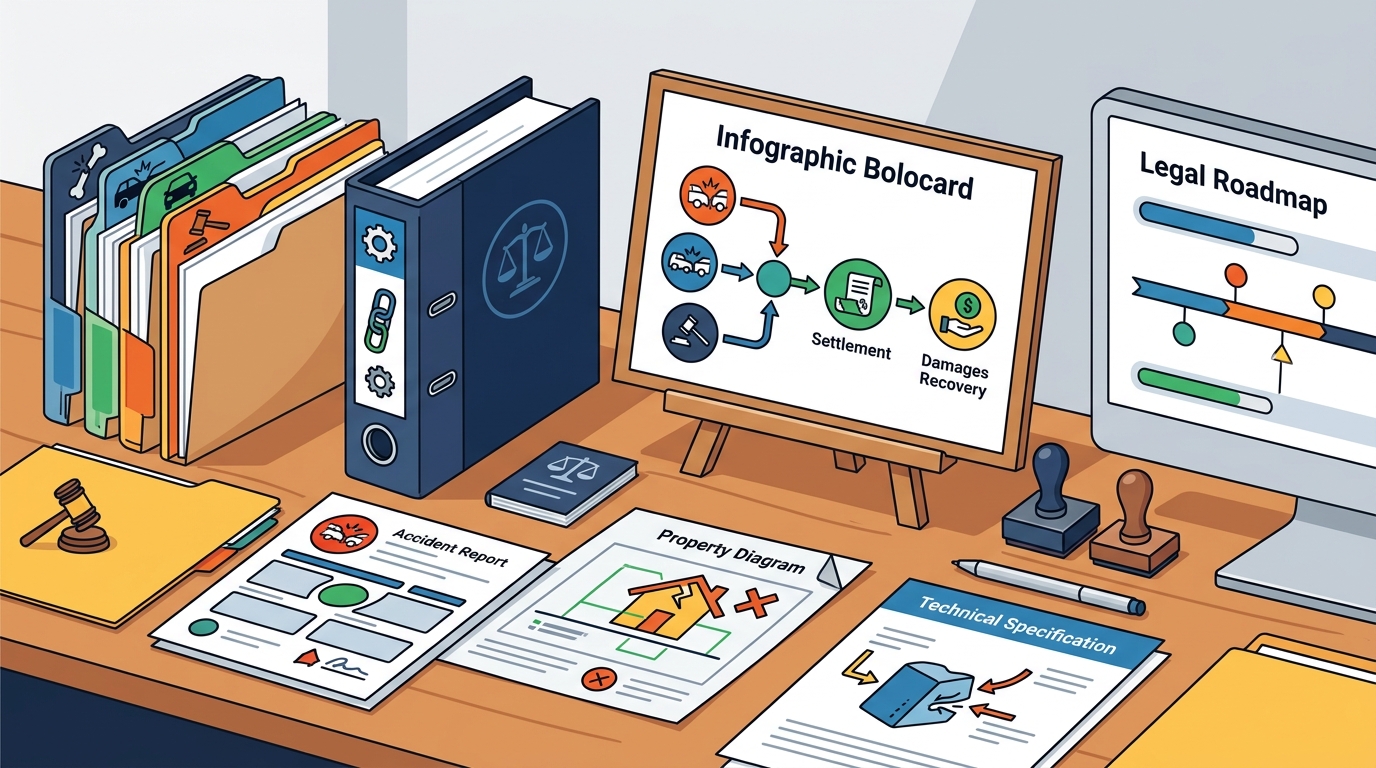
This documentation forms the backbone of your case. Photographs can visually demonstrate the conditions that led to the injury, while witness statements validate your account of events.
Report the Incident
Depending on the type of accident, notify the appropriate authorities. For car accidents, call the police for an official accident report. For slip-and-fall incidents, report the injury to the property owner or manager. Having an official record creates a paper trail that strengthens your claim.
Avoid Common Mistakes
Two critical rules apply immediately after an accident: do not admit fault, and do not provide recorded statements to the other party's insurance company without legal advice. Anything you say can be used to reduce or deny your compensation later.
Phase 2: Consulting a Personal Injury Attorney
Once you have addressed your immediate medical needs, the next step is to consult with an experienced personal injury attorney who can evaluate your case and advise you of your legal options. An initial consultation typically involves discussing the fundamentals of what happened, reviewing your injuries and expenses, and assessing whether you have a viable claim.
Why Legal Representation Matters
Insurance companies are notorious for trying to minimize payouts or denying claims altogether. A skilled personal injury attorney knows how to handle insurance adjusters and negotiate effectively. Many attorneys, including the team at Benner Law Firm in San Diego, offer free initial strategy sessions so you can learn your options without financial risk.
What to Bring to Your First Meeting
Maximize the value of your initial consultation by bringing:
- All medical records and bills related to your injury
- Photographs or video from the scene
- The police or incident report
- Names and contact details for any witnesses
- Records of lost wages or time missed from work
- Any correspondence you have received from the other party's insurer
Phase 3: Investigation and Evidence Gathering
After you retain an attorney, a thorough investigation begins. Your lawyer will collect and organize evidence to build a strong foundation for your case. This phase may include:
- Obtaining and reviewing copies of accident reports and police reports
- Interviewing witnesses to secure detailed written statements
- Consulting medical experts to establish the full scope of your injuries
- Hiring accident reconstruction specialists when necessary
- Identifying every party who might be liable for your injury
For instance, in a medical malpractice claim, the doctor, medical facility, and lab might all share responsibility for your injuries. Your lawyer also identifies each insurance provider that might have policies covering the incident.
Phase 4: The Demand Letter and Pre-Suit Negotiation
Once the investigation is complete and you have reached maximum medical improvement (or your condition is well-documented), your attorney prepares a formal demand package. This document explains the facts of your case, outlines the damages you have suffered, and makes an official request for a fair settlement.
What a Strong Demand Letter Includes
- A clear narrative of the accident and how negligence caused your injuries
- A detailed accounting of all medical expenses incurred and projected
- Documentation of lost wages and diminished earning capacity
- Evidence of pain, suffering, and emotional distress
- Supporting materials such as photographs, medical records, and witness statements
- A specific dollar amount being requested and the reasoning behind it
The demand letter is sent to the at-fault party's insurance company, which then reviews the claim. The insurer may respond with a counteroffer or reject the claim outright. If they accept your offer, you may receive your settlement in full. More often, however, this begins a negotiation phase with multiple rounds of offers and counteroffers.
Phase 5: Filing a Lawsuit
If pre-suit negotiations fail to produce a fair offer, your attorney files a formal complaint with the court. This written document outlines your allegations, the legal basis for holding the defendant liable, and the amount of damages you are seeking. It must then be served upon the defendant, which initiates the actual lawsuit.
The Defendant's Response
After the complaint is served, the defendant has a set number of days to file an answer—their formal response to your allegations. If the defendant includes counterclaims, you will also have time to respond. If the defendant fails to respond at all, your attorney can file a motion for default judgment.
Statute of Limitations: A Critical Deadline
Every state imposes a deadline for filing a personal injury lawsuit. In California, the statute of limitations for most personal injury cases is two years from the date of the injury. Claims under the Defense Base Act have an even shorter window of one year. Missing this deadline typically means losing your right to sue entirely.
Phase 6: Discovery
After the initial pleadings, the case enters the discovery phase. During discovery, both sides exchange information through several mechanisms:
- Interrogatories: Written questions that each party must answer under oath
- Document requests: Formal requests for medical records, financial documents, internal communications, and other relevant materials
- Depositions: Sworn, recorded testimony from parties, witnesses, and expert witnesses conducted outside the courtroom
Discovery is often the longest phase of litigation. It allows both sides to evaluate the strength of the opposing case, which frequently leads to renewed settlement discussions.
Phase 7: Mediation and Settlement Negotiations
Most personal injury lawsuits settle out of court. Trials are time-consuming, stressful, and expensive for both sides. Courts often require or encourage mediation—a structured negotiation session guided by a neutral third party—before a case can proceed to trial.
Settling has a distinct advantage: you have a guaranteed outcome, whereas a trial risks an unfavorable verdict from a judge or jury. Your attorney will advise you on whether a settlement offer is fair based on the full scope of your damages.
Phase 8: Trial
If no settlement is reached, your case goes to trial. During trial, both sides present evidence, call witnesses, and make legal arguments before a judge or jury. Your attorney will present your case by demonstrating each element of negligence and quantifying your damages.
At the conclusion of the trial, the court issues a verdict. If you are successful, you may be awarded compensation for your injuries and damages.
Phase 9: Post-Trial and Potential Appeals
Even after a verdict, the legal process may not be over. The losing party may file an appeal seeking to overturn the decision. If the defendant appeals, your attorney will continue representing your interests, advocating for the court's decision to be upheld. Post-trial also allows you to settle legal fees and debts related to the injury, including any medical liens.
What Types of Damages Can You Recover?
Negligence damages generally fall into three categories:
Economic Damages
- Medical expenses (past, current, and future)
- Lost wages and reduced earning capacity
- Property damage repair or replacement
- Rehabilitation costs, including physical and occupational therapy
Non-Economic Damages
- Pain and suffering
- Emotional distress
- Loss of consortium (impact on your relationship with your spouse or family)
- Loss of enjoyment of life
Punitive Damages
In rare cases involving especially reckless or intentional behavior, the court may award punitive damages designed to punish the defendant and deter similar conduct in the future.
How Comparative Negligence Affects Your Recovery
If you are partially at fault for the accident, your compensation may be reduced proportionally. Many states follow a comparative negligence rule. For example, if you are found to be 20 percent at fault and the total value of your case is $100,000, you would receive $80,000. California follows a pure comparative negligence system, meaning you can recover damages even if you are 99% at fault—though your award will be reduced by your percentage of responsibility.
Key Takeaways
- Seek medical attention immediately—both for your health and to create a documented link between the incident and your injuries.
- Preserve evidence from the scene: photos, witness contacts, and official reports.
- Consult an experienced personal injury attorney before speaking with any insurance company.
- Proving negligence requires establishing duty of care, breach, causation, and damages.
- Most cases settle before trial, but having a trial-ready case strengthens your negotiating position.
- California's statute of limitations for personal injury is generally two years from the date of injury.
- Comparative negligence may reduce your award if you share fault, but it does not eliminate your right to compensation under California law.
Frequently Asked Questions
How long does a negligence claim take from start to finish?
Timelines vary widely. Straightforward claims that settle during pre-suit negotiation may resolve in a few months. Cases that go through litigation and trial can take one to three years or longer, especially if appeals are involved. Factors like the complexity of the injuries, the number of parties, and court schedules all affect duration.
What if I cannot afford an attorney to pursue my claim?
Most personal injury attorneys work on a contingency fee basis, meaning you pay nothing upfront. The attorney collects a percentage of your compensation only if your claim is successful. If the claim fails, no payment is required. Benner Law Firm offers a free strategy session to evaluate your case at no cost.
What is the statute of limitations for personal injury in California?
California law generally permits an injury victim to seek compensation up to two years following the accident. There may be exceptions depending on the circumstances of each case, such as cases involving minors or government entities. Consulting with an attorney promptly ensures you do not miss this critical deadline.
Can I still recover damages if I was partially at fault?
Yes. California follows a pure comparative negligence rule, which means your compensation is reduced by your percentage of fault but is not eliminated. For instance, if you are found 30% at fault for a $200,000 claim, you could still recover $140,000.
What types of evidence are most important in a negligence case?
The strongest evidence typically includes medical records linking your injuries to the incident, photographs of the scene and your injuries, official police or incident reports, witness statements, and documentation of your financial losses such as medical bills and pay stubs showing lost wages.
Should I accept the insurance company's first settlement offer?
In most cases, the initial offer from an insurance company is significantly lower than what your claim is worth. Insurance adjusters are trained to minimize payouts. Having an experienced attorney review any offer before you accept is critical to ensuring you receive fair compensation for all of your damages, including future medical costs and non-economic losses.
Protect Your Rights After a Negligence Injury
The process of seeking damages for a negligence injury is methodical, and every step matters. From preserving scene evidence to navigating discovery and trial preparation, having a knowledgeable legal team makes a measurable difference in the outcome of your case. Benner Law Firm's personal injury attorneys in San Diego provide dedicated representation for accident victims, handling everything from initial investigation through trial and appeals. Contact Benner Law Firm today at 619-941-0456 to schedule a free strategy session and learn how to move forward with your claim.